
New research reveals that the 4,000-year-old city of Mohenjo-daro defied the 'rules' of history by becoming more equal as it became more successful.
For decades, historians have generally agreed that the progress of small villages as they evolved into cities came at the price of widening inequality. A small group of leaders, kings and priests, would inevitably seize control of the wealth and the gap between rich and poor would grow. However, a new study at the University of York delves into the archaeology of Mohenjo-daro, the Indus civilization's largest city, and shows the opposite was true.
By analyzing house sizes across the ancient city, researchers found that Mohenjo-daro was not only more equal than its neighbors in Mesopotamia and Greece, but it actually became more egalitarian over time.
- Where Was Democracy Born? Not Greece Claims Study
- Did Climate Change Cause the Demise of the Ancient Indus Valley Civilization?
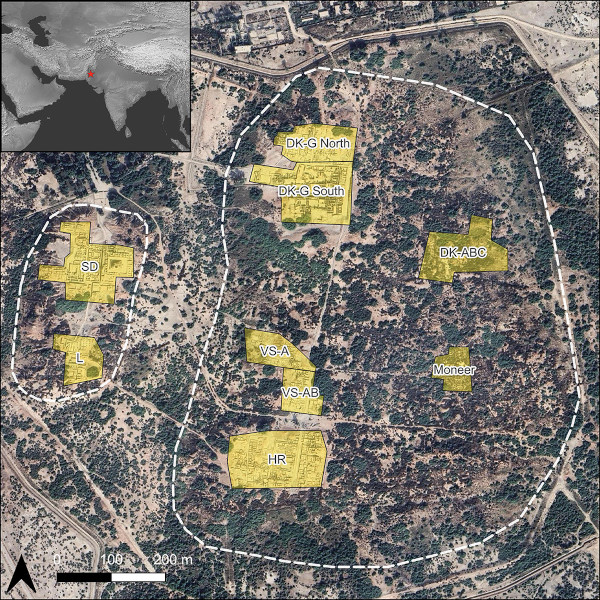
Mohenjo-daro and its excavation areas (figure by authors; basemap consists of Google Earth Imagery © 2026; inset basemap is from Natural Earth/Antiquity Publications Ltd)
An Entirely Different Urban Model
The lead author, Dr. Adam Green from the University of York's Department of Archaeology and Department of Environment and Geography, noted that legacy data from the ancient city shows that as the city matured, the gap between the largest and smallest homes narrowed. In fact, by its later years, the wealth gap in this massive urban center had dropped to levels typical of the first farming villages.
"While ancient Egyptians were building pyramids for god-kings, and the Greeks were constructing massive palaces at Knossos, the people of the Indus were building something entirely different," explained Dr. Green.
Instead of gold-filled tombs and huge temples, Mohenjo-daro focused on sophisticated brick-lined drains and organized street layouts. Instead of allowing the perks of society to accumulate with a tiny elite, the city's amenities were widely distributed amongst the everyday households.
- What Happened to the Indus Valley Civilization? (Video )
- Bronze Age Indus Valley Civilization: The Spirit of Saraswathi
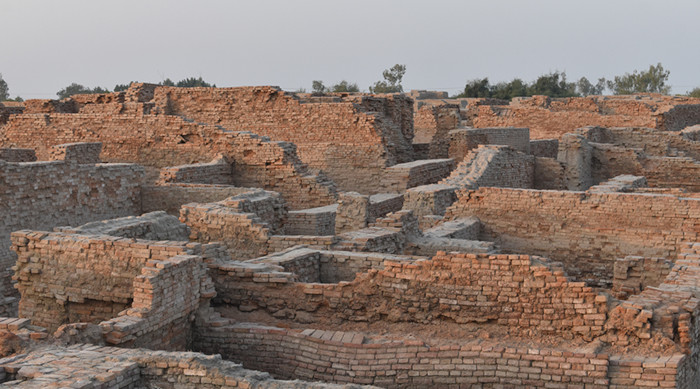
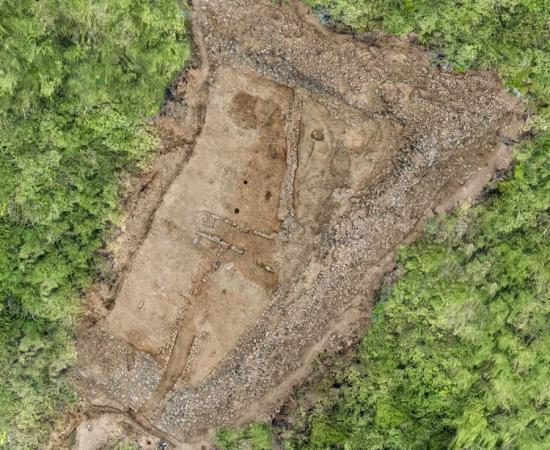
A view of DK-G South, facing north-west, from December 2023, highlighting the complexity of the standing architecture at Mohenjo-daro. (Photograph by Adam S. Green/Antiquity Publications Ltd)
The Distribution of Indus Seals
This egalitarian approach was particularly true with regard to the distribution of the famous Indus seals, which were tools of business and trade. Indus seals were typically found in ordinary homes and not in public buildings, with no palaces to monopolize these tools of government.
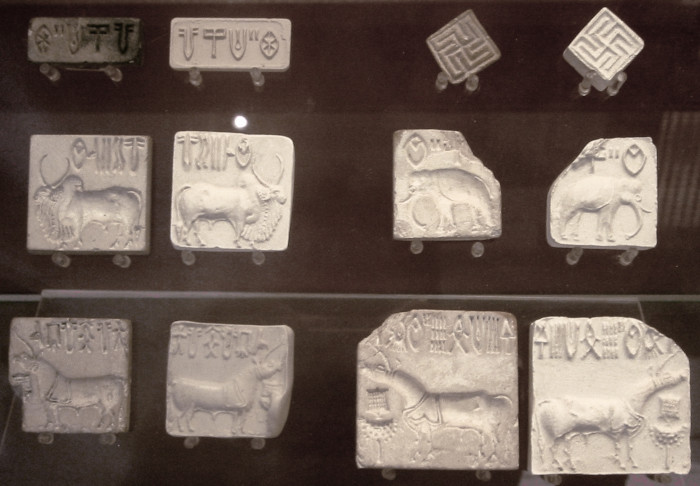
Stamp seals of the Indus Valley Civilization, some of them with Indus script; probably made of steatite; British Museum (London). (World Imaging / CC BY-SA 3.0)
It was evident that rather than a single ruler hoarding resources, the city's inhabitants worked together to ensure fair access to a good standard of life. Investment in very practical things, like drainage and street maintenance, was also a sign of working collectively for the public good.
The use of a standardized system of weights and measures across the region ensured that exchange remained fair for all citizens.
Rising Productivity Without Rising Inequality
The findings, published in the journal Antiquity, challenge the modern assumption that rising inequality is an unavoidable side effect of economic growth. Mohenjo-daro, the researchers say, stands as proof that a society can be technologically advanced and highly productive whilst also ensuring its prosperity is shared by the many, rather than the few.
Dr. Green emphasized that Mohenjo-daro is often cited as being famous for what it doesn't have, such as the absence of palaces for kings, gold-filled tombs, and no statues of rulers. But what it does have is incredibly important.
"In the period when inequality appears to be lowest, productivity appears to rise. It challenges the idea that prosperity requires us to concentrate decision-making powers in the hands of the few," said Dr. Green.
He added that this presents quite an interesting lesson for modern societies, as the Indus civilization demonstrates clearly that an urban society can be highly productive and inventive at scale, whilst also ensuring that resources and power are shared equitably. In fact, doing so may even have been essential to sustaining prosperity over the centuries.
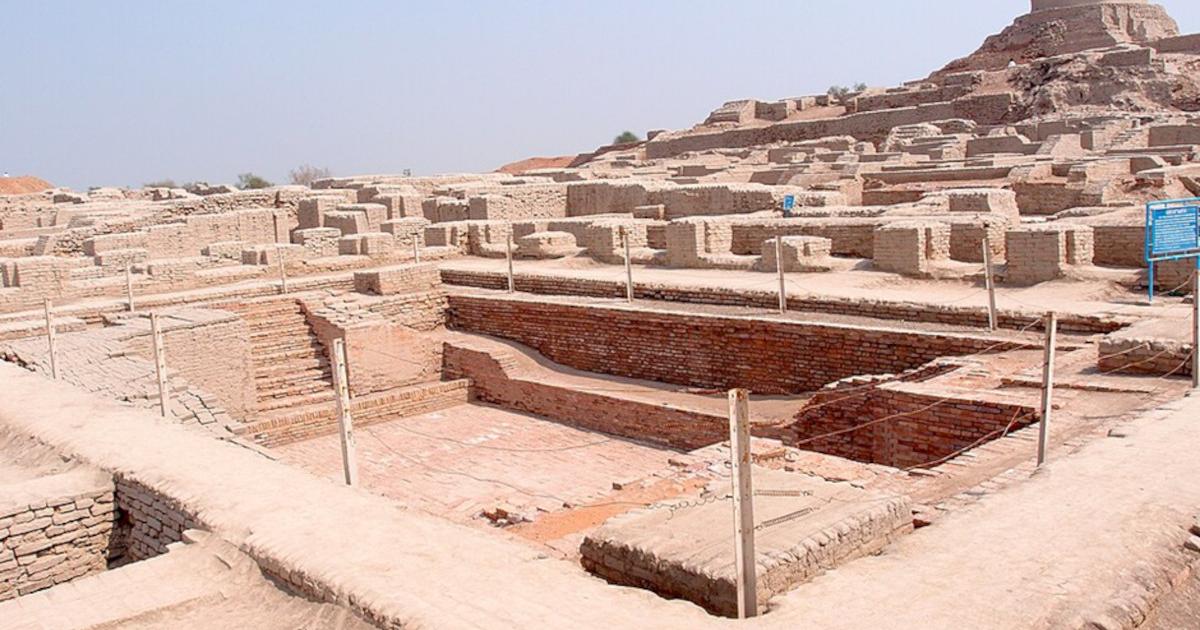
Top image: Excavated ruins of Mohenjo-daro, with the Great Bath in the foreground and the granary mound in the background. Source: Saqib Qayyum/CC BY-SA 3.0
By Gary Manners
References
Green, A. S., Alam, I., & Petrie, C. 2026. Inequality declined in the Bronze Age city of Mohenjo-daro. Antiquity. Cambridge University Press. Available at: https://www.cambridge.org/core/journals/antiquity/article/inequality-declined-in-the-bronze-age-city-of-mohenjodaro/BF07ED4E516F2127F1C3E645C9C8F462
University of York. 2026. Study reveals one of world’s first cities prospered as wealth-gap shrank. Available at: https://www.york.ac.uk/news-and-events/news/2026/research/world-first-city-prospered-wealth-gap-shrank/