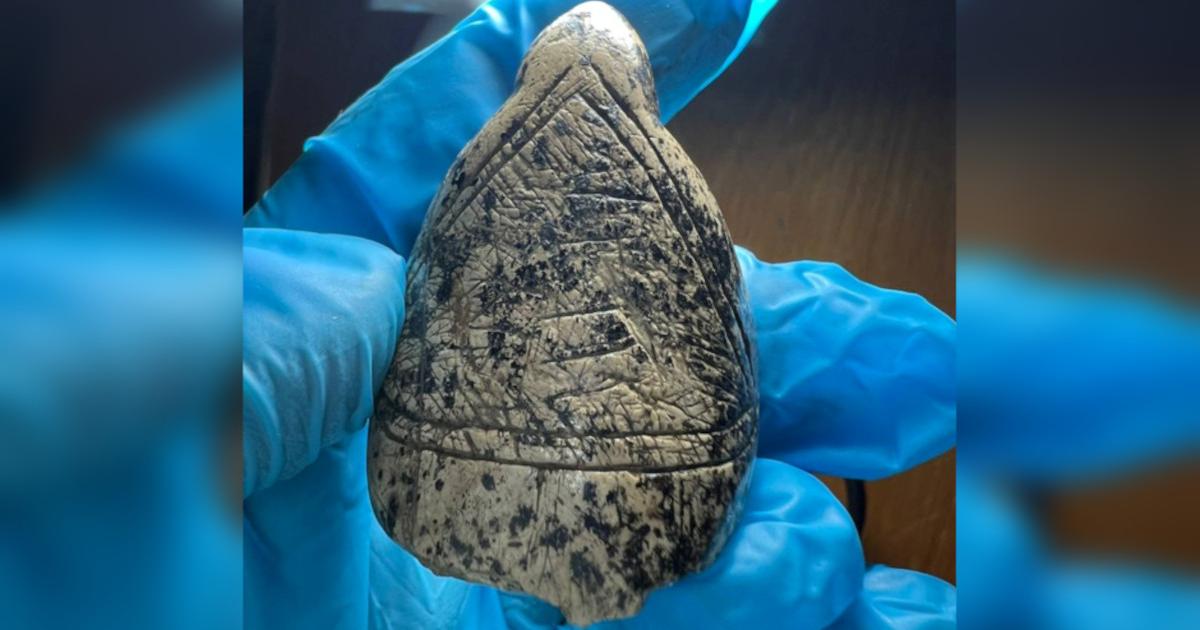

A collective of female figurines dating back 18,000 years which was discovered in Mizyn in the northern part of Ukraine shows that the artists of the Ice Age did not simply mammoth ivory into a form. According to new research the artists followed the natural lines inside the tusk and incorporated this into the design. The finding provides a rare opportunity to find evidence of artists’ intention in prehistoric work.
A material that became part of the design
This study, released in npj Heritage Science, investigated 18 Venus figurines recovered from the Mizyn site. Using high-resolution microscopy and 3D digital modeling, the group found ethno-geometric engravings that resemble Schreger and Owen patterns, or the natural structure of mammoth tusks. Apparently, the ivory carvers studied their raw material carefully before making the decision of where to cut!
The result is more than a technical detail. This indicates that mammoth ivory was not perceived as a nondescript resource, such as rock ready to be processed, but as something that possesses a clearly defined essence that has an impact on the creative process. Similar questions about craftsmanship arise in Ancient Origins’ report on carved mammoth tusks from Siberia where microscopic examination made it possible for the scientists to understand how Paleolithic craftsmanship was done.
- Archaeologists Just Found the Smallest Ice Age Sculptures Ever Made
- Ancient Siberian Carved Mammoth Ivory Yields Amazing New Clues
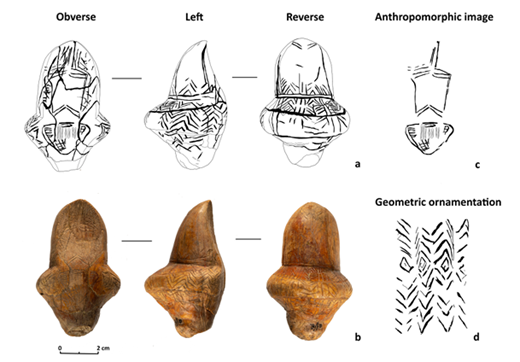
Key elements of Mizyn figurine F4, with drawing of markings. (S. Radchenko et al./ npj Heritage Science)
An independent eastern tradition
The figurines further complicate the well-established narrative surrounding the evolution of prehistoric art as a continuous line of development. The study asserts that the Mizyn artifacts belong to the category of the earliest anthropomorphic images in Europe made after the Last Glacial Maximum, following a gap of roughly 1,000 to 3,000 years in the production of human figurines. According to researchers, figurine production came back to life earlier in Eastern Europe than in the West and that later western examples do not reproduce the internal tusk patterns seen at Mizyn.
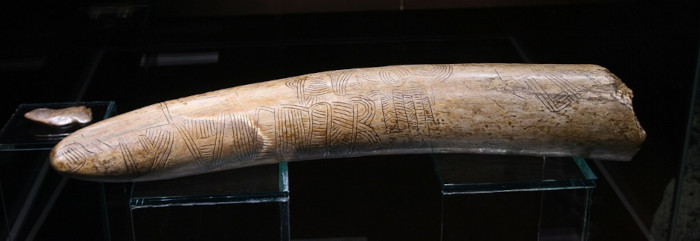
Engraved mammoth tusk displayed at the National Museum in Prague. (Petr Novák/CC BY-SA 2.5)
Dr Andrew Needham of the University of York said the evidence indicates that, “Ice Age artists in Eastern Europe forged their own independent artistic path rather than simply following trends from Western Europe,” according to the University of York announcement. The conclusion adds a new layer to the long debate over “Venus” figurines, whose possible social, symbolic and ritual meanings remain unsettled.
- Monumental Mammoth-Bone Structure Built 25,000 Years Ago
- Ancient Expressions: The World’s Oldest Works of Prehistoric Art
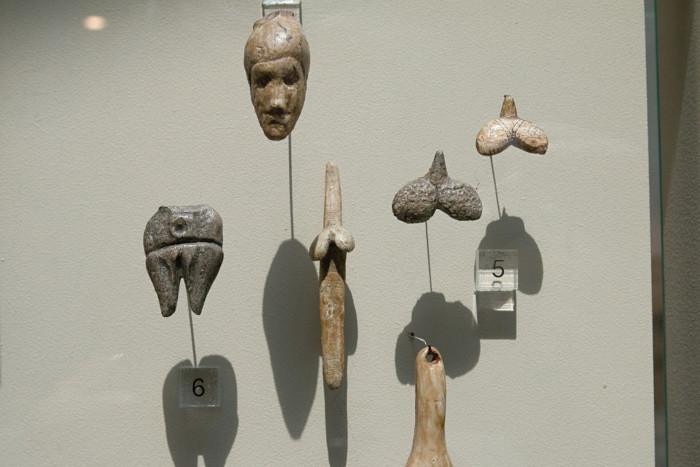
Female figurines from Dolní Věstonice, made from mammoth ivory, about 28,000–22,000 years ago (Zde/CC BY-SA 4.0)
Digital preservation amid war
Urgent preservation efforts have contributed to making this study possible. The figurines in question are part of the collection of the National Museum of History of Ukraine that is located in Kyiv. The war that Russia is waging against Ukraine does not permit access of researchers to the physical objects. Digital scanning has facilitated the creation of detailed records that can be studied without repeated handling and enabled preservation for future needs.
The international project brought together researchers from Ukraine, Norway, Germany and the United Kingdom, with support from a Marie Skłodowska-Curie Action grant. Dr Aimée Little of York described the finding as “an extraordinary window into how Palaeolithic peoples perceived and engaged with their material world.” It also reinforces a broader lesson from other Ice Age art discoveries: small marks on ancient materials can reveal choices, skills and regional traditions that finished objects alone may conceal.
The international project brought together researchers Ukraine, Norway, Germany, and the UK with aid from a Marie Skłodowska-Curie Action grant. According to Dr Aimée Little from York, the discovery is “an extraordinary window into how Palaeolithic peoples perceived and engaged with their material world.” It also supports a larger lesson from other discoveries in Ice Age art - minuscule traces of ancient materials have the potential to tell us about choices, expertise, and cultures that otherwise cannot be understood.
The researchers now hope that further digital study will clarify how artistic expression developed across Europe. At Mizyn, the evidence already points to an inventive form of mammoth ivory art in which the tusk was not merely the canvas. Its natural patterns helped write the design.
Top image: One of the Mizyn figurines examined in the recent study. Source: University of York
References
BBC News. 16 September 2026. Mammoth tusk patterns used in Ice Age art - study. Available at: https://www.bbc.com/news/articles/cjvgy5ew3xkdo
Novák, P. 2 September 2007. Mammoth tusk engraving venus. Available at: https://commons.wikimedia.org/wiki/File:Mammoth_tusk_engraving_venus.jpg
Radchenko, S. 11 September 2026. Internal structure of Mammoth ivory inspired the design of Mizyn (Ukraine ) Upper Palaeolithic figurines. Available at: https://www.nature.com/articles/s40494-026-02988-5
University of York. 16 September 2026. Ice Age carvers used mammoth tusk patterns to create unique art, study finds. Available at: https://www.york.ac.uk/news-and-events/news/2026/research/ice-age-carvers-mammoth-tusk-patterns/