

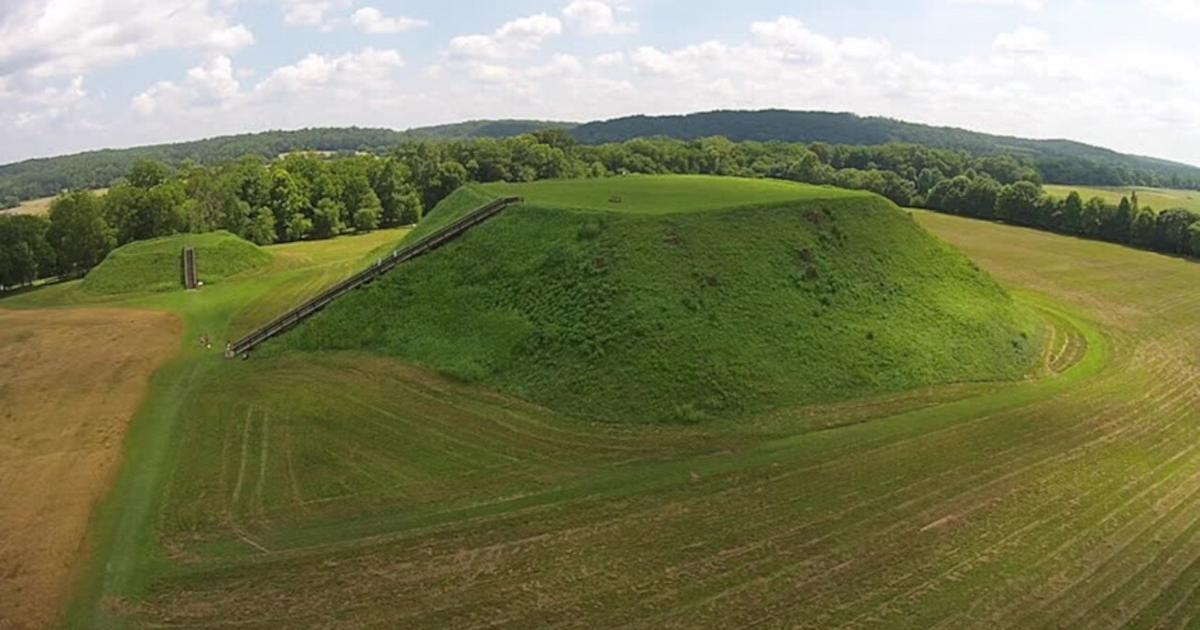

Chocolate may have been on the menu at great communal feasts in North America centuries earlier than anyone imagined. A new study published in the journal PLOS One has identified ancient DNA from Theobroma cacao – the plant behind chocolate – absorbed into pottery from the Etowah site in Georgia. This offers the first firm evidence that cacao consumption was part of the Mississippian world nearly 1,000 years ago.
The find indicates that this ancient cacao was far from its original growing area and it coincides with the archaeological record of the large city, Etowah, being contemporaneous with Chaco Canyon in New Mexico, where all of the Pueblo ancestors drank a chocolate beverage during the time period spanning the two civilizations. For archaeologists, this indication points to the possibility of an extensive trade network at work in moving exotic items into the Eastern Woodlands.
Chocolate in the Feasting Pits
The Etowah site, known today as the Etowah Indian Mounds State Historic Site near Cartersville, Georgia, covers some 54 acres (22 hectares) along the Etowah River and includes six earthen mounds, a village and broad plazas. At its peak in the 14th century it was one of the most important centers of the Mississippian culture, but the new evidence comes from two centuries earlier, when the community was just beginning its rise.
Around the 11th and 12th centuries AD, the people who lived at Etowah created their first platform mound by excavating soil. While doing so, they left behind a number of borrow pits, which were afterwards filled with refuse from communal feasting. Pottery sherds were found by archaeologists excavating these pits during the 1950s, and analysis of residue on two of the Etowah Complicated Stamped vessels, which had been stored in museums until recently, provided DNA evidence of cacao.
- The Moundbuilders: North America's Little-known Native Architects
- The Ancient History of Chocolate, Gift of the Gods
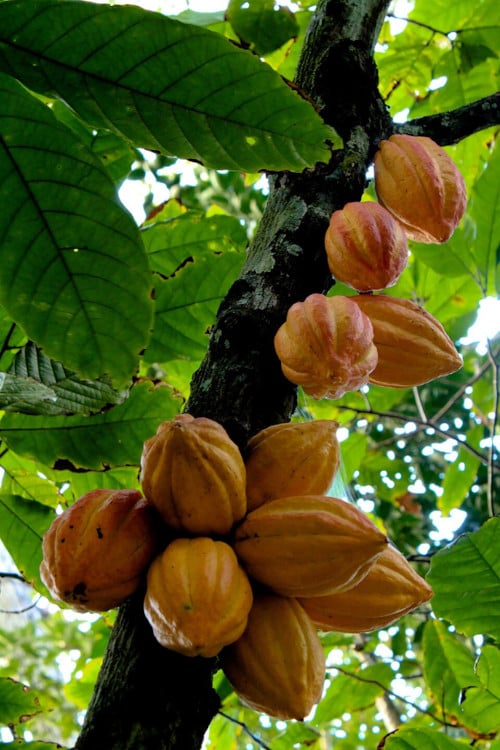
Cacao pods growing on a Theobroma cacao tree. The tropical plant could never have grown in Georgia's climate, so its presence at Etowah points to long-distance exchange. (Luisovalles / CC BY 3.0)
Outwitting the Black Drink
There had been previous attempts to identify traces of chocolate at the Etowah site. In 2017, researchers attempted a similar study using mass spectrometric analysis on residue contained in 31 sherds, which showed evidence of stimulation with caffeine and theobromine. But there was a problem: yaupon holly, a local plant used to brew the caffeinated ceremonial "Black Drink", contains the very same chemical markers, so chemistry alone could not separate a cup of cacao from a cup of yaupon tea.
The new study, led by archaeologist Adam King of the University of South Carolina with geneticists from the French research institute CIRAD, turned instead to archaeogenomics. As reported by Phys.org, the team sequenced DNA trapped in the pottery residues and filtered out contamination from soil bacteria and other plants, ultimately identifying dozens of tiny genetic fragments unique to Theobroma cacao. The fragments showed the classic damage patterns of genuinely ancient DNA, ruling out modern contamination.
- Chocolate Trail: Sacred Maya Cacao Groves Found In Mexico's Yucatan
- Failed Crops Caused Economic Crash for Mayan Chocolate Currency
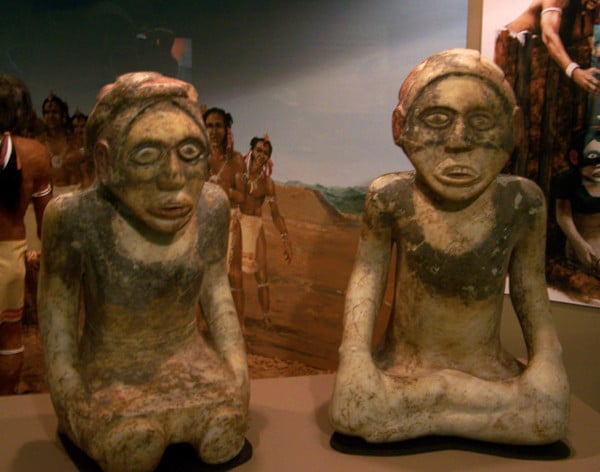
Stone effigy statues excavated from Mound C at Etowah, dating to 1250–1375 AD, a reminder of the sophisticated ceremonial life of this Mississippian city. (Heironymous Rowe / CC BY-SA 3.0)
A Taste of Power from Distant Lands
The cacao beans that were eventually consumed at Etowah had to have travelled either hundreds or thousands of miles from Central or South America, as cacao grows strictly in tropical areas. In a preliminary genetic comparison study, the researchers were surprised to find that the two beans were most closely related to cacao varieties from the Amazon region of South America. However, the researchers cautioned that additional data would need to be collected in order to determine an exact source for the beans.
The researchers believe that cacao was not an everyday beverage, but was likely reserved for special occasions, such as when feasting was associated with the construction of sacred earthworks - events that have been categorized by archaeologists as communal renewal ceremonies. There are similarities to the way the Maya used cacao as both a form of currency as well as ceremonial food, and how elites in Chaco ate chocolate from specially designed jars. Similarly, the elites at Etowah likely used the beverage for the same purpose, to enhance their status and to form alliances.
"This discovery at Etowah asks us to broaden our understanding of the networks that distributed cacao throughout the Americas before European colonization," the study authors wrote in PLOS One.
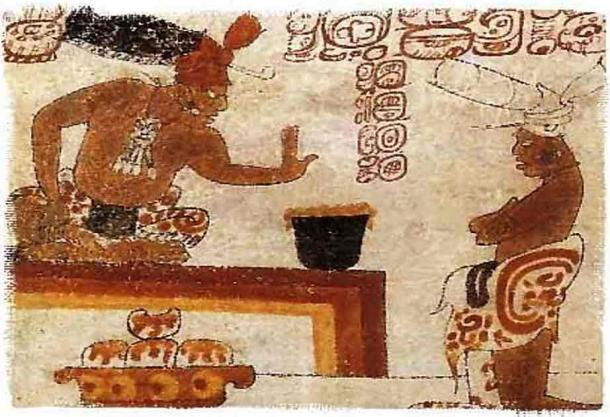
A Maya lord forbids an individual from touching a container of chocolate. (Public Domain)
Rewriting the Map of Ancient Exchange
According to Archaeology News Online Magazine, the ancient DNA from a variety of foods (and beverages) has helped answer one of the big unanswered questions about the drink known as the "Black Drink." While previous efforts using chemical methods were inconclusive in identifying the sources for these drinks, many researchers are now confirming that people living in what we now refer to as the Mississippian world participated in the same traditions that brought chocolate to the New World.
A further conclusion that researchers can draw from the DNA evidence is that trade networks existed well before the arrival of Europeans in the Southeast. Goods and ideas were exchanged between mound-building societies in the Eastern Woodlands and people living in local areas of the tropics. Moving forward, future research will investigate additional archaeological remains associated with cacao in order to better determine where the cacao originated and the routes it traveled into the ancient Southeastern United States.
Top image: Etowah Indian Mounds Historic Site near Cartersville, Georgia, where cacao DNA was identified in pottery from ancient feasting pits. Source: Archaeo-Geophysical Associates/CC BY-SA 3.0
By Gary Manners
References
Arnold, P. 2026. Ancient DNA reveals cacao was consumed in present-day Georgia 1,000 years ago. Available at: https://phys.org/news/2026-08-ancient-dna-reveals-cacao-consumed.html
King, A., Powis, T. G., Argout, X., et al. 2026. Cacao in the Mississippian World: Archaeogenomic evidence for T. cacao consumption at the Etowah Site, Georgia. PLOS One, 21(8 ). Available at: https://journals.plos.org/plosone/article?id=10.1371/journal.pone.0353607
Radley, D. 2026. Cacao may have been consumed at feasts by Mississippian people nearly 1,000 years ago. Archaeology News Online Magazine. Available at: https://archaeologymag.com/2026/08/cacao-at-mississippian-feasts-at-etowah/






















