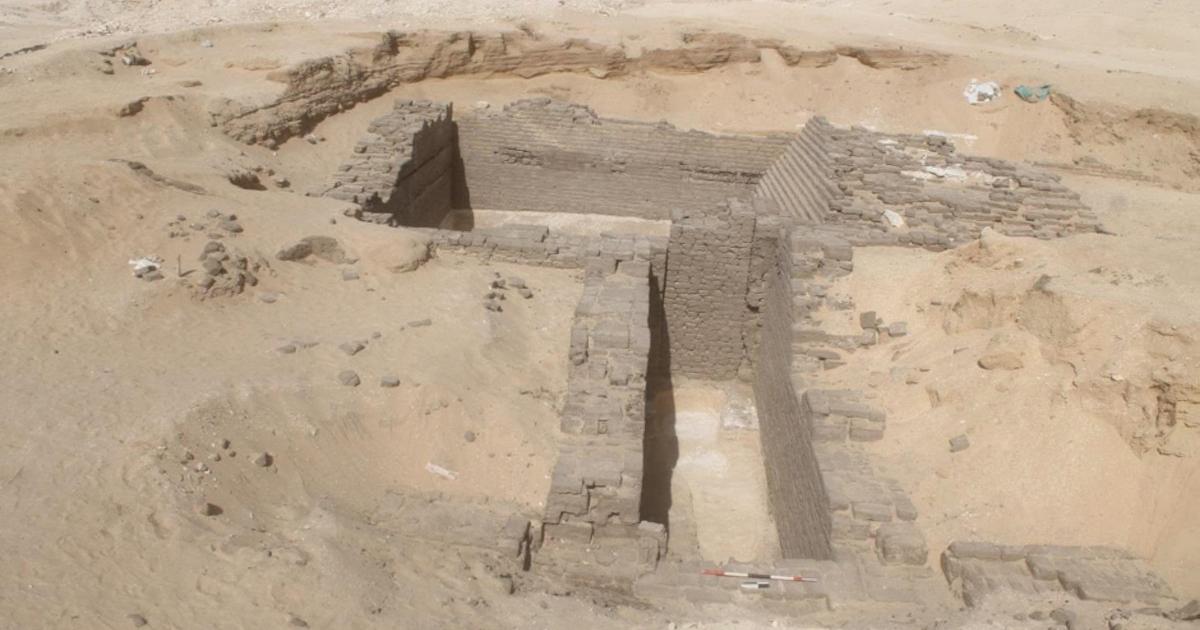

An Egyptian archaeological mission has unearthed a pair of 5,000-year-old tombs in Minya Governorate that are shedding new light on the evolution of ancient Egyptian funerary architecture. The discovery at the Jabal Al-Tayr site includes two tombs dating to the Early Dynastic Period, along with numerous burials from the Predynastic and Late Periods. The unique geometric design of these structures suggests they represent a crucial transitional phase in engineering that eventually led to the construction of the iconic Egyptian pyramids.
The excavation, led by the Supreme Council of Antiquities, took place on the eastern bank of the Nile in an area long recognized as a significant burial ground. According to Egypt’s Minister of Tourism and Antiquities, Sherif Fathy, the find provides valuable evidence for tracing the development of tomb architecture across different historical eras, confirming Jabal Al-Tayr's status as a key necropolis used continuously for millennia.
- Mound to Mountain: The Long Road to the Great Pyramid
- The Magnificent Step Pyramid of Djoser in Saqqara – Now Open!
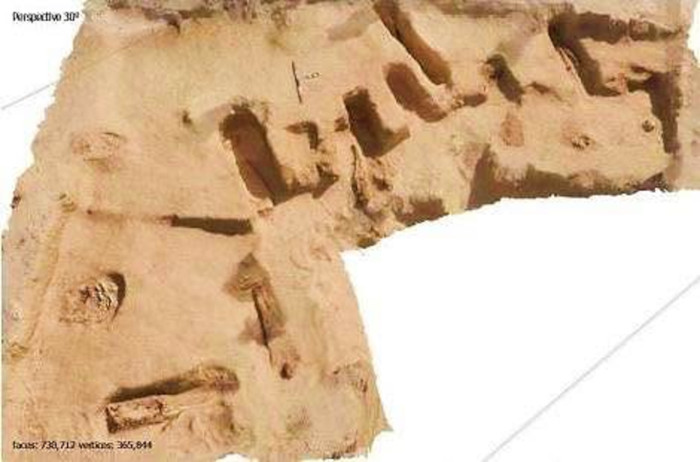
Early Dynastic Period necropolis found at Jabal Al-Tayr site includes two tombs dating to the Early Dynastic Period. (MOTA)
A Crucial Link to the Pyramids
The most significant aspect of the discovery lies in the architectural design of the first Early Dynastic tomb. Mohamed Abdel Badie, Head of the Egyptian Antiquities Sector, explained that the tomb features walls that gradually decrease in thickness from the base to the top. This distinct tapering design is considered an early engineering concept aimed at improving stability, which later evolved into the techniques used to build step pyramids and, ultimately, the true pyramids.
Although the first tomb was subjected to quarrying in later periods, surviving sections have preserved crucial details about ancient construction methods. Archaeologists found oxide lines on the stone surfaces, which served as guidelines for precise stone cutting. Additionally, large wooden supports were discovered embedded within the structure to reinforce the walls, offering a rare glimpse into the building techniques of the time.
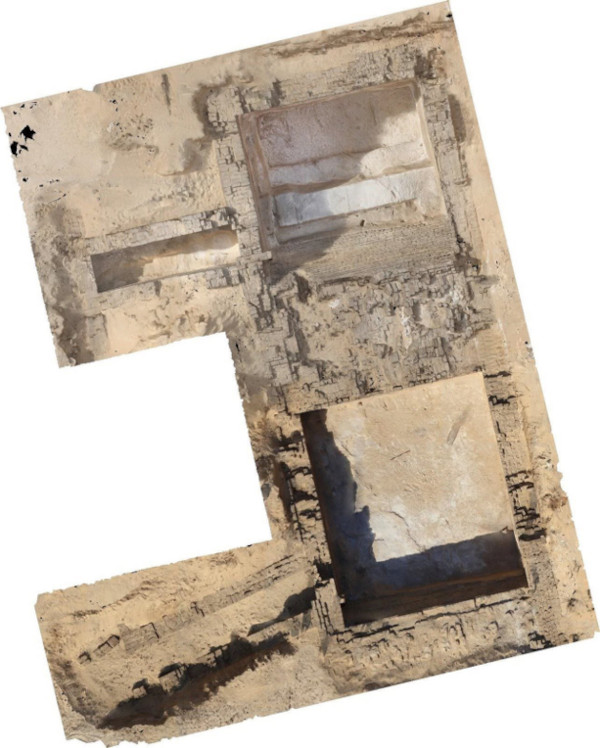
Two adjacent tombs - the first features walls that gradually decrease in thickness from the base to the top. (MOTA)
Parallels with Royal Tombs at Abydos
The second tomb, located just south of the first, follows a nearly identical architectural layout but remains in a remarkably better state of preservation as it escaped later quarrying activities. Preliminary studies by the research team indicate striking similarities between the design of these newly discovered tombs and the famous tomb of King Den at Abydos.
King Den was one of the most prominent rulers of Egypt's First Dynasty, and his tomb is renowned for its advanced architecture, including the first known use of a staircase leading to the burial chamber. The resemblance between the Jabal Al-Tayr tombs and King Den's royal burial complex reinforces the archaeological importance of the Minya site and suggests a shared architectural tradition during the early stages of Egyptian state formation.
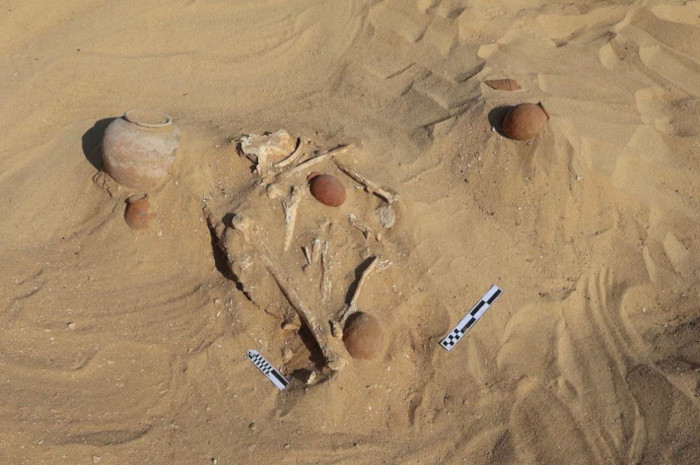
Predynastic burials were found with individuals in a crouched position. (MOTA)
A Timeline of Ancient Burials
In addition to the Early Dynastic tombs, the archaeological mission uncovered part of a Predynastic cemetery. The burials from this earlier era featured individuals placed in a crouched or contracted position, wrapped in woven plant mats that have largely decomposed over the millennia.
Alongside these early graves, researchers found black-topped pottery vessels characteristic of the Naqada II and Naqada III periods, which date back to before the unification of Egypt. The presence of these artifacts highlights the long-standing use of Jabal Al-Tayr as a sacred burial ground long before the first pharaohs ruled.
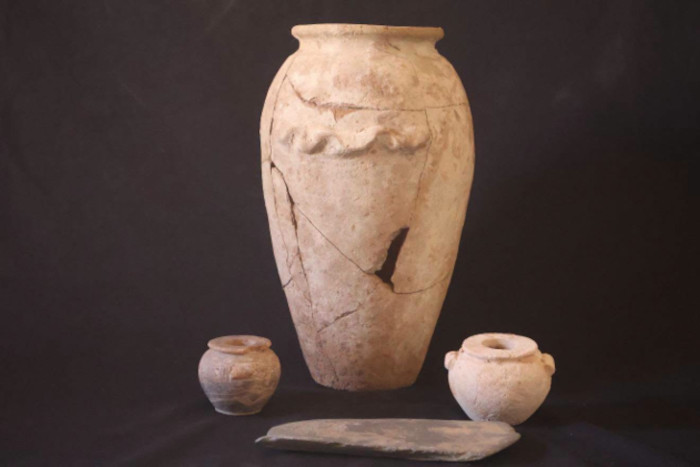
Funerary items found at the necropolis. (MOTA)
The team also discovered several individual and collective burials dating to the much later Late Period. Some of these deceased individuals were interred within wooden coffins, the remnants of which have survived despite significant decay. Together, these finds paint a comprehensive picture of a burial landscape that evolved and adapted across multiple phases of ancient Egyptian history, from the Predynastic era through the Early Dynastic Period and into the Late Period. Excavations at the site are ongoing, with researchers anticipating further discoveries that will continue to reshape our understanding of ancient Egypt's earliest builders.
Top image: 5,000-year-old tombs found in Minya rewrite the origins of Egyptian pyramid architecture. Source: MOTA
By Gary Manners
References
Archaeology Magazine. 2026. 5,000-year-old tombs found in Minya rewrite the origins of Egyptian pyramid architecture. Available at: https://archaeologymag.com/2026/06/5000-year-old-tombs-in-egypt-origins-of-pyramids/
Daily News Egypt. 2026. New Jabal Al-Tayr discovery reshapes understanding of early Egyptian funerary architecture. Available at: https://www.dailynewsegypt.com/2026/06/20/new-jabal-al-tayr-discovery-reshapes-understanding-of-early-egyptian-funerary-architecture/
Heritage Daily. 2026. Ancient Egyptian tombs discovered at Jabal Al-Tair in Minya. Available at: https://www.heritagedaily.com/2026/06/ancient-egyptian-tombs-discovered-at-jabal-al-tair-in-minya/158411
Xinhua. 2026. Nearly 5,000-yr-old architecturally unique tombs uncovered south of Egyptian capital. Available at: https://english.news.cn/africa/20260620/480535c0c5a64262b272c231b588fd1f/c.html