
A stunning new archaeological discovery at Gordion, the ancient capital of the Phrygian Kingdom in central Turkey, may rewrite what we know about the funerary traditions of King Midas's dynasty. A remarkably well-preserved 2,800-year-old royal tomb has been unearthed in a monumental burial mound near the site's museum, revealing a cremation burial, a banquet set of finely crafted bronze vessels, and tantalizing evidence of elite Phrygian life and death in the 8th century BC.
The announcement was made by Turkey's Minister of Culture and Tourism, Mr. Mehmet Nuri Ersoy, in collaboration with the Penn Museum and Professor C. Brian Rose, director of the Gordion Excavation Project. According to Rose, "The excavation of these tumuli has yielded a wealth of information about the lives of Gordion's rulers and their associates," states the Penn Museum release.
Gordion, located nearly 60 miles (96 km) southwest of modern Ankara, was the heart of the Phrygian kingdom during the early first millennium BC. It is most famously associated with King Midas - a real ruler whose reign around 740-700 BC brought the city to its zenith, and whose mythical "golden touch" persists in legend. While no inscriptions were found in the newly excavated tomb to directly identify the individual, the richness and date of the grave goods strongly suggest a member of Midas's royal family.
- Lost Kingdom that Crushed King Midas Identified in Turkey
- Sacred Structures Built by Phrygians in 800 BC Unearthed in Turkey

Penn Museum archaeologist Dr. C. Brian Rose, Director of Excavations at Gordion, at the Gordion site in Ankara, Turkey. (Tom Stanley/Penn Museum)
An Unprecedented Royal Cremation
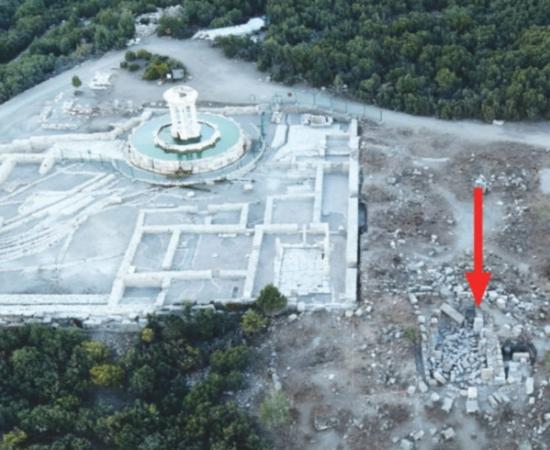
The burial chamber was found hidden beneath a 21-foot-tall (6.5 meters), 196-foot-wide (60 meters) mound labeled Tumulus T-26, and was detected using remote sensing techniques by Professor Yücel Şenyurt of Haci Bayram Veli University. After four months of excavation, the wooden chamber was revealed. Though its roof had collapsed, the burial remained untouched by looters for nearly three millennia.
"The most surprising feature is that the grave was a cremation rather than an inhumation," Rose explained, as reported by Popular Mechanics. "Otherwise, our earliest cremation is over a century later, so this is an indication of the high status of the decedent."
This revelation challenges previous assumptions that cremation practices only appeared at Gordion a century later, suggesting that Phrygian elites may have adopted diverse burial rites earlier than once thought.
Feast for the Afterlife
Among the grave goods were bronze cauldrons, including two large and several smaller ones, alongside jugs, bowls, and iron tools. Many vessels still bear traces of textiles, offering a glimpse into the woven finery once placed inside or wrapped around them. The vessels likely served in a funerary banquet, prepared to honor the dead during the ritual and to accompany them in the afterlife.
"These finds point to the centrality of feasting in elite burial rites and to Gordion's production of high-quality bronze and textiles," said Rose. "Moreover, the traces of textiles on the vessels provide evidence for one of Gordion's most important industries." (Penn Museum)
The tomb's contents and location place it near in time and space to the famous "Midas Mound" (Tumulus MM), a colossal tomb dating to around 740 BC thought to belong to Midas's father. Though T-26's occupant remains unnamed, the new burial is likely part of the same royal lineage.
Gordion's Growing Legacy
The new find adds to a long list of spectacular discoveries at Gordion, including the oldest known standing wooden building (Tumulus MM's tomb chamber), the earliest known colored stone mosaics (825 BC), and an exquisitely carved gilded ivory sphinx, once part of a royal throne.
In 2023, Gordion was officially added to the UNESCO World Heritage Site list, underscoring its global importance. Recent collaborations between Turkish and international archaeologists, enabled by an initiative from Turkey's Ministry of Culture and Tourism, have allowed for extended year-round excavations - a major shift from traditional summer-only fieldwork.
Another recent burial uncovered in Tumulus T-52-a child's tomb containing more than 3,000 amber beads imported from the Baltic-further highlights Gordion's extensive trade links and cosmopolitan reach.
As Rose notes:
"It was during the reign of Midas that Gordion enjoyed its greatest power and prosperity... Contemporary historical records from Assyria suggest that he commanded one of the most powerful armies in Asia Minor."
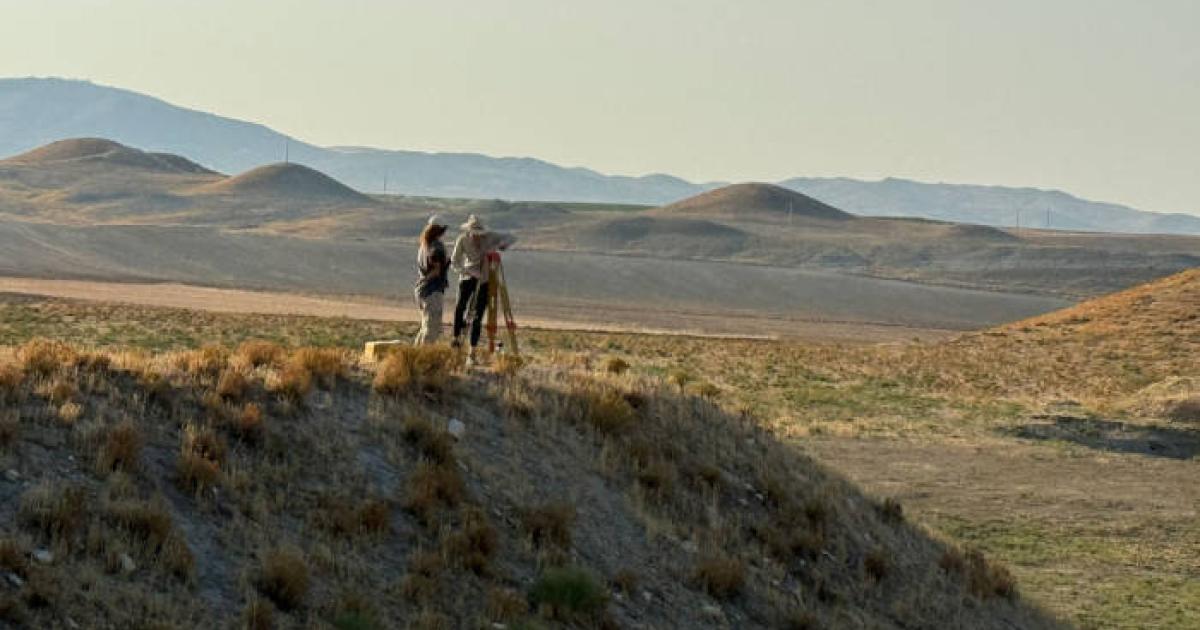
Top image: Studying the mounds and what might rest beneath, researchers gather near the citadel of Gordion, Turkey. Source: Photo courtesy of Professor Brian Rose for the Penn Museum.
By Gary Manners