

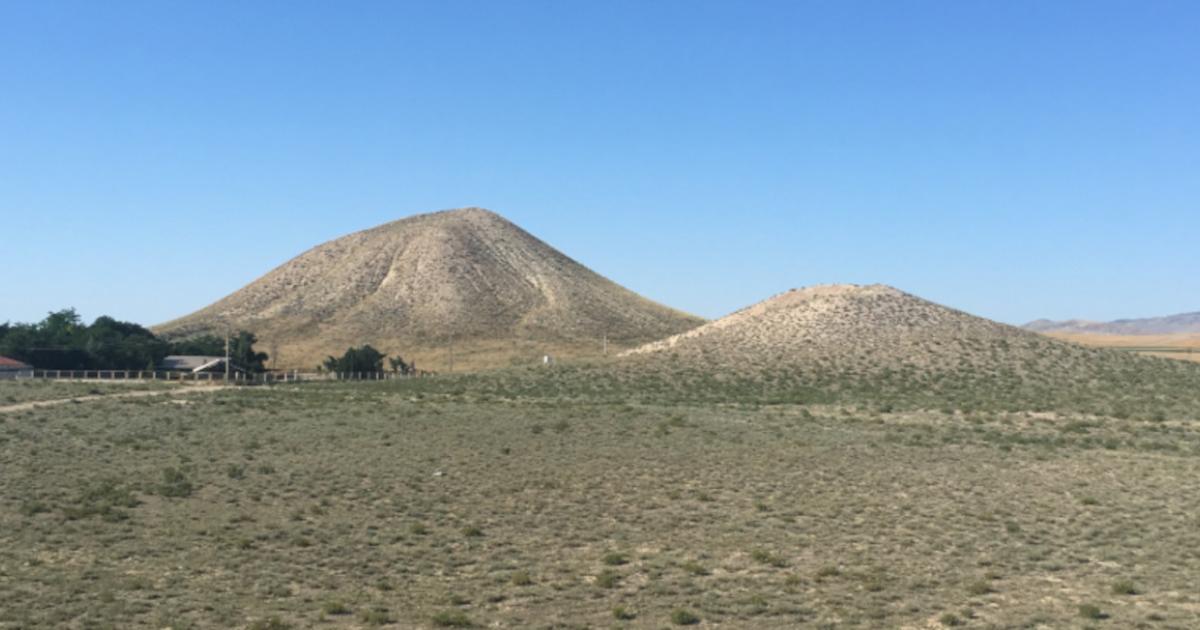

The huge burial mound long called the Midas Mound at Gordion is increasingly being understood not as King Midas’s own grave, but as the tomb of his father, Gordias. A new report in Hürriyet Daily News has returned attention to that reassessment, which turns a familiar legend into a more revealing dynastic story. The conclusion rests on the mound’s eighth-century BC date, the status of its occupant, and the historical record showing that Midas outlived the chamber’s construction. Far from diminishing the famous king, the interpretation suggests that the Midas Mound was one of his earliest and most imposing statements of royal authority.

Gordion’s Citadel Mound, with the Early Phrygian Terrace Building Complex in front and Tumulus MM in the background. (Gordionproject / CC BY-SA 4.0)
A Tomb Reconsidered
Tumulus MM—the archaeological name for the Midas Mound—was opened in 1957 by a University of Pennsylvania team led by Rodney S. Young. Its timber-lined chamber contained the remains of an older man, wooden furniture, bronze vessels and evidence for a lavish funerary banquet, while the mound itself rises about 53 metres (174 feet) above the plain. Penn Museum’s Gordion Archaeological Project identifies the burial as that of Gordias, the father of the historical ruler behind many of the later stories of King Midas.
“Midas is such a famous figure of antiquity that his father could never take precedence over his son,” Kadim Koç, chairman of the Gordion Foundation, told Hürriyet Daily News.
- King Midas Era Royal Tomb Excavated at Gordion, Turkey
- Would You Like to Try the King Midas Feast? What Was Served at a 2,800-Year-Old Funeral
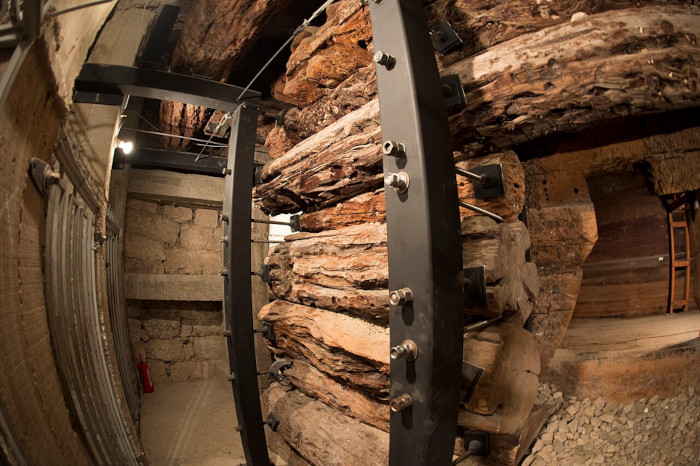
The wooden grave chamber of Tumulus MM, now surrounded by a modern protective framework. (Dosseman / CC BY-SA 4.0)
The Date That Changed the Story
The important clue is chronology. In their detailed account of Tumulus MM, archaeologists Richard Liebhart and Lucas Stephens place the construction of the chamber at around 740 BC, whereas Midas appears in Assyrian records as late as 709 BC. Nothing recovered from the tomb names the deceased, so Gordias cannot be presented as a forensic certainty; nevertheless, the date, exceptional scale and royal assemblage make Midas’s father the strongest interpretation. This distinction brings the archaeological Midas closer to history than myth, alongside the wider study of Phrygia and research into the Mysterious Midas City.
The chamber’s survival is extraordinary in its own right. Built with pine and juniper, and containing cedar in its floor and coffin, it is described by UNESCO as the oldest known standing wooden building in the world, dating to about 740 BC. Its materials, planned double roof and stone packing protected a royal burial that was never intended to be reopened. The result is a rare record of Phrygian carpentry, woodcarving and metalwork rather than merely a monument to a king of the “golden touch.”
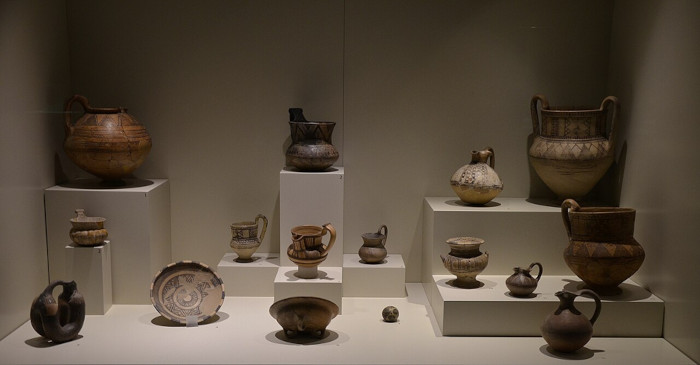
Bronze finds from Gordion’s Great Tumulus in Ankara’s Museum of Anatolian Civilizations. (Carole Raddato / CC BY-SA 2.0)
A Landscape of Phrygian Power
The Midas Mound was not an isolated marvel. Gordion, the Iron Age capital of the Phrygian kingdom, is surrounded by more than a hundred tumuli; their size and positioning made royal power visible to people moving across central Anatolia. It was a city of striking religious and civic architecture as well, as new work on Phrygian sacred structures has shown. UNESCO inscribed Gordion on the World Heritage List in 2023, citing the cluster of monumental burial mounds as an exceptional “landscape of power” in the Iron Age Near East. The story has also been enlarged by the 2025 excavation of nearby Tumulus T-26, a separate royal burial with cremation and banquet vessels that may connect to the same dynasty, as reported in Ancient Origins.
The treasures of Tumulus MM illuminate the ceremony behind the mound. Chemical study of residues in its vessels indicates that mourners shared a feast of roasted sheep or goat stew with lentils and spices, accompanied by a mixed drink of grape wine, barley beer and honey mead; the meal is explored in this Ancient Origins report. Bronze cauldrons, bowls, serving stands and fibulae point to a court that invested heavily in display, craft and commemoration. Reading the Midas Mound as Gordias’s tomb therefore shifts the focus from a fable about gold to the real political theatre of a Phrygian succession.
Top image: ‘Midas Mound’ Tumulus (left) and Tumulus P at Gordion, Turkey. Source: Archaeologist1950 / CC BY-SA 4.0
By Gary Manners
References
Hürriyet Daily News. 2026. Gordion tumulus identified as tomb of King Midas’ father. Available at: https://www.hurriyetdailynews.com/amp/gordion-tumulus-identified-as-tomb-of-king-midas-father-225462
Liebhart, R. and Stephens, L. n.d. Tumulus MM. Available at: https://www.penn.museum/sites/expedition/tumulus-mm/
Penn Museum. 2025. 2,800-Year-Old Royal Tomb Linked to Midas Dynasty Discovered in Gordion, Türkiye. Available at: https://www.penn.museum/about/press-room/press-releases/2-800-year-old-royal-tomb-linked-to-midas-dynasty-discovered-in-gordion-tuerkiye
Penn Museum. n.d. Gordion Archaeological Project. Available at: https://www.penn.museum/research/project.php?pid=24
UNESCO World Heritage Centre. 2023. Gordion. Available at: https://whc.unesco.org/en/list/1669/






















