
Archaeologists working beside the Metsamor Historical-Archaeological Museum-Reserve in western Armenia have dug down through a single stone tomb and found burials stacked across very different ages. Earlier seasons exposed an upper layer holding gold jewelry and a coin of Octavian Augustus. This year, near the floor, the team reached what the excavators call the main burial, with horse bones, pottery and a bronze dagger of the Lchashen type.
According to Armenpress, the state news agency, the work is run by the Service for the Protection of Historical Environment and Cultural Museum-Reservations, a state non-commercial organization under Armenia's Ministry of Education, Science, Culture and Sport. Armenpress reported the results on October 27, 2026. The service's statement, as quoted in English by Armenpress, describes the site as a burial chamber that was "used over a long period and reused in different periods," a reading that rests, for now, on a preliminary dating of the finds.
A Stone Chamber Inside a Cromlech
The tomb sits on a plot of land owned by private individuals, right next to the protected reserve. Excavation began there two years ago and continued this year. The service gave Armenpress a short description of the structure itself:
"The archaeological structure under investigation is a stone-built burial chamber surrounded by a cromlech approximately 20 meters in diameter. The structure is built of tuff and basalt stones."
At the center stands a large stone-cist tomb of the same stone, which the service measured at about 6 by 4 meters on the inside. Panorama, another Armenian outlet, described the cromlech for English readers as a circular stone arrangement around the tomb.
The finds came out in stages over several seasons, since earlier digging exposed the top layer while the 2026 season went deeper and reached the oldest material. This order matters, because the headline objects, the gold earrings and the Augustus coin, were not the discovery of this year at all.
Gold and a Coin of Augustus at the Top
According to the service, earlier excavations "had uncovered a burial from the Classical period in the upper layer of the tomb, accompanied by a rich assemblage of grave goods." Armenpress reports that these included gold jewelry, a coin and other objects of the Classical period, dating to the first century AD.
News.am, which also carried the service's announcement, lists the eye-catching pieces as gold earrings, a button, a coin of Octavian Augustus and a bronze dagger. Augustus ruled the Roman Empire from 27 BC to AD 14, as the Armenian outlet 301.am notes, so a coin of his fits the first century date given for the upper burial.
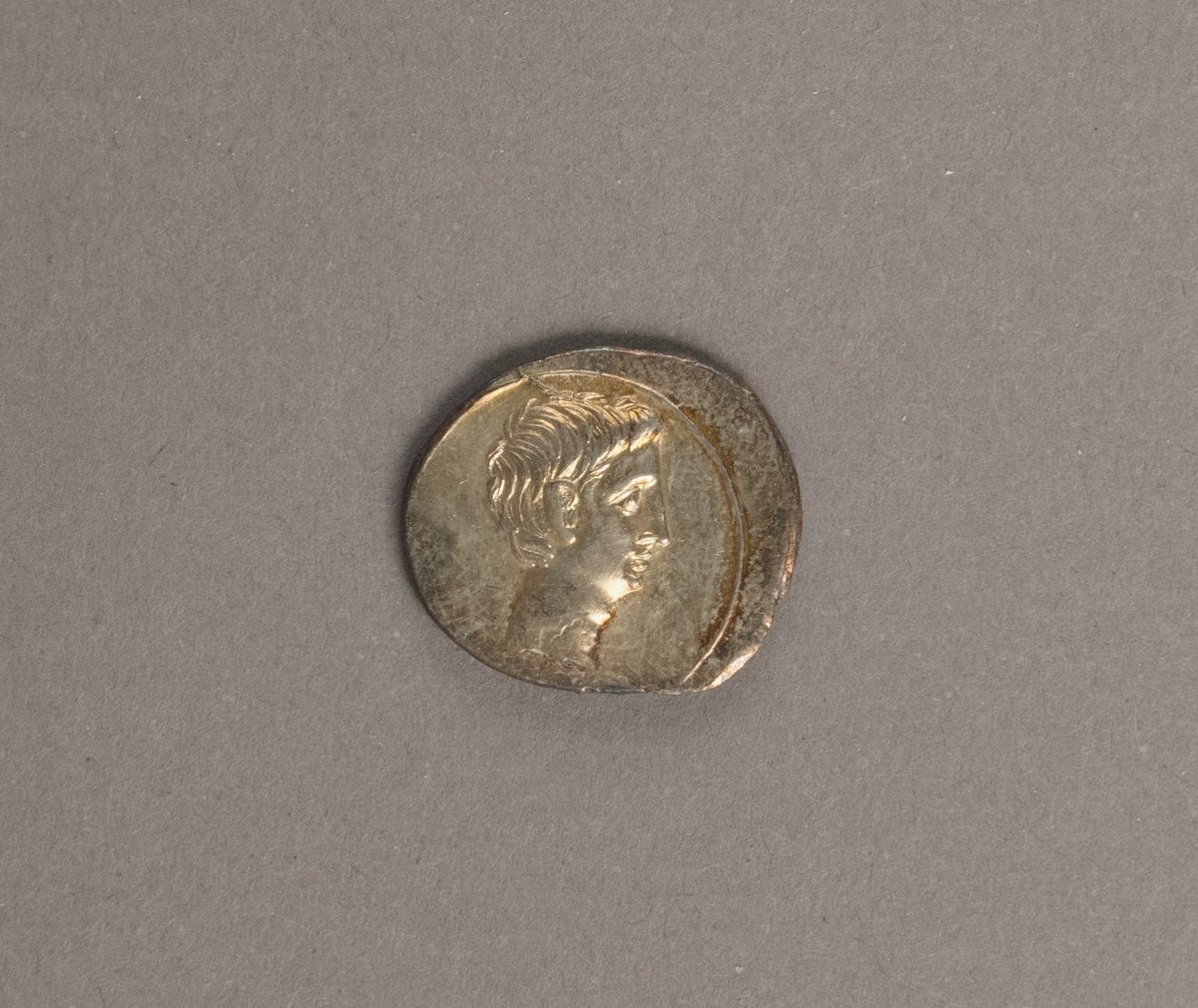
A silver denarius of Octavian, later Augustus, dated by the Metropolitan Museum of Art to about 29 to 27 BC. It is shown for context only. It is not the coin found at Metsamor, which has not been described in detail. Metropolitan Museum of Art, via Wikimedia Commons, released under Creative Commons CC0 1.0 Universal Public Domain Dedication (CC0).
What the reports do not say is just as important. None of them describe the coin in detail, give its metal, or say how it reached Metsamor. None of them identify the person in the upper burial either. A Roman coin in an Armenian grave is a tempting clue to trade or contact with Rome, but the published statements stop well short of that link.
The same restraint applies to the wording of the announcement itself, where News.am relays the service's description of the finds as "unique and exclusive," while Radar Armenia renders it as "unique and exceptional." Both renderings trace to the service's announcement, and no outside specialist has yet commented on them in the reports.
An Iron Age Burial in Between
The middle of the sequence is the least described. The service reports that the 2026 work exposed "a burial layer dating to the Iron Age, where the burial of a single individual was found, accompanied by grave goods and a large quantity of pottery."
No date range more precise than the Iron Age is given, and the grave goods are not listed. It is not yet clear whether this person was buried in the same chamber while it was still visibly a tomb, or whether the builders of the later burials knew what lay beneath them.
Horse Bones and a Lchashen Dagger at the Floor
The deepest layer is where the excavators place the original burial. Armenpress quotes the service:
"The main burial was uncovered in the lower part of the burial chamber, near the floor. Based on the preliminary dating of the materials found, it dates to the Late Bronze Age"
The service places it in the 14th to 13th centuries BC.
That layer contained "substantial accumulations of horse bones," large quantities of pottery fragments, belt fragments, bell-shaped pendants, fragments of various bronze objects and the dagger. The word preliminary deserves weight here. The service does not say whether the date comes from the style of the objects or from a laboratory method, and no radiocarbon results are mentioned.
The dagger's type name points to a well-known site. Lchashen lies on the northwest shore of Lake Sevan, and its necropolis lay under the lake until the 1950s and was excavated after the water level was lowered, according to a 2017 study by L. A. Petrosyan in the journal Via in tempore. Petrosyan writes that the Late Bronze Age mounds there held large burial vaults with two-wheeled and four-wheeled wooden vehicles, including the Lchashen wagon.
The History Museum of Armenia holds a bronze dagger with a sheath from Lchashen, which its catalog dates to the 15th to 14th centuries BC. Its sheath bears "the embossed image of a serpent crawling upwards." The Metsamor reports do not describe their dagger in this kind of detail, so it is not yet clear how closely it matches.
Horse remains in a Late Bronze Age grave are a striking detail, but the reports do not say how many animals are represented, whether they were whole, or how they were placed. Without that, the reports offer no basis for reading the horses as sacrifices or status symbols.
What Was Metsamor?
The Armenian-Polish Archaeological Mission, a joint project with the University of Warsaw, says the settlement began at the end of the fifth or start of the fourth millennium BC and was used, with breaks, until the 17th century AD. In its prime, between the 11th and 9th centuries BC, the mission says it covered nearly 100 hectares and "was a major metallurgical centre."
Full-scale excavation began in 1965 under Emma Khanzadyan, according to the mission, and work since 2013 has been led jointly by Ashot Piliposyan and Krzysztof Jakubiak. Earlier excavations found kilns, channels for liquid metal and large containers cut into the bedrock, as Jakubiak and his University of Warsaw colleague Kinga Bigoraj summarized in a 2020 paper in the journal Antiquity.
How Metsamor Met Urartu
The later history of the Metsamor settlement is debated among the archaeologists who know it best. The mission's own website says that early in the eighth century BC the Urartian king Argishti I "laid waste to the city," after which it was partly rebuilt. Readers can follow the wider story of the Kingdom of Urartu and its expansion.
Jakubiak and Bigoraj, however, argued in Antiquity that the old idea of a forced takeover "cannot be sustained in light of the new evidence." They found no traces of destruction from the turn of the ninth and eighth centuries and described the change as "a well-planned political and economic expansion." Both accounts come from people tied to the same Armenian-Polish project, and the website does not say which view it now follows.
None of this bears directly on the new tomb, which lies outside the reserve and has not been tied by the service to any phase of the citadel. Armenia has produced other striking Bronze Age graves in recent years, such as a couple buried in an embrace, but each needs its own full report.
Until the service publishes its plans, dates and the coin itself, the Metsamor tomb remains less a finished story than a stack of promising chapters.
How we label claims
Established: a stone-cist tomb inside a cromlech about 20 meters across, beside the Metsamor reserve, with an upper burial holding gold jewelry and a coin of Augustus, an Iron Age burial of one individual, and a lowest burial with horse bones, pottery, bronze fragments, pendants and a Lchashen-type dagger, all as reported by the excavating service. Unverified: the 14th to 13th century BC date of the main burial, which the service calls preliminary, and the service's description of the finds as unique. Disputed: whether Argishti I destroyed Metsamor or absorbed it peacefully.
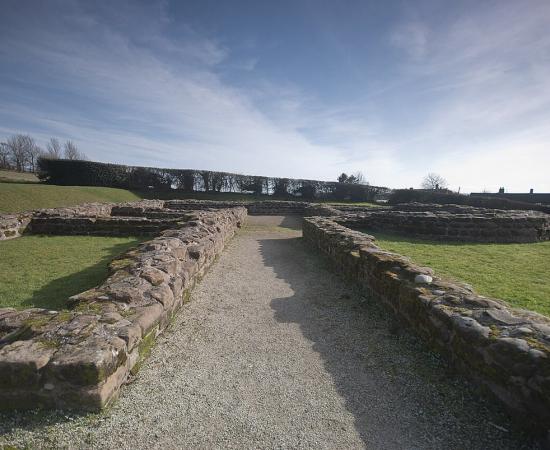
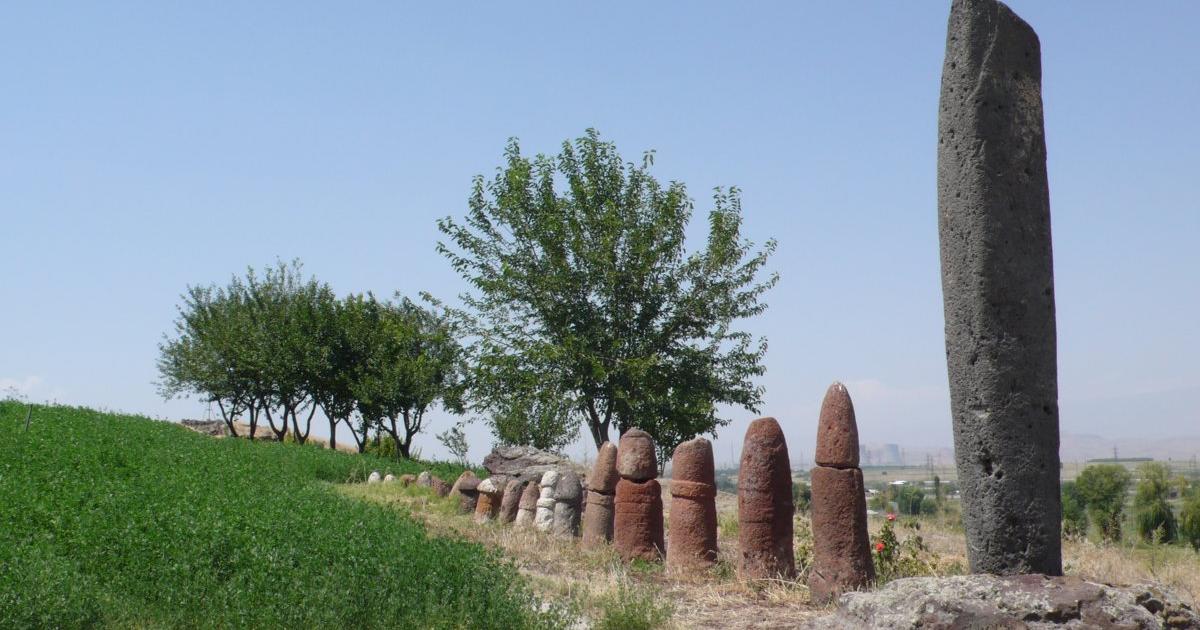
The site of the ancient citadel of Metsamor in Armenia, photographed in 2007. The newly reported tomb lies on private land next to the museum-reserve and does not appear in this photo. Photo by alpolano, via Wikimedia Commons, licensed under Creative Commons Attribution 3.0 Unported (CC BY 3.0).
By Aris Manus
Sources
- Excavations in Armenia yield gold jewelry, coin of Octavian Augustus, Armenpress, October 27, 2026
- Gold earrings, Roman coin and bronze dagger unearthed at Armenia's Metsamor site, Panorama.am, October 27, 2026
- Gold earrings, button, coin of Octavian Augustus, bronze dagger: Exclusive finds discovered at Armenia's Metsamor archaeological site, News.am, October 27, 2026
- Gold Earrings and Coin of Roman Emperor Augustus Discovered at Metsamor, Armenia, 301.am, October 27, 2026
- Exceptional finds have been discovered in Metsamor, Radar Armenia, undated
- Our History, Armenian-Polish Archaeological Mission Metsamor
- Krzysztof Jakubiak and Kinga Bigoraj, Metsamor: the Early Iron Age/Urartian settlement in the Aras Valley, Armenia, Antiquity 94 (378), 2020
- L. A. Petrosyan, Wheeled vehicles from the Late Bronze Age cemetery of Lchashen, Via in tempore, 2017 (in Russian, English abstract)
- Dagger with a sheath, History Museum of Armenia