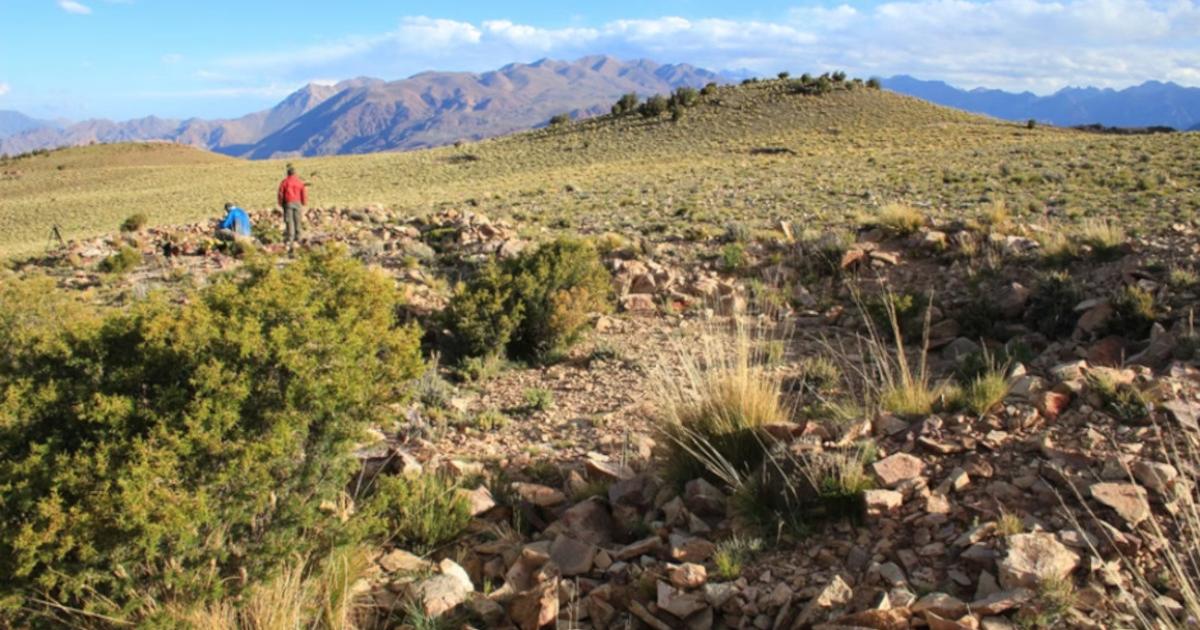

When viewed from above, the stone construction resembles a drawing across the Andes. However, on ground level, it is a distinct network of circle shapes, paths, and partially buried stones in a faraway area of Mendoza, Argentina. A report from Diario de Cuyo, indicates that the circles measure between 27 and 35 meters in diameter and archaeologists are exploring whether they should be classified as a geoglyph, or something else. The issues yet to be answered are how and why the people created these connected circles there, more than 3,000 meters above sea level.
A clue on a screen, then four days on foot
Carlos Gobbi, a mountain climber, came across the formations in May 2025 while Gobbi was using Google Earth in search of old stonework he had heard of in the Cordillera del Tigre. According to Los Andes, Gobbi made two attempts to reach the site, which were unsuccessful. On February 14, 2026, Gobbi, accompanied by Adrián Radich and Gabriel Orofino, spent almost four days traveling and finally found the structures. There was no nearby water or phone signal, and the stones were harder to make sense of at ground level than in the satellite view.
- Ten of the Biggest and Best Geoglyphs from the Ancient World
- Ancient rock lines created by enigmatic Paracas culture predate Nazca geoglyphs
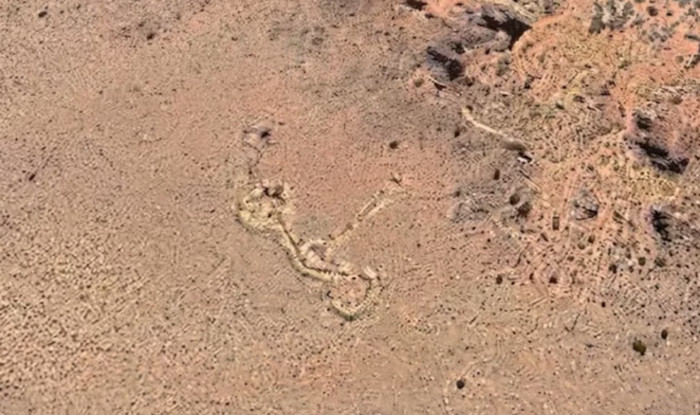
The site's connected circular structures, seen in a Google Earth image published by Los Andes. (Google Earth / Los Andes)
Gobbi discovered there were dry-stone walls, which created pathways connecting the various large circles, as well as stones that were placed in shallow trenches. The view from above revealed rectangular areas. Upon returning to Mendoza, he presented the photographs to archaeologists Cristina Prieto-Olavarría and Horacio Chiavazza, who are now lead the investigation. They told Los Andes that there were no known parallels in the province, and also that as yet they have not established that these Mendoza geoglyphs are geoglyphs at all.
- Qhapaq Nan, the Grand Route of the Incas, wins World Heritage Status
- The Perplexing Nazca Lines: Sacred Roads, Spirit Animals, or Water Sources?
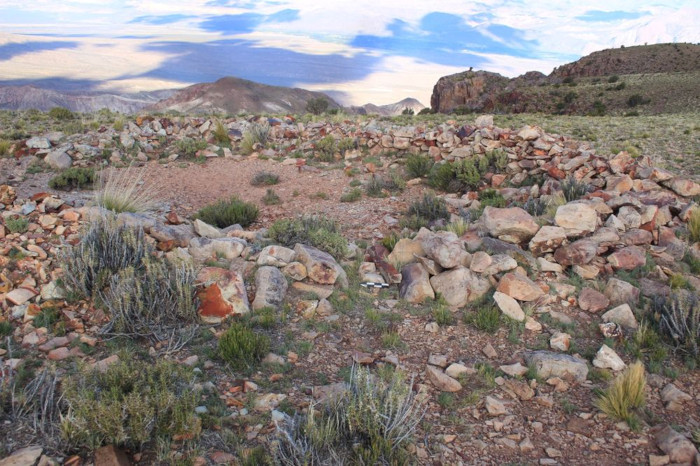
Stone-built structures at the Cordillera del Tigre site, photographed during the difficult expedition. (Courtesy of ArqueoAndes/Los Andes).
The Nazca comparison
Understanding these stone structures is a real puzzle for the investigators. Due to the view from above and regional proximity, comparison with Peru's Nazca Lines is invited. But there seem to be few similarities, and nobody has shown a connection between the two places. Mendoza's stone corridors and circles do not resemble the familiar animal figures in the Peruvian desert. Bolivia's Sajama Lines and the older Paracas rock lines offer other examples of how differently people have marked Andean landscapes. None tells researchers who laid out the stones in the Cordillera del Tigre.
What the first visit did not reveal may matter just as much as what was found. According to Los Andes, there were no pottery fragments or food remains visible on the ground to suggest a permanent settlement. Prieto-Olavarría and Chiavazza are therefore considering a ritual or symbolic purpose, possibly during the Inca period or even earlier. The Inca road network and known high-altitude ceremonies in Argentina provide context, not evidence that the newly found site belonged to either tradition.
A return to the mountain for answers
The ArqueoAndes group managed by Prieto-Olavarría and Chiavazza intends to return in December with scientists from the Spanish University of Jaén. They hope to carry out mapping using drones and other technologies, study sediments, and analyze the area surrounding the site. Information obtained about the local environment may shed light on the reasons behind the choice of such a harsh and dry area. Establishing the date the structures were created would be an important step toward determining whether the site can be classified as either Inca, pre-Inca, or something else.
It took Gobbi months to turn an intriguing shape on a screen into a place people could walk through. The next stage will be even slower: documenting the structures without damaging them and listening to Indigenous communities around Uspallata, whom the researchers hope to involve. Other image-led geoglyph discoveries show the value of an aerial first look, but the answers here must come from work on the ground. Until then, terming the structures as ‘Mendoza geoglyphs’ is a useful, although perhaps temporary description.
Top image: Expedition members amid the stone structures at the archaeological site in the Cordillera del Tigre, Mendoza. Source: Courtesy of ArqueoAndes/Los Andes
By Gary Manners
References
de la Rosa, I. 20 September 2026. Se ve desde el espacio: creen haber hallado un geoglifo en la cordillera de Mendoza. Available at: https://www.losandes.com.ar/sociedad/se-ve-el-espacio-creen-haber-hallado-un-geoglifo-la-cordillera-mendoza-n6006727
Diario de Cuyo, Redacción. 24 September 2026. Misterio en la alta montaña: descubren geoglifos gigantes en la Cordillera del Tigre. Available at: https://www.diariodecuyo.com.ar/argentina/misterio-la-alta-montana-descubren-geoglifos-gigantes-la-cordillera-del-tigre-n6584012