
- Early Middle Ages Jewelry Unearthed from Opulent Graves in Crimea
- Neanderthals Crafted Ochre Crayons 70000 Years Ago
A Rare Two-tower “isar” Has Been Found
According to Heritage Daily, the fortress covers roughly 0.9 hectares (2.2 acres) and is enclosed by rubble stone walls bonded with mortar. Excavations documented substantial stone foundations up to 0.8 meters high and about 0.5 meters wide, with surviving masonry sections ranging between 0.2 and 0.5 meters. Two rectangular tower foundations were recorded on the southeastern side, hinting at a more complex defensive plan than archaeologists usually see at isar sites.
Sergei Bocharov of Sevastopol State University described the site as distinctive for its “system for organising defensive space,” stressing that the presence of two towers sets it apart from most known isars, which typically had just one. That detail matters because towers often controlled approach routes, chokepoints, and visibility - so a second tower can signal a higher-stakes location or a rethought strategy for protecting nearby territory.
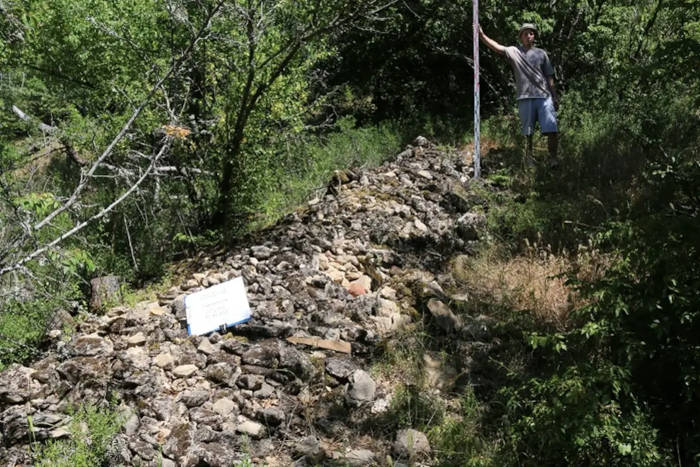
Evidence of the medieval fortress found in Theodoro, Crimea. (Sevastopol.SU)
The Fortress and the Shadow of the Principality of Theodoro
The newly identified isar is being discussed in connection with the Principality of Theodoro, a Christian Greek-ruled state that held on in southwestern Crimea until the Ottoman conquest in the late 15th century. In practical terms, small fortresses like this helped knit together control of mountain routes, farmland, and access corridors between the interior and the coast - an essential function in a region where competing powers repeatedly contested ports and passes.
Historically, Theodoro (also known as Gothia) is often described as one of the final “rump states” of the Eastern Roman world, with its capital at Mangup (Doros/Theodoro) and a mixed population that included Greeks and Crimean Goths. It ultimately fell in 1475 during Ottoman expansion into the Black Sea.
- The Khazars: A Forgotten Medieval Empire that Ruled the Northern Caucasus
- Ukraine Treasures Returned, But Current War Destroys Cultural Heritage
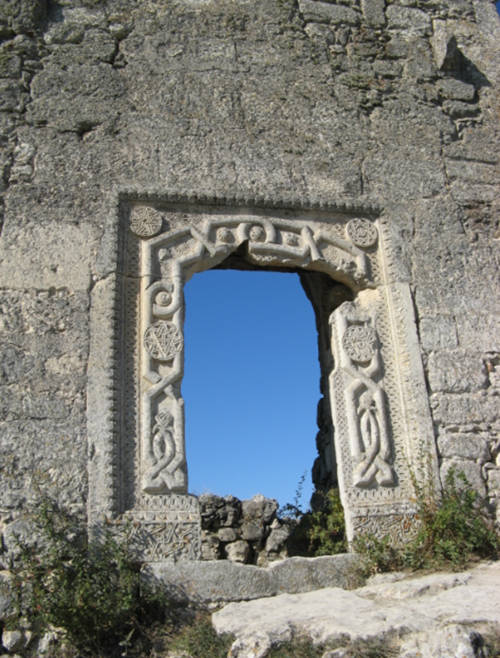
Ruins at Mangup-Kale, often linked with Theodoro’s medieval landscape. (Ilya Voyager/CC BY-SA 3.0)
Crimea’s Dense“Fortress Landscape”
Crimea’s southern and southwestern zones sit at a strategic hinge between steppe and sea. Over centuries the peninsula saw Greek colonists, Roman and Byzantine influence, later Turkic and Tatar powers, and then intensified competition around coastal strongholds and trade. That’s why each newly recorded fortification is more than “just another wall”: it can refine maps of movement, jurisdiction, and local security in a region where a short ridge line could separate safe farmland from exposed approach routes.
For context, major fortified complexes elsewhere in Crimea - such as the well-known medieval defenses at Sudak - show how long the peninsula’s fortifications remained in use and were repeatedly rebuilt or adapted. While the Rodnoye fortress is not the same site, comparing construction techniques and tower placement across Crimea can help archaeologists decide whether a newly found fort was a quick frontier outpost, a local strongpoint, or part of a larger defensive network.
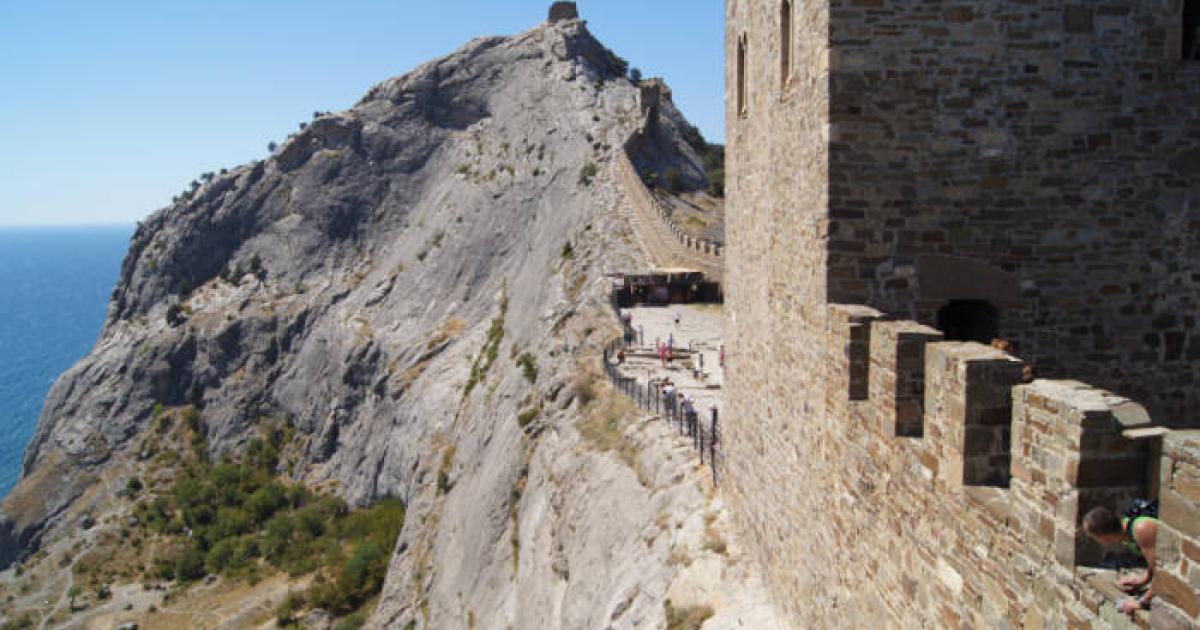
Top image: Sudak Genoese Fortress walls and towers. Source: © Vyacheslav Argenberg/CC BY 4.0
By Gary Manners
References
Bocharov, S. 2026. Medieval fortress discovered in Southwestern Crimea. Available at: https://www.heritagedaily.com/2026/01/medieval-fortress-discovered-in-southwestern-crimea/156774
Wikipedia contributors. n.d. Principality of Theodoro. Available at: https://en.wikipedia.org/wiki/Principality_of_Theodoro