
A new survey of Malta’s famous Maltese cart ruts argues that most were made during the Classical era rather than deep prehistory, bringing the long-running debate closer to the Roman world. The study by University of Malta archaeologist Joel Grima, published in the Journal of Archaeological Science: Reports, catalogued 2,628 tracks across Malta and Gozo and found no secure evidence that any pair is prehistoric. That is a substantial shift in the chronology of one of the Mediterranean’s most puzzling landscapes.
The conclusion does not make every groove Roman, nor does it solve every question about how the tracks formed. It does, however, challenge the assumption that weathered limestone and tracks disappearing beneath the sea must point to the Neolithic or Bronze Age. The survey instead questions whether later transport and quarrying left the deeper archaeological evidence.
- Malta Underground: Religious Legends, Cave Churches and More
- Megalithic Temples of Malta still the oldest ones in the World
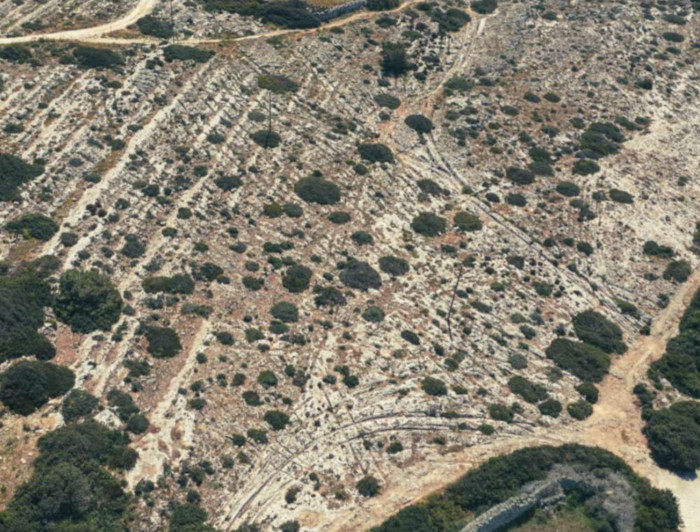
A dense cluster of overlapping cart ruts at Misraħ Għar il-Kbir. This stretch of ruts measures 80 by 100 meters across. ( J. Grima, Journal of Archaeological Science, Reports (2026). CC BY-NC-ND 4.0)
A 31-Mile Survey Changes the Map
Grima’s project is the largest systematic survey of the features so far. Researchers created three-dimensional models for 155 sites using drone and handheld photography, combined that material with excavation records, plans and satellite imagery, and mapped 228 sites in all. Together, the recorded tracks stretch for about 49.65 kilometers (31 miles), while only 48 were identified as modern.
That scale matters because individual cart ruts are difficult to date. They are worn or cut into bedrock, so they rarely preserve a layer of material that can be tested directly. A later road, tomb or quarry can show that a rut is older than the feature, but it cannot automatically reveal how many centuries earlier the track was in use.
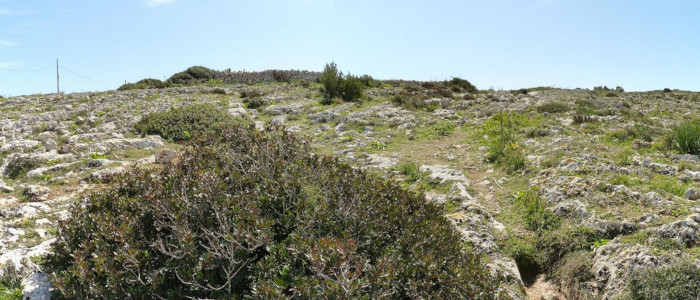
Intersecting cart ruts at ‘Clapham Junction’, Malta. (Ronny Siegel/CC BY 3.0)
Roman Roads, Quarries and Tombs
The strongest evidence comes from places where the ruts meet dated architecture. Near the Domus Romana at Mdina, tracks run through an urban street later covered by successive Roman road surfaces. At il-Qortin in Marsa, an eighteenth-century drawing recorded grooves worn into the threshold slabs of a Roman warehouse, apparently linking the building with a nearby quay.
The same pattern appears in the countryside. The survey documented 112 examples of quarries cutting across cart ruts and 17 cases where traffic wore grooves into quarry floors. At tal-Qares, tracks converge around a Roman-period agricultural complex, while at Nigret and Ta’ Qali, ruts lie beneath or within Roman roads. The findings fit a practical network connecting farms, stone quarries, settlements and ports, rather than a mysterious prehistoric ‘railway’.
The relationship with burial grounds is also important. Of 1,690 mapped burials, 34 percent lay within 50 meters of a known track. Rather than proving the ruts were older than the tombs, Grima argues that the pattern may reflect a familiar Classical practice: placing cemeteries beside roads, where graves were visible to travelers. That landscape helps explain why the tracks are frequently found beside Hagar Qim, the Neolithic Temple Complex of Malta, even though proximity alone cannot establish a shared date.
An Older Date Is Still Possible
The paper also addresses the clues that have long supported a prehistoric interpretation. Some ruts run into the sea, while others end at unstable cliff edges, but Malta’s sea level has risen by about 1.3 meters over the last 2,000 years and coastal rock has continued to collapse. Those processes can produce apparently impossible routes without requiring the tracks to predate the Classical period.
For now, the fairest conclusion is cautious rather than absolute. Grima finds no solid evidence confirming a prehistoric date for any pair of Maltese cart ruts, but he does not rule the possibility out. Material trapped inside rut fills could eventually provide minimum ages, and direct laboratory dating remains the key missing test in a debate that has outlasted generations of archaeologists.
The result also invites a more grounded reading of Malta’s ancient landscape. The islands’ early human presence and extraordinary Neolithic monuments remain important subjects, but the ruts need not belong to that same chapter. They may instead preserve the wear of later communities moving crops, stone and people through a busy island economy.
Top image: Clapham Junction cart ruts near Buskett, Malta, with Verdala Palace visible in the distance. Source: Marika Caruana / CC BY-SA 4.0
By Gary Manners
References
Grima, J. 2026. The chronology of the Maltese cart ruts: a critical evaluation of the available dating evidence. Journal of Archaeological Science: Reports. Elsevier. Available at: https://doi.org/10.1016/j.jasrep.2026.106134
Leafloor, L. n.d. The Cart Ruts of Misrah Ghar il-Kbir. Ancient Origins. Available at: /unexplained-phenomena/malta-cart-ruts-020312
Magro Conti, J. 2005. Description, history and archaeology of cart-ruts. Available at: https://www.um.edu.mt/library/oar/handle/123456789/53912
Radley, D. 2026. Most Maltese cart ruts date to the Classical era, not prehistory, new survey suggests. Available at: https://archaeologymag.com/2026/10/most-maltese-cart-ruts-date-to-the-classical-era/
Reedijk, L. n.d. Cover Up: Very Early Human Presence in Malta Has Been Challenged. Available at: /ancient-places-europe/early-human-presence-malta-0011169
Tabone, L. 2021. Secrets Of The Stones: Malta’s Lesser-Known Megalithic Sites. Available at: /ancient-places-europe/megalithic-malta-0015550