
In one of the most audacious museum robberies in recent history, four masked thieves broke into the world-famous Louvre Museum in Paris on Sunday morning and made off with eight priceless pieces of French royal jewellery in just seven minutes. The brazen daylight heist has left France reeling and raised serious questions about security at one of the world's most visited cultural institutions. The stolen items, dating from the 19th century Napoleonic era, include tiaras, necklaces, and brooches adorned with thousands of diamonds, emeralds, and sapphires that once belonged to French empresses and queens.
The robbery took place between 9:30 and 9:40 am local time, shortly after the museum opened to the public. Four thieves used a vehicle-mounted mechanical lift to gain access to the Galerie d'Apollon (Gallery of Apollo) via a balcony overlooking the River Seine, according to reports from BBC News. The orchestrated assault saw two of the criminals cut through glass panes with a battery-powered disc cutter and enter the opulent gilded gallery that houses France's crown jewels. They threatened guards with their power tools, forcing an evacuation, before smashing open two high-security display cases and escaping on scooters with their priceless haul.
- Stealing History: 10 of the Most Tragic Artifact Thefts in History
- Disastrous German Museum Heist Scoops Gold Coins
The Mechanics of a Professional Heist
Pictures from the scene revealed how meticulously the robbery had been planned. A furniture elevator was positioned against the museum's facade, its ladder extending up to a first-floor window. The thieves, disguised in workmen's clothing and wearing high-visibility yellow vests, approached from the riverside, blending in with legitimate workers in one of the city's busiest tourist areas. According to French Interior Minister Laurent Nuñez,
"Clearly, a team had been scouting the location. It was obviously a very experienced team that acted very, very quickly."
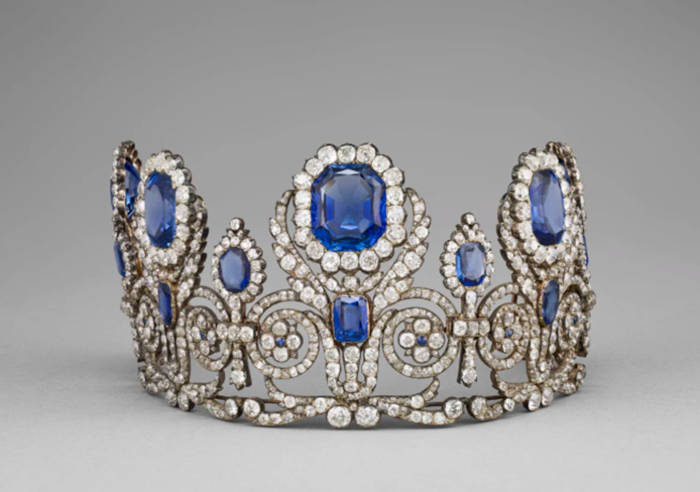
Tiara of Queen Marie-Amélie, stolen in the Louvre heist. (Mathieu Rabeau/Musée du Louvre)
The gang attempted to set fire to their vehicle outside to destroy evidence, but their plan was foiled by a quick-thinking museum staff member. Police later found two angle grinders, a blowtorch, gasoline, gloves, a walkie-talkie, and a blanket at the scene. A tour guide who was leading visitors through the Apollo Room at the time described hearing what sounded like "stomping" on the window before security guards began shouting for everyone to evacuate. Ryan el Mandari told CNN that his group "had no clue that it was a robbery" until they were rushed out of the building.
Perhaps most troubling, a preliminary report revealed that one in three rooms in the area of the museum that was raided had no CCTV cameras, according to French media. Senator Natalie Goulet, a member of the French Senate's finance committee, told the BBC that the gallery's localized alarm was recently broken, raising questions about whether it had been deliberately disabled. "The museum is actually a high-security location," she said. "But all the connections to the alarm were cut. We have to wait for the investigation in order to know if the alarm was deactivated."
- Priceless Romanian Artifacts Stolen in Daring Raid
- Billion-Dollar Jewelry Heist from Green Vault in Germany
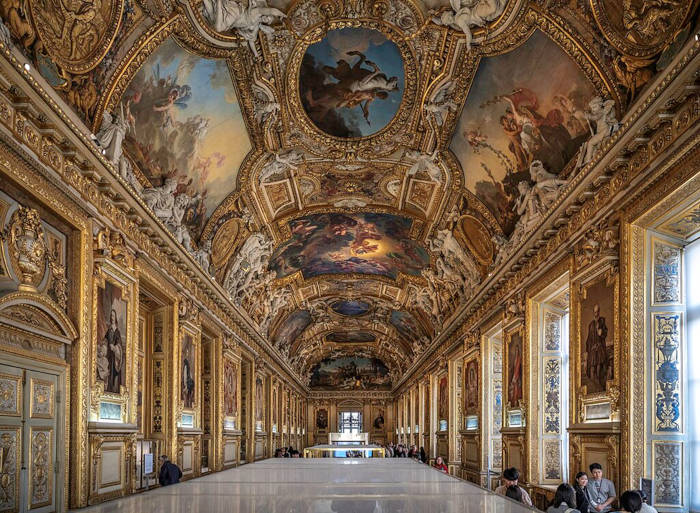
The opulent Apollo Gallery in the Louvre, Paris, where French crown jewels were displayed. (Wilfredo Rafael Rodriguez Hernandez/CC0)
The Priceless Treasures That Were Stolen
According to France's Ministry of Culture, the eight stolen items include some of the most historically significant pieces from France's imperial past. The haul consists of a tiara and brooch belonging to Empress Eugénie, wife of Napoleon III; an emerald necklace and a pair of emerald earrings from Empress Marie Louise; a tiara, necklace and single earring from the sapphire set that belonged to Queen Marie-Amélie and Queen Hortense; and a brooch known as the "reliquary broach." Between them, these pieces are adorned with thousands of diamonds and other precious gemstones.
Two additional items, including Empress Eugénie's ornate crown featuring 1,354 diamonds and 56 emeralds, were found near the scene, apparently having been dropped during the chaotic escape. The crown was damaged in the heist, prosecutors confirmed. French Interior Minister Laurent Nuñez described the stolen jewels as "priceless" and "of immeasurable heritage value," emphasizing that their historical significance far outweighs any monetary worth.
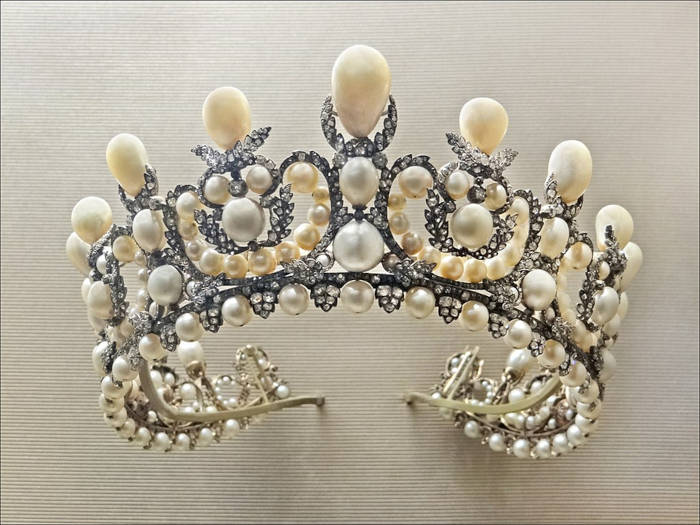
One of Empress Eugénie's tiaras displayed at the Louvre before the robbery. (Alexandre-Gabriel Lemonnier/CC BY 2.0)
Christopher Marinello, chief executive of Art Recovery International, warned that time is of the essence. "There is a race going on right now," he said. "They are not going to keep them intact, they are going to break them up, melt down the valuable metal, recut the valuable stones and hide evidence of their crime." The unique nature of these pieces makes them virtually impossible to sell intact on the legitimate market, meaning the thieves will likely destroy centuries of craftsmanship and historical heritage to convert the jewels into untraceable cash.
Around 60 investigators are now working on the case, studying CCTV footage from the escape route and searching for the four suspects. Paris prosecutors said their working theory is that the robbers were operating under orders from a criminal organization, given the professional nature of the operation. The search extends beyond France's borders, with prosecutors not ruling out foreign interference as a possible line of inquiry.
Political Fallout and Historical Context
The theft has caused a political outcry across France. President Emmanuel Macron called the raid "an attack on our history" and vowed that "everything is being done" to catch the suspects and recover the stolen treasures. National Rally leader Jordan Bardella described it as an "intolerable humiliation," while Marine Le Pen called it a "wound to the French soul." French Culture Minister Rachida Dati, who visited the scene immediately after the robbery, told French news outlet TF1 that footage showed the masked robbers entering "calmly" and smashing display cases with practiced efficiency.
The Louvre remained closed on Monday while forensic teams combed through evidence, with no announcement yet about when the museum might reopen. Visitors who had already purchased tickets were automatically refunded. Metal barriers were erected around the famous glass pyramid entrance as police continued their investigation. Earlier this year, Louvre officials had requested help from the French government to restore and renovate the museum's aging exhibition halls and better protect its works of art. President Macron had pledged that the Louvre would be redesigned as part of a New Renaissance project expected to cost between €700 million and €800 million, with reinforced security as a key component.
This is not the first time the Louvre has fallen victim to theft. In 1911, an Italian museum employee managed to walk out with the Mona Lisa tucked under his coat, lifting Leonardo da Vinci's masterpiece straight off the wall. The painting was recovered after two years, and the incident transformed the relatively unknown portrait into the world's most famous artwork. In 1998, Le Chemin de Sevres, a 19th-century painting by Camille Corot, was stolen and has never been found, prompting a massive overhaul of museum security.
France has experienced a recent spate of museum thefts. Last month, thieves broke into the Adrien Dubouche Museum in Limoges and stole porcelain works reportedly worth €9.5 million. In November 2024, seven items of "great historic and heritage value" were stolen from the Cognacq-Jay Museum in Paris, though five were recovered recently. That same month, armed robbers raided the Hieron Museum in Burgundy, firing shots before escaping with millions of pounds worth of 20th-century artworks.
The brazen nature of Sunday's heist has raised uncomfortable questions about security protocols at major cultural institutions across Europe. With 8.7 million visitors in 2024 alone, the Louvre is the world's most visited museum, making it both a prestigious target for criminals and an incredibly challenging venue to secure. As investigators race against time to recover the stolen jewels before they are destroyed, the incident serves as a stark reminder that even the most treasured artifacts of human civilization remain vulnerable to those willing to reduce priceless heritage to mere cash value.
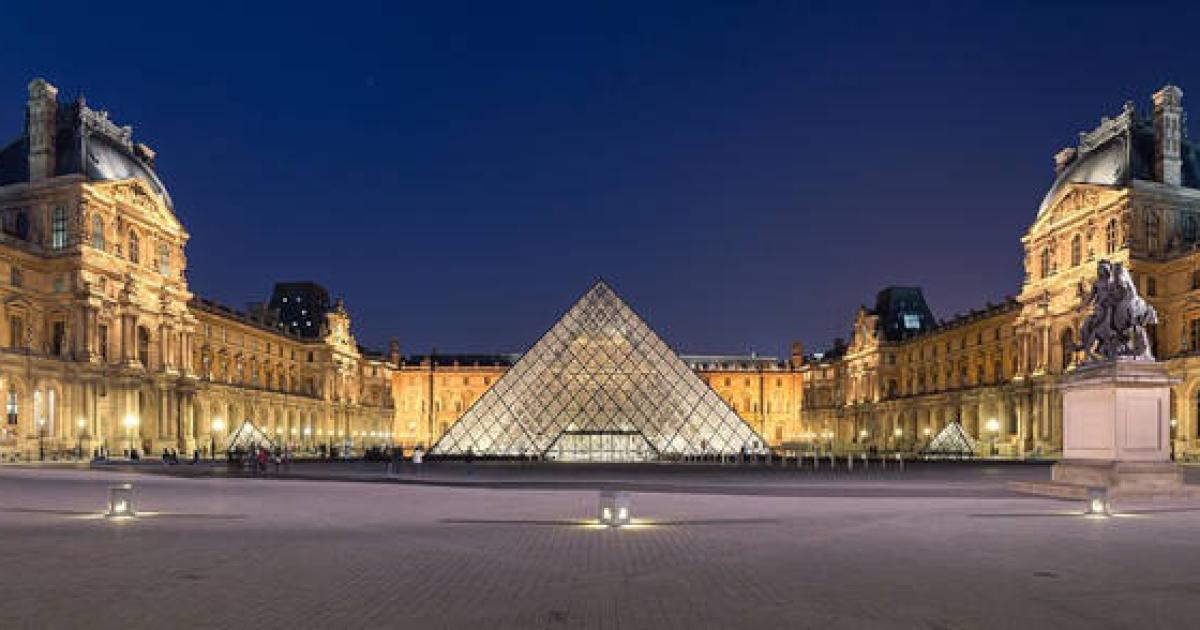
Top image: The Louvre Museum in Paris, one of the world's most visited cultural institutions, scene of the audacious crown jewels heist. Source: Benh LIEU SONG/ CC BY-SA 3.0
By Gary Manners
References
Aikman, I. and Hagan, R. 2025. Everything we know about the Louvre jewellery heist. Available at: https://www.bbc.com/news/articles/cg7nrlkg0zxo
CNN Staff. 2025. Thieves steal 'priceless' jewelry from the Louvre in seven-minute raid. Available at: https://edition.cnn.com/2025/10/19/europe/robbery-louvre-paris-france-museum-closure-intl