- Lidar Scans Reveal Many Lost Cities, Thousands of Earthworks in the Amazon
- Pre-Inca Tulipe and the Yumbo: Traders Ahead of their Time?
Technological Breakthrough Multiplies Known Archaeological Sites
The investigation, carried out in the northwestern reaches of Ecuador's Metropolitan District of Quito, employed LiDAR scanning to penetrate the region's thick vegetation and complex topography. Before this technological survey, archaeological records documented only 40 mounds and 10 terraces in the area, according to El Diario. The LiDAR results, however, revealed a landscape transformed by human intervention on a scale far exceeding previous estimates—a five-fold increase in identified structures.
Archaeologist Juan Jijón, a consultant for the IMP, explained that the newly discovered structures demonstrate a sophisticated organization of space connected to the social, productive, and ceremonial dynamics of pre-Hispanic societies. The findings include both circular and rectangular structures, interconnected by a network of roadways that suggest deliberate urban planning rather than random settlement patterns.
- Water Management in Ancient Civilizations: From Aqueducts to Qanats
- Oldest Known Ancient Amazonian Cities Uncovered in Ecuador
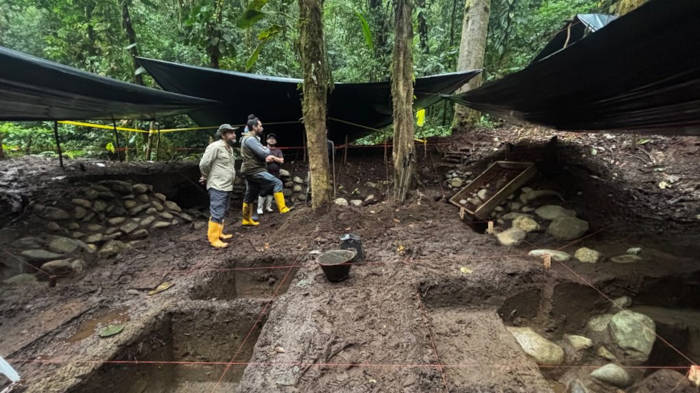
LiDAR technology has revealed hidden archaeological features beneath jungle canopy, now being investigated. (IMP)
Evidence of Advanced Hydraulic Knowledge
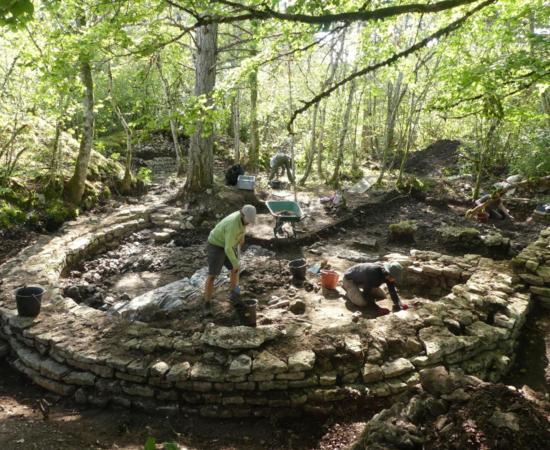
During fieldwork, researchers excavated a sunken structure near the San Francisco River that bears remarkable similarities to those found at the Tulipe Archaeological Complex in the parishes of Gualea and Nanegalito. This rectangular formation features stone walls, what appears to be an entrance, and a water drainage channel—clear indicators of advanced hydraulic engineering knowledge. Such sophisticated water management systems were characteristic of highly developed ancient civilizations throughout the Americas.
The architectural elements align with the distinctive building style of the Yumbo culture, a pre-Hispanic society historically established in Ecuador's northwestern Andean region. The Yumbo people, who flourished between approximately 800 BC and 1660 AD, were renowned as skilled traders who connected coastal and highland communities, moving goods along intricate trail networks through challenging mountain terrain.
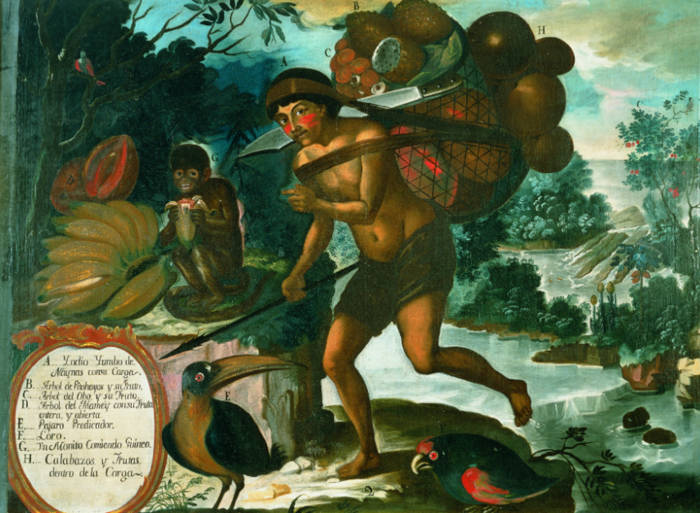
Depiction of a Yumbo Indian by Vicente Albán. (Public domain)
Community Involvement and Cultural Heritage Protection
IMP archaeologist Dayuma Guayasamín emphasized that Quito's municipal government aims not only to protect these archaeological sites but also to understand the formation of cultural landscapes and valorize the Metropolitan District's heritage. The community component has proven essential to the project's success. Ángel Miranda, a resident of San Francisco de Pachijal and owner of the investigated property, noted that his ancestors had long known about the presence of ancient remains in the area. "Es nuestra historia, la de los yumbos y la de Quito" ("It is our history, that of the yumbos and that of Quito"), Miranda affirmed, highlighting local commitment to safeguarding territorial and cultural legacy.
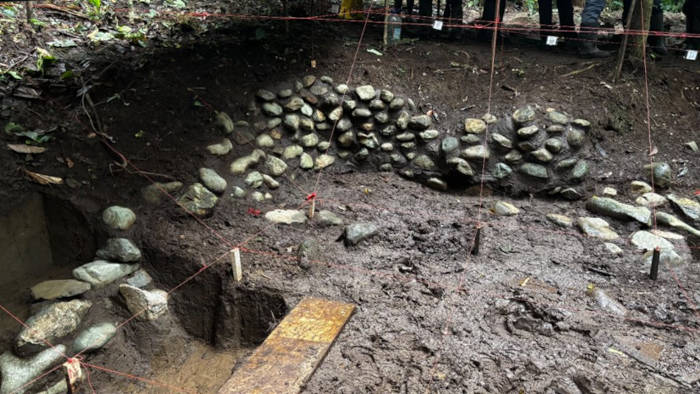
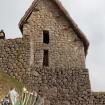
Stone structures at the San Francisco de Pachijal archaeological complex. (IMP)
The fieldwork phase has concluded, and researchers are now conducting laboratory analysis of recovered materials. Results will be compiled in a technical report to be shared with the community as part of the heritage management process. This discovery adds to mounting evidence from across Latin America that pre-Hispanic populations engineered their landscapes far more extensively than previously recognized, challenging long-held assumptions about the region's indigenous societies.
Implications for Future Archaeological Research
The staggering implication that only two percent of the Chocó Andino has been surveyed suggests the region harbors archaeological treasures of potentially unprecedented scale. If the current survey area's density of structures holds true across the broader landscape, the Andean Chocó could contain tens of thousands of pre-Hispanic features still waiting to be documented. Similar LiDAR surveys across the Amazon basin have revolutionized understanding of ancient Amazonian civilizations, revealing extensive urban centers, agricultural systems, and monumental earthworks that were invisible to conventional survey methods.
The findings underscore how technological advances continue reshaping archaeological understanding of the Americas' pre-Columbian past. Just as LiDAR has unveiled hidden Amazonian cities and transformed knowledge of Maya civilization, this survey demonstrates that vast swathes of Ecuador's cultural heritage remain literally buried beneath the forest floor, awaiting discovery.
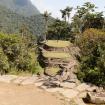
Top image: Stone structures found in the cloud forest near Quito, Ecuador. Source: IMP
By Gary Manners
References
El Diario. 2026. Bajo la selva del Chocó Andino: tecnología revela un paisaje prehispánico oculto. Available at: https://www.eldiario.ec/quito/bajo-la-selva-del-choco-andino-tecnologia-revela-un-paisaje-prehispanico-oculto-02012026/
Instituto Metropolitano de Patrimonio. 2026. Paisaje prehispánico en el Chocó Andino. Available at: https://patrimonio.quito.gob.ec/?p=6476