

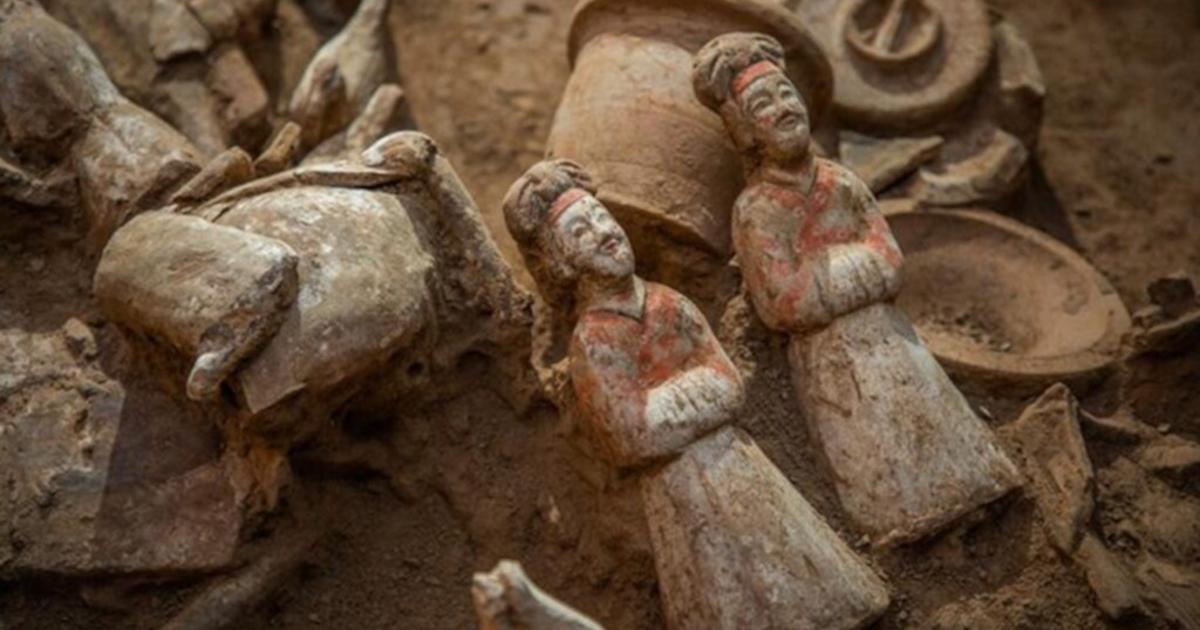

Chinese archaeologists have made an extraordinary discovery in Shaanxi Province, unearthing two ancient game boards from the Han Dynasty. The find, dating back approximately 2,000 years, sheds new light on Liubo, one of ancient China’s most prominent and enigmatic board games. The game boards were found carved directly into square bricks inside tombs during excavations at the Chang’an campus of Shaanxi Normal University in Xi’an.
The Shaanxi Provincial Institute of Archaeology announced the findings as part of a larger presentation of four major archaeological discoveries in the region. The excavation, which took place in 2022 ahead of student dormitory construction, revealed 25 tombs and two ash pits. Ten of these burials were identified as relatively well-preserved Han Dynasty tombs, spanning from the late Western Han to the late Eastern Han periods.
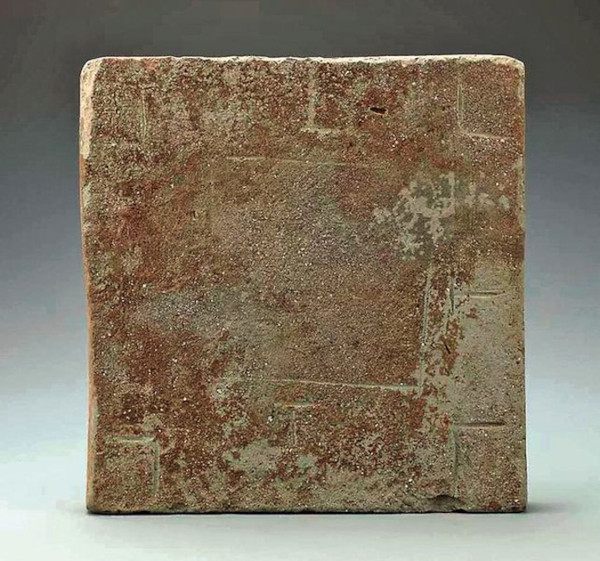
One of two Liubo game boards carved into square bricks and recovered from Han Dynasty tombs at Shaanxi Normal University’s Chang’an campus in Xi’an. (Shaanxi Provincial Institute of Archaeology)
A Game for the Afterlife
Around 130 objects or groups of objects were recovered from the tombs, including pottery vessels, bronze mirrors, iron implements, coins, and miniature representations of household items. However, the most unusual finds were the two Liubo boards discovered in tombs designated M4 and M17.
Unlike the elaborate lacquered wood or stone boards typically associated with elite Liubo sets, these newly announced boards were engraved directly onto ordinary architectural bricks. One was created from a plain brick, while the other reused a brick decorated with a geometric fret pattern. Lines forming the characteristic Liubo playing surface were cut across the faces of both bricks.
- Mysterious board game found in ancient Chinese tomb, along with suspected dead looter
- Archaeological Treasure Trove! 21 Royal Han Tombs Discovered on Chinese Mountainside
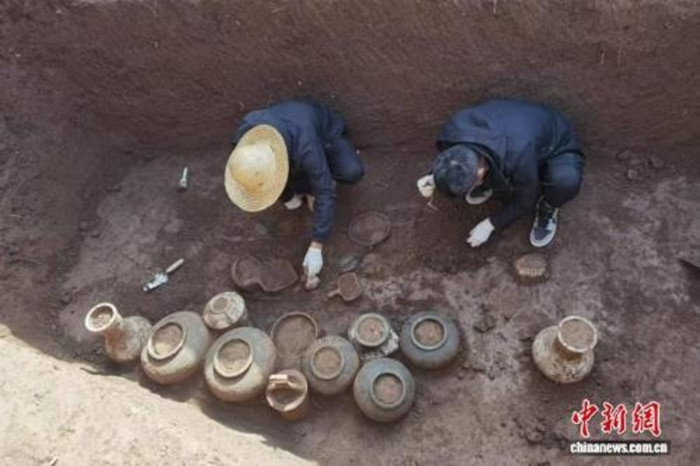
Pottery figurines and other artifacts unearthed from the Han Dynasty tombs. (Ecns.cn)
The use of bricks may indicate that simplified or symbolic versions of Liubo equipment were placed in the tombs. It reflects the broader Han practice of furnishing tombs with objects associated with domestic life, entertainment, and social status, ensuring the deceased were well-equipped for the afterlife.
The Enigma of Liubo
Liubo - literally translated as "six sticks" or "six rods" - was a two-player game played on a square board marked with a symmetrical network of paths. Surviving sets suggest that each player controlled six pieces. Throwing sticks or dice determined movement across the board, while counters and additional pieces may have been used for scoring.
The game appears to have combined strategy, chance, and gambling, although its complete rules remain a mystery. It was immensely popular among royals and commoners during the Han Dynasty (206 BC – 220 AD), but its exact rules were lost after the Tang Dynasty (618 – 907 AD). Liubo is sometimes described as a possible precursor to Xiangqi, or Chinese chess, though this relationship is still debated among scholars.
- Spectacular Royal Han Tombs Reveal Wealth and Glory of the Han Dynasty
- 1000-Year-Old Chuiwan Golf Balls Discovered In China
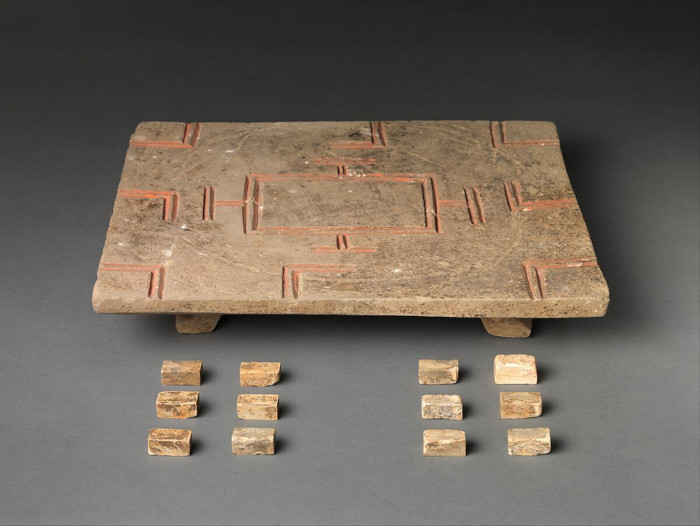
A complete Liubo set from the Han Dynasty, featuring the board, playing pieces, and throwing sticks. (Metropolitan Museum of Art)
Unveiling More Ancient Secrets
In addition to the Han Dynasty tombs, the Shaanxi Provincial Institute of Archaeology unveiled three other significant discoveries. These included a Northern Zhou Dynasty (557-581) joint burial site containing a distinctive white porcelain water container, and tombs from the Sixteen Kingdoms (304-439) and Tang Dynasty periods.
The Sixteen Kingdoms tomb yielded 60 pieces of burial objects, including well-preserved horse figures that offer valuable information for research into horse equipment during the period. Meanwhile, the Tang Dynasty tombs provided new insights into marital relationships, family structures, and burial practices, with some unusual figurines suggesting a deep connection to Taoist beliefs.
These discoveries continue to enrich our understanding of ancient Chinese history, revealing not only the grand sweep of dynasties but also the everyday pastimes, like the game of Liubo, that once captivated the people of the past.
Top image: Artifacts unearthed from a site in Xi'an's Xincheng district. Source: Courtesy of Shaanxi Provincial Institute of Archaeology
By Gary Manners
References
Arkeonews. 2026. Games for the Afterlife: 2,000-Year-Old Liubo Game Boards Found in Han Dynasty Tombs. Available at: https://arkeonews.net/games-for-the-afterlife-2000-year-old-liubo-game-boards-found-in-han-dynasty-tombs/
Global Times. 2026. 2,000-year-old chessboards found in Han Dynasty tombs. Available at: https://www.globaltimes.cn/page/202607/1366046.shtml






















