

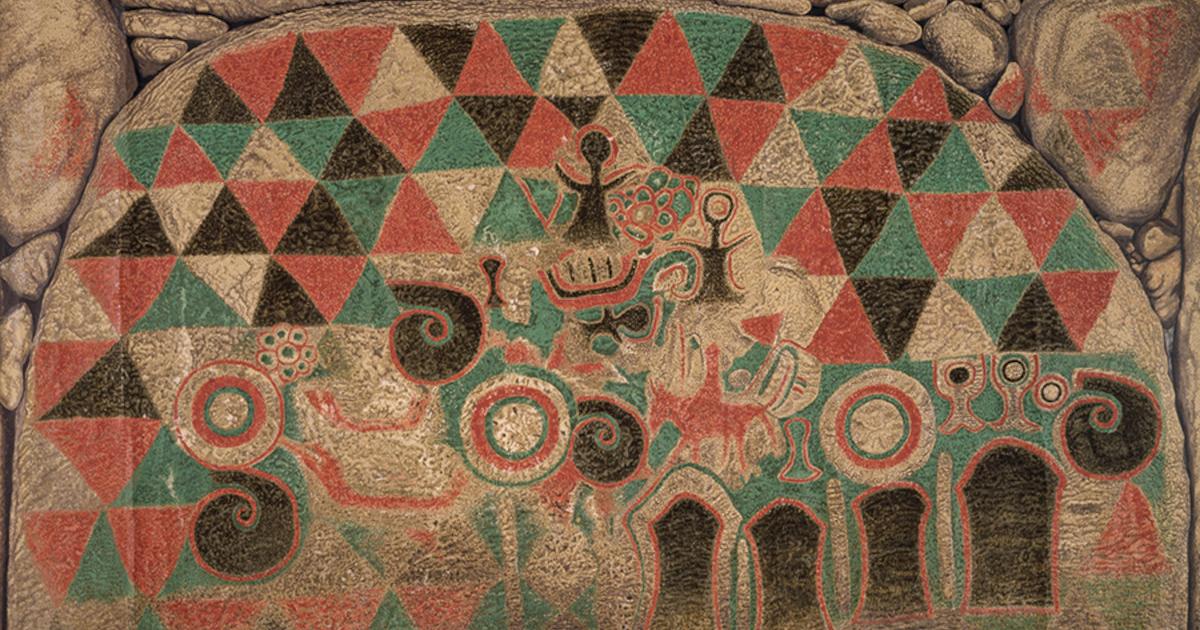

The burial sites of Kyushu, Japan from the Late Kofun era show that the anthropomorphic forms were never accounted for as representing individuals. The inconspicuous figures served as symbols encapsulating collective ancestral identity. According to a recent study, the idea that these images represented particular dead people or their likenesses has now been disproven. Instead, the findings suggest that tombs served as venues for ritual transition featuring anonymity as a critical part of the process.
The Late Kofun era associates itself with an important stage in Japanese funeral rituals. What used to be the practice of burying one person by putting him or her in a standing position and covering the revered with the earth has been transformed into a tomb made to contain several corpses at once fitted with horizontal stone chambers. The new architectural style has turned the tomb from a sealed monument into an accessible space for recurring ritual interactions between the living and the dead. In Kyushu, these chambers often featured entrance corridors aligned with open coffins, emphasizing the visibility of the deceased during ceremonies.
- Japan's Kofun Period: 160,000 Ancient Tombs Built by the Forgotten Tomb Builders
- Rare, Giant-Sized Haniwa Funerary Statue Found in Japan
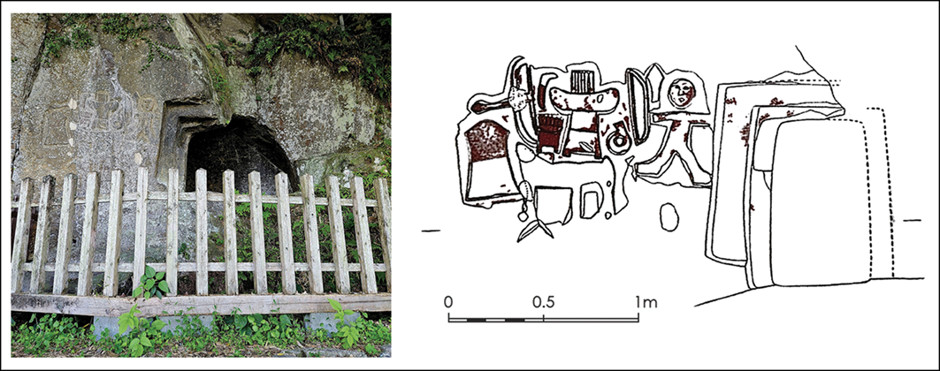
Relief human figure (compositions category) on the entrance façade of the Nabeta 27 rock-cut tomb (photograph by author, drawing from Kumamoto-ken Kyōiku Iinkai 1984: 86(23); reproduced with permission). (Antiquity Publications Ltd)
The Subordinate Role of Human Figures
A recent study by Claudia Zancan, published in the journal Antiquity, meticulously analyzed 77 human figures found across 38 decorated tombs in northern and central Kyushu. The research revealed a striking pattern: human figures were consistently portrayed in a subordinate role compared to other motifs. In mural tombs, these figures were often significantly smaller than geometric designs, such as concentric circles or depictions of weapons like quivers and shields. This hierarchical scaling suggests that the human form was not the central focus of the funerary narrative.
- Lost Imperial Treasures of Emperor Nintoku Surface
- Satellite Images Reveal Japanese Kofun Tombs all Point to the Rising Sun
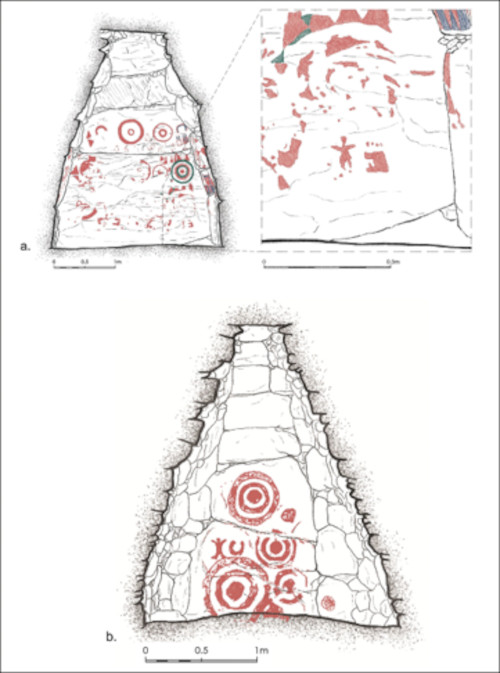
Human figure (compositions category): a) on the rear wall of Nakabaru-kitsunezuka; b) on the rear wall of Furuhata (images redrawn by architect Mariapia Di Lecce after Tanushimaru-machi Kyōiku Iinkai 2004: 6 and after Ukiha-shi Kyōiku Iinkai 2007: 37, respectively). (Antiquity Publications Ltd)
This visual subordination contrasts sharply with contemporaneous funerary art in other regions, such as the Koguryo tombs in the Korean Peninsula, where the deceased were often depicted centrally and in realistic or hierarchical proportions to emphasize their status. In Kyushu, however, the figures seem to be minor characters within a broader, abstract narrative, pointing towards a collective understanding of the afterlife rather than the commemoration of a single individual's achievements.
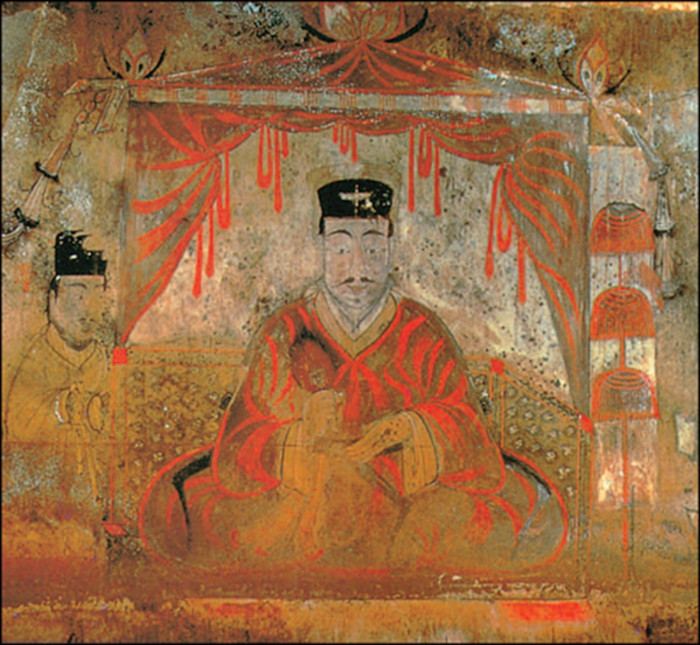
Mural from Anak Tomb No. 3 depicting the deceased noble (Dong Shou 동수) and attendants, Koguryŏ Kingdom, mid-fourth century AD; note the use of hierarchical scale to denote individual social status. (Public Domain)
Strategic Architectural Placement
The agency of these figures is further illuminated by their strategic placement within the tomb's architecture. Zancan's analysis found that human representations were predominantly located in three specific areas: the external facades of rock-cut tombs, the side stones of the entrance gates to burial chambers, and the rear walls of mural tombs. Each location served a distinct ritual purpose. Figures on external facades likely acted as guardians, warding off malevolent forces from the communal space.
Those positioned at entrance gates marked liminal thresholds, symbolizing the transition between the world of the living and the realm of the dead. Meanwhile, figures on the rear walls, the most sacred area of the tomb, functioned as abstract markers of the deceased's final journey. This deliberate positioning suggests that the images were not merely decorative but active participants in the ritual process, guiding the soul and protecting the sacred space.
The Power of Anonymity
Perhaps the most compelling finding of the study is the systematic anonymity of the human figures. Across the entire corpus, there is an almost complete absence of distinctive facial features, sexual traits, or individualized clothing. Even when advanced techniques would have allowed for greater detail, the artists chose stylization over realism. This intentional abstraction indicates that the figures were not meant to be portraits of the specific individuals interred within.
Instead, this anonymity reflects a profound ideological choice. As funerary rituals moved from the public spectacle of monumental mound building to the private, recurrent ceremonies within horizontal stone chambers, the focus shifted from celebrating an individual's earthly power to emphasizing their integration into a collective ancestral lineage. The faceless figures of Kyushu's decorated tombs thus stand as powerful symbols of a shared communal vision of death, where the individual dissolves into the eternal collective.
Top image: Takehara Kofun Mural showing stylized figures and animals. Source: Maculosae tegmine lyncis / Public Domain Link to image source
By Gary Manners
References
Zancan, C. 2026. The anonymous protagonist? Agency and abstraction in Kyushu decorated tombs of the Japanese Late Kofun period. Antiquity. Cambridge University Press. Available at: https://www.cambridge.org/core/journals/antiquity/article/anonymous-protagonist-agency-and-abstraction-in-kyushu-decorated-tombs-of-the-japanese-late-kofun-period/F3C9D7E0B7A1234567890ABCDEF
Zancan, C. 2013. Decorated Tombs in Southwest Japan: Behind the Identity and the Socio-Political Developments of the Late Kofun Society in Kyūshū. Leiden University. Available at: https://www.researchgate.net/publication/373512032_Decorated_Tombs_in_Southwest_Japan_Behind_the_Identity_and_the_Socio-Political_Developments_of_the_Late_Kofun_Society_in_Kyushu
Medium. 2026. Anonymous by Design: Why Are These 1,500-Year-Old Tomb Figures Faceless? Available at: https://medium.com/the-academic/anonymous-by-design-why-are-these-1-500-year-old-tomb-figures-faceless-2ff2fe77c2ae






















