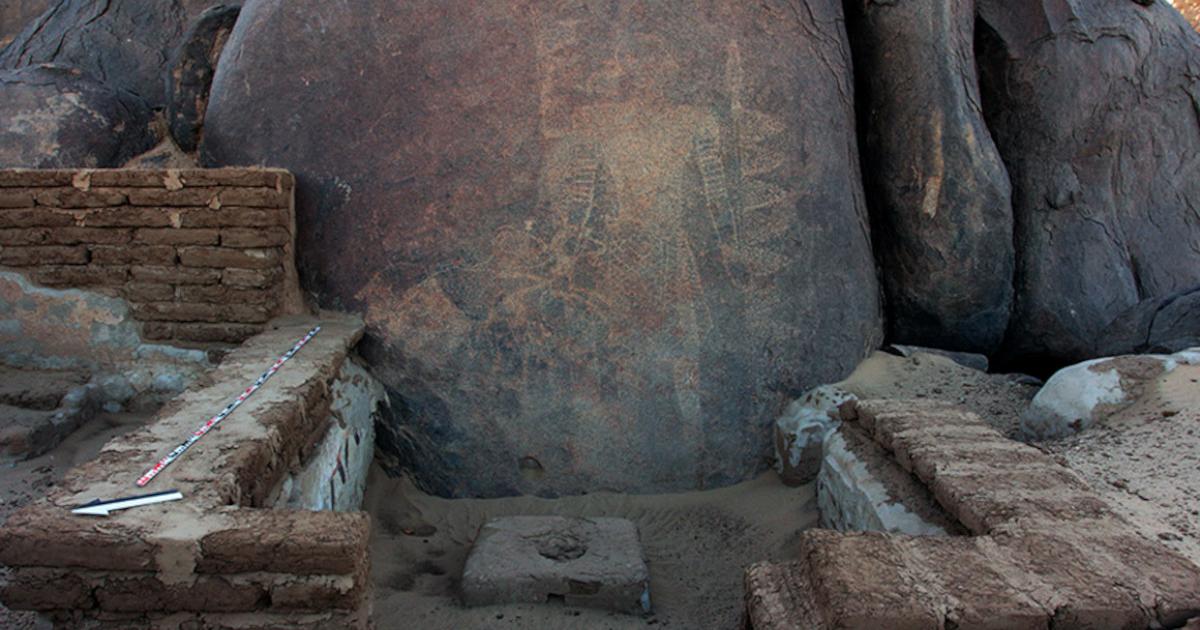

On top of a granite hill in northern Sudan, a life-sized engraving of a figure might depict a Kushite king, although its exact identity or exactly when it was made are unknown. In the seventh century AD, builders erected a church near the statue, indicating two different faiths had been present in the region. The study published in Antiquity explores this fascinating location, looking at the context of this enigmatic image. Its wider finding is that Miseeda, in the Mahas region, was a long-lived crossroads and not simply the setting for an isolated monument.

The church of Miseeda with the petroglyph visible on the rock behind it. (© S. Lenarczyk/Antiquity Publications Ltd)
Could the Carving Depict a Kushite Ruler?
The imposing figure set on the huge rock is not a new find. Previous studies have suggested that the petroglyph dates back to Kerma or wider Kushite period. The recent research study was still unable to establish its exact age. According to Phys.org, the notion that the figure might depict a Kushite ruler is still a theory and not yet proven. That caution is worth keeping in mind beside the regal looking image.
The scientists juxtapose Miseeda with a unique monumental sculpture of the Meroitic ruler Sherkarer at Gebel Qeili, understood as a statement of power at the southern border of the kingdom. This comparison reinforces the idea of Miseeda’s context as a borderland, but still provides neither a king’s name nor a precise date. All the other Kushite royal images were identified through inscriptions, but such identification is not available in this case. As the study’s authors put it, “a more precise date remains to be established.”
- The Ancient City of Naqa - The Kushite Religious Stronghold
- 16 Ancient Pyramids, Burial Sites for a Vanished Kingdom, Found in Sudan
A Frontier with a Deep Past
The team documented almost 300 archaeological sites around Miseeda, which is close to the Third Cataract of the Nile. Preliminary findings indicate that there was considerable activity during the Mesolithic era approximately 12,000 to 8,200 years ago, as well as during the Late Neolithic/pre-Kerma period around 3000–2500 BC, and during the Christian era covering the period between 6th and 15th centuries AD. Much less material was found from the periods in between, ie. from the Classic Kerma to the Kushite period. However, this only indicates that there is less evidence to analyze, and it does not mean that people abandoned these locations during these times.
- Medieval Christogram Tattoo Found in Sudan Reveals Deep Christianity
- The rich history of the ancient Nubian Kingdom of Dongola
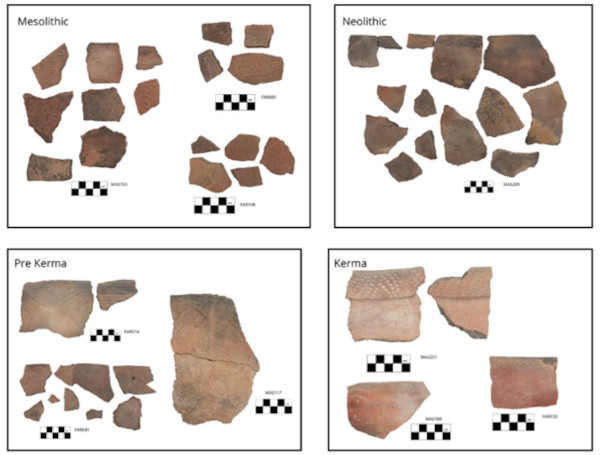
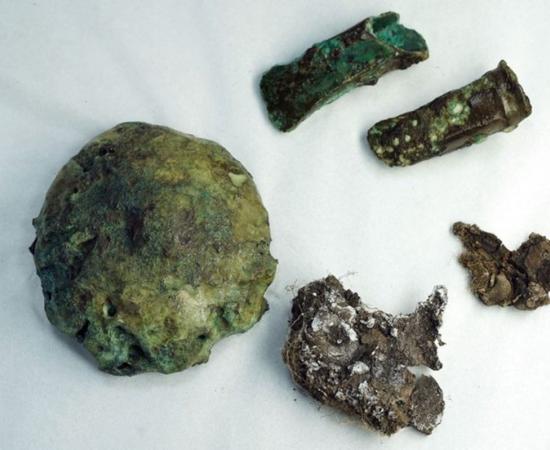
Pottery from the survey, arranged by period, shows the long span of activity around Miseeda. (K. Rosa/Antiquity Publications Ltd)
The humble potsherds have given a more detailed picture than the than the grand headline-grabbing carved image. Some of the wares made before and during the Kerma period show characteristics of both the northern and southern traditions, fitting the position of the Mahas area which lies between them. The authors suggest that some missing Classic Kerma types could be due to the survey’s emphasis on settlements and not on burials. The Kingdom of Kerma played an important role in ancient Nubia, and the river landscape of Napata serves as another reminder of the influence of the Nile on the Kushite centers.
When an Older Image Met a Christian Church
The hill includes a variety of forms of rock art, with the survey recording a lion, an animal that might be a rhinoceros, an elephant, cattle, as well as a number of later crosses, ships and some figures. There are some carvings of cattle found in other places in Sudan, offering some context for comparison, but they are not evidence that the Miseeda images were made at the same time.
The church was built around the older rock figure during the seventh century, while pottery from the area includes vessels linked to Nobadia and early wares in the style of Makuria’s Dongola workshops. Its builders inherited a place already marked by generations of images.
Some nearby Christian carvings even seem to point toward the church, supporting the idea that it became a focus of the local sacred landscape. Additionally, Sudan has revealed some major Nubian churches and early-Christian paintings in Old Dongola, an indication that the medieval heritage transcends the scope of its presence in Miseeda. However, building around an earlier image does not tell us what worshippers in the 7th-century thought it represented.
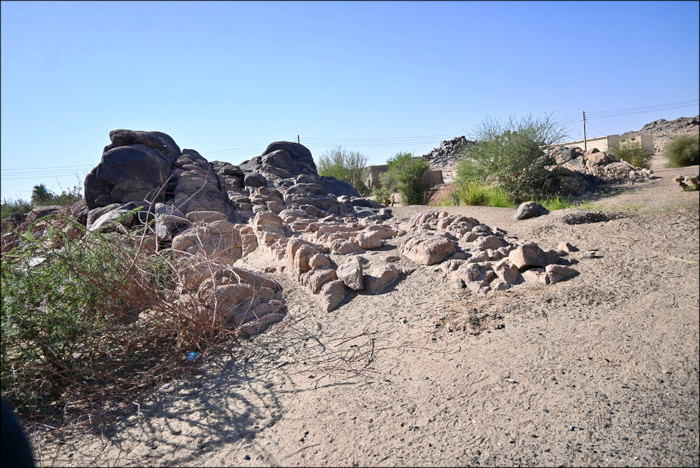
The aquatic sanctuary attributed to Sheikh Kuman in the Miseeda area. (M. Kurcz/Antiquity Publications Ltd)
Sacred Ground, Changing Meanings
Interviews with local residents add a modern view to the place. The researchers report that the church and the post-medieval Diffi Allirki fortress were once places of pilgrimage and offerings, and now appear in accounts of both curses and miracles. Some residents call the church “Beit Kitchiner” or “Beit Sheitan,” while a shrine dedicated to Sheikh Kuman in Miseeda has become the principal local sacred site. These accounts illuminate changing relationships with the ruins.
For now, no inscription names the person on the boulder, and the proposed border marker remains an interpretation rather than a fixed historical fact. The study’s combination of survey, pottery, rock-art analysis and local testimony tells a larger story than a hunt for one ruler could. At Miseeda, different communities repeatedly found something worth marking in the same rugged landscape. The image remains mysterious, but the enduring importance of the place has been made even clearer.
Top image: The petroglyph at Miseeda, Sudan, possibly depicting a Kushite ruler. Source: © C. Calaforra-Rzepka / Antiquity Publications Ltd
By Gary Manners
References
Arnold, P. 29 September 2026. Mysterious giant carving may show a Kushite ruler and mark an ancient borderland. Available at: https://phys.org/news/2026-09-mysterious-giant-kushite-ruler-ancient.html
Ciesielska, J. A., et al. 24 September 2026. Miseeda: between kingdoms, through epochs—reconstructing a history of the Mahas region (Sudan ). Antiquity. Cambridge University Press. Available at: https://www.cambridge.org/core/journals/antiquity/article/miseeda-between-kingdoms-through-epochsreconstructing-a-history-of-the-mahas-region-sudan/36228B78AF514630836ECEE46ECE7C52
Cooper, J. 29 April 2024. Rock Art Discoveries in Eastern Sudan Tell a Tale of the Once ‘Green Sahara’. Available at: /news-history-archaeology/sudan-rock-art-0020716