

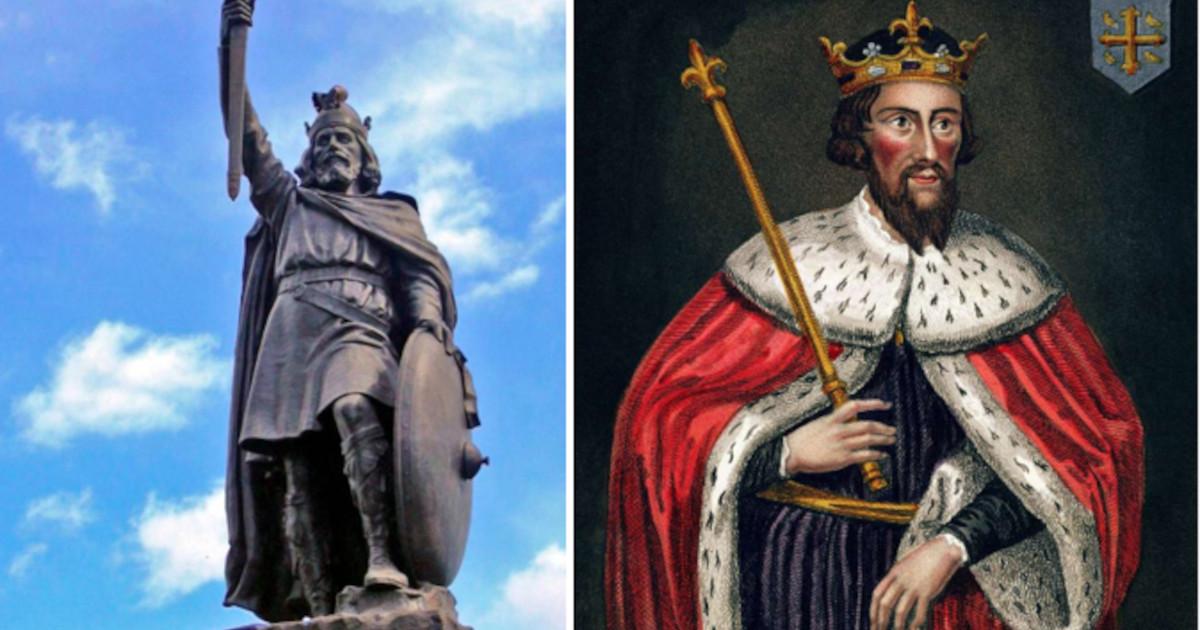

The long-lost remains of King Alfred the Great, the celebrated monarch who united the Anglo-Saxons against Viking invaders, have reportedly been located beneath a car park in Hampshire. This astonishing claim mirrors the famous 2012 discovery of King Richard III, whose skeleton was also found buried beneath a modern parking lot in Leicester.
Author and historical investigator Graham Phillips asserts he has pinpointed Alfred’s final resting place after a dedicated 13-year search. Phillips believes the bones of the legendary king lie just 20 yards from a memorial slab in Winchester that traditionally marked the site of his grave.
Alfred the Great is widely regarded as one of England’s most important historical figures. Reigning as King of Wessex from 871 to 899, he was instrumental in defending his kingdom against the relentless incursions of the Vikings. His decisive victory over the Viking leader Guthrum at the Battle of Edington in 878 laid the groundwork for a unified English nation. Despite his monumental legacy as a warrior, scholar, and lawgiver, the whereabouts of his bodily remains have been a profound historical mystery for centuries.
- Have archaeologists finally found King Alfred the Great?
- Opening the Medieval Stone Coffin at the Richard III Burial Site
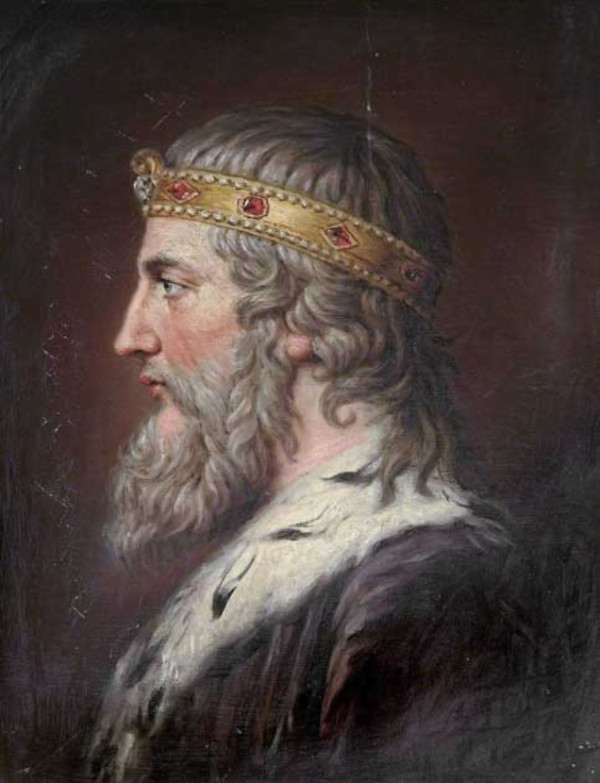
Portrait of King Alfred the Great, of the Kingdom of Wessex, by Samuel Woodforde. (Public domain)
Part of the mystery lies in the fact that Alfred's bones have been moved several times after his death in 899. Initially buried at the Old Minster in Winchester, his remains were later moved by his son, Edward the Elder, to the New Minster. In 1110, the royal burials were moved one last time to Hyde Abbey, just outside the walls of the city of Winchester. Here, Alfred and his wife, Ealhswith, and son Edward were buried, in front of the high altar.
The sanctity of the royal tomb was shattered in 16th century. After King Henry VIII’s order of dissolution of monasteries in 1539, Hyde Abbey was destroyed. The site of royal burials was forgotten with time and later developments.
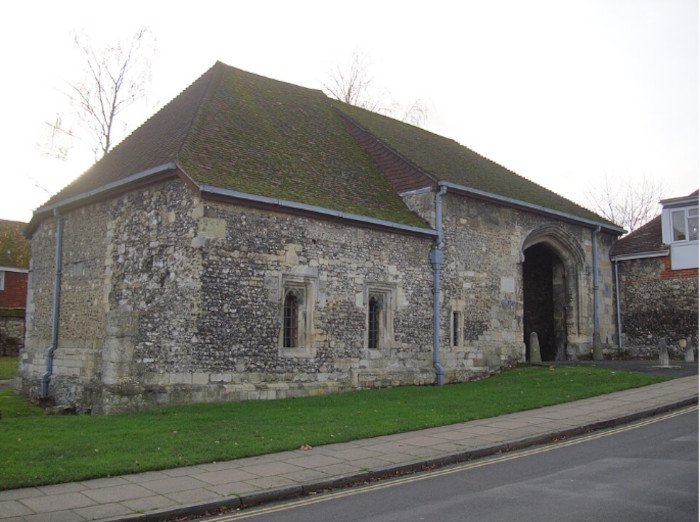
Hyde Abbey gatehouse, Winchester. (JohnArmagh/CC BY-SA 3.0)
In 1866, the site of the old abbey was acquired for the construction of a workhouse wherein an excavation was conducted under disputable circumstances. An antiquarian named John Mellor claimed to have found the bones of the royal family which he sold and the bones were buried again without any marking at St. Bartholomew's Church.
For many years, it was assumed these were the remains of Alfred and his kin. But in 2013, a team from the University of Winchester exhumed the bones from St Bartholomew’s. Radiocarbon dating revealed a shocking truth: the skeletons dated from between 1100 and 1500 AD, centuries after Alfred’s reign.
“Whoever’s bones they were, they weren’t Alfred’s. So, I decided to discover what happened to them,” Phillips explained regarding his motivation. “The quest has taken me 13 years.”
- Why was Alfred the Great One of Only Two Kings Called ‘Great’?
- Archaeologists on Mission to Find Remains of Saxon King, 'Alfred the Great'
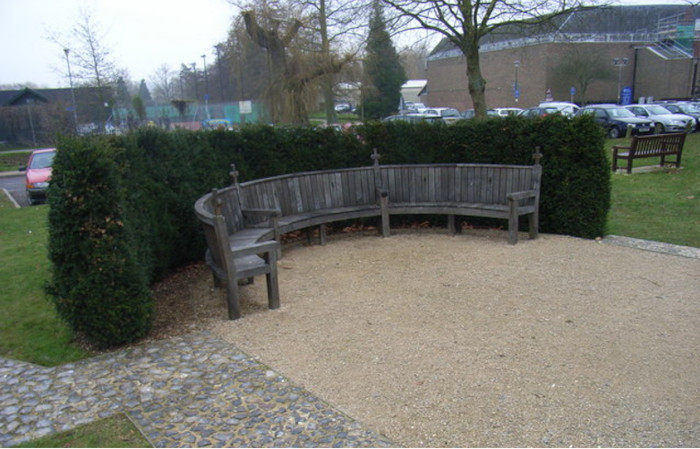
Hyde Abbey Garden seating area near the ruins in Winchester. (Geoffrey Morgan / CC BY-SA 2.0)
While Winchester City Council eventually transformed the Hyde Abbey site into a memorial garden, marking the supposed locations of the royal graves with stone slabs, Phillips believes the original bones had already been relocated long before the 1860s workhouse construction.
His investigation led him to historical records from 1788, when a prison was built adjacent to the abbey ruins. The area containing the graves was reportedly landscaped into a garden for the prison warden. Phillips asserts that the royal bones were disturbed and moved during this landscaping work.
The breakthrough came when Phillips examined an 1800 article published in Archaeologia, the journal of the London Society of Antiquaries. Written by English historian Henry Howard, the piece detailed a visit to the site and included a crucial map.
“In it, he refers to prisoners employed to landscape the warden’s new garden unearthing bones which were reburied nearby, even including a map,” Phillips revealed.
This historical map, according to the investigator, points directly to a modern-day car park situated just 20 yards from the current memorial garden slabs.
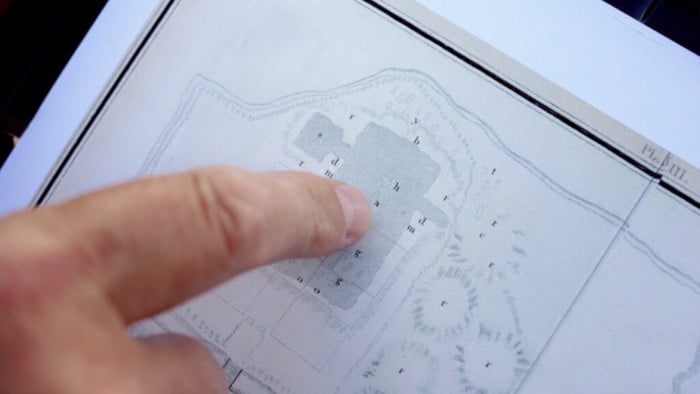
Author and historical researcher Graham Phillips now claims to have discovered Alfred’s grave after a 13 year hunt. (Pix xDragonfly Films)
The full details of this compelling investigation, including the exact location of the proposed burial site, are unveiled in an episode of the television series, Weird Britain. If proven correct, the discovery would finally close the book on the centuries-old mystery surrounding the resting place of one of the most foundational figures in English history.
Top image: Left; Statue of Alfred the Great at Winchester unveiled during the millennial commemoration in 1899 of Alfred's death. Right; Alfred the Great (849-99), after a painting in the Bodleian Gallery. Source: Left; Odejea / CC BY-SA 3.0 Right; Public Domain
By Gary Manners
References
Discover SWNS. 2026. King Alfred the Great 'found under car park' like Richard III. Available at: https://discover.swns.com/2026/07/king-alfred-the-great-found-under-car-park-like-richard-iii/
Hyde900. In Search of Alfred the Great. Available at: https://www.hyde900.org.uk/hyde-abbey/in-search-of-alfred-the-great
Portsmouth News. 2026. King Alfred: Bones of first ruler of united England are 'found' under car park in Winchester, Hampshire. Available at: https://www.portsmouth.co.uk/news/king-alfred-bones-ruler-united-england-found-under-car-park-in-winchester-hampshire-8781557
Telegraph, The. 2026. Alfred the Great’s remains ‘located under car park’. Available at: https://www.telegraph.co.uk/news/2026/07/07/alfred-great-remains-found-under-car-park-claim-uk-richard/
University of Winchester. The Search for Alfred the Great. Available at: https://www.winchester.ac.uk/research/Our-impactful-research/Research-in-Humanities-and-Social-Sciences/Research-projects/The-Search-for-Alfred-the-Great/






















