
Archaeologists have recently uncovered an incredibly well-preserved mobile dwelling, dated to the Kimak-Kipchak period, at the Baidala burial complex in the Pavlodar region of Kazakhstan. The site itself is regarded as one of the most important archaeological monuments from this period, when the Kimak Khaganate ruled over this vast swathe of territory, and is now expected to provide significant insights into the history of the Great Eurasian Steppe.
Rise of the Kimak Khaganate
The Kimak or Kimek Khaganate began to emerge as a serious Turkic political power during the late 9th and early 10th centuries. Its territories were principally centered around the Irtysh River and even extended across vast parts of present-day northern, eastern, and central Kazakhstan, the western Altai and neighboring steppe regions. Early traditions trace back to a confederation of seven distinct tribes, the Eymur, Imek, Kipchak, Tatar, Bayandur, Lanikaz and Ajlad. As the tribal confederation expanded through conquest, medieval sources now referred to up to twelve different tribes under the rule of this wide-ranging confederacy. Its supreme ruler began to adopt the royal title of Khagan, marking the true transformation of this alliance into an organized steppe state.
- Nomadic Tribes of the Eurasian Steppes: Lifestyle and Impacts on Settled Societies
- The Famous and Powerful Khanates that Followed the Mongol Empire
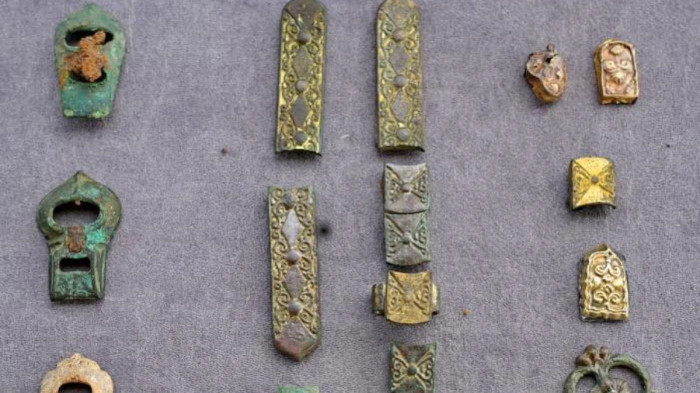
Decorated bronze and gilded belt fittings excavated from a Kimak-Kipchak burial at the Baydala archaeological complex in Pavlodar Region, Kazakhstan. (Press Service of the Akim of Pavlodar Region/Government of Kazakhstan)
From Steppe Empire to Kipchak Ascendancy
Although livestock continued to remain a central element within Kipchak society, the population wasn’t completely nomadic. Historical and archaeological evidence points to settlements, craft production, trade, writing, and social divisions between the wealthy elites and poorer groups. Caravan routes were also able to connect these lands to the Volga Bulgars and the Samanid territories of Central Asia, the Oghuz, Karluks, and other regional powers adjacent to the Kimak Khaganate. But the Khaganate began to break up and weaken around the turn of the 11th century. The fall of this once mighty nomadic confederacy was brought on by factors such as internal political struggles, the growing independence of the Kipchaks, and large-scale tribal migrations, which contributed to its final collapse. The Kipchaks, in the wake of this political vacuum, were soon able to become the dominant Eurasian steppe power across much of the territory that the Kimaks once ruled.
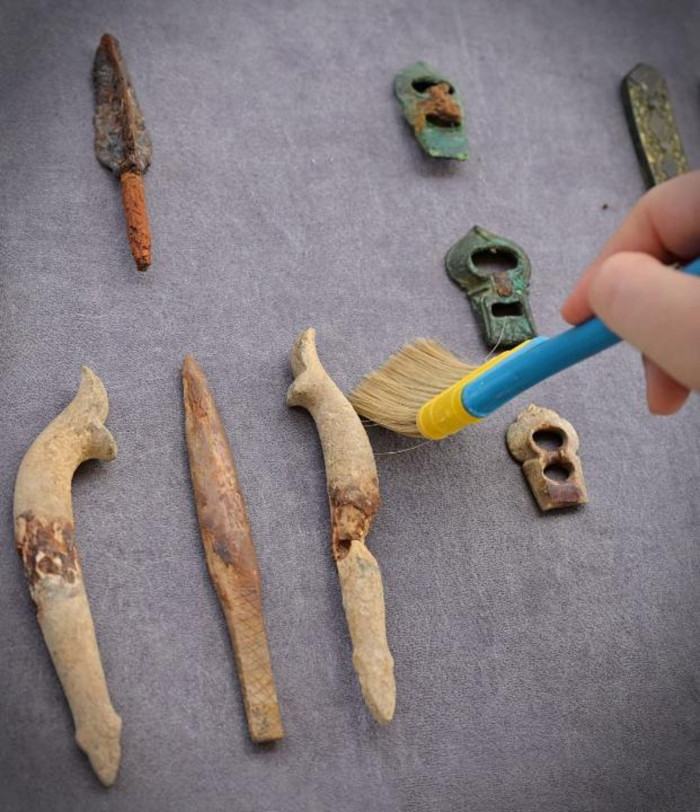
Archaeologists clean bone and metal artifacts recovered from the Baydala burial complex during ongoing excavations in northeastern Kazakhstan. (Press Service of the Akim of Pavlodar Region/Government of Kazakhstan)
Searching for the Last Capital of the Kimak Khaganate
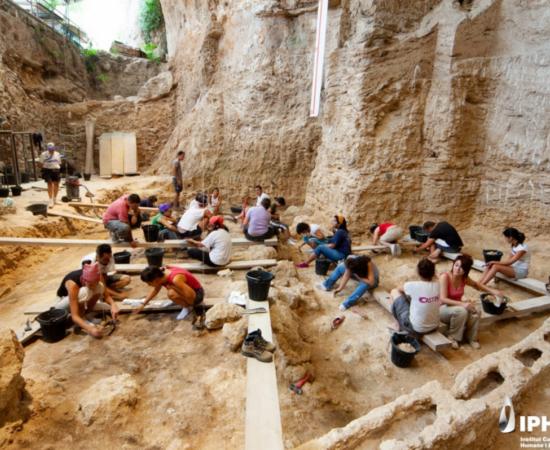
According to an analysis of tenth-century Arab maps, the area is believed to have been the site of Imakia, the political center of the Kimak Khaganate, although the findings are not definitive. Imakia also once crucially served as the very political heart of the Kimak Khaganate. Archaeologists led by Timur Smagulov have conducted numerous rescue excavations on this site for more than two decades. During the field season, the researchers continued to work on one of the remaining burial mounds. This set of excavations allowed the researchers to uncover not only the remains of a burial ditch but also the bones of sacrificial animals. Smagulov explained, according to a 2021 ANSA article, that the burial mounds of Kimaks near Baidaly village is of great scientific value:
“Thanks to specific chemical content of soil the woodware, silk clothes and various items made of leather and metal found there were preserved well. A few years ago, the so-called Kimak chariot was unearthed there. It is the only well-preserved sample of mobile dwelling of medieval-era nomads found in the Eurasian steppes.”
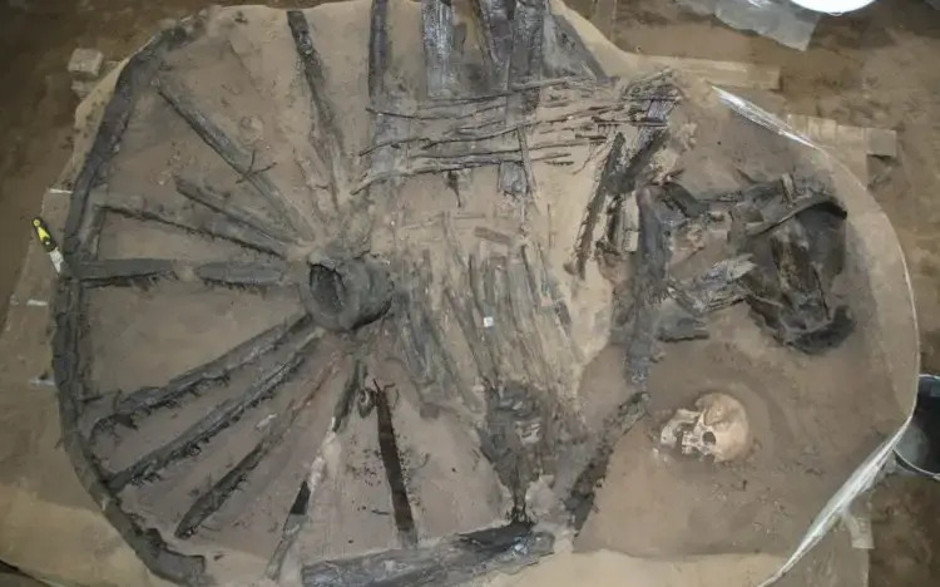
The Kimak chariot, discovered in the Pavlodar Region of Kazakhstan. (Pavlodar Pedagogical University)
A One-of-a-Kind Medieval House on Wheels
Among the expedition's most important discoveries is the Kimak Chariot, a well-preserved mobile wooden dwelling that was once mounted on a wheeled platform and covered by a tent-like structure resembling a traditional Kazakh yurt. According to archaeologists, no comparable find has yet been identified in the course of professional archaeology on the Eurasian steppe.
This particular archaeological find also included a wooden saddle, stirrups, bits, weapons, jewelry, silk textiles, and other artifacts, offering new insights into the nomadic culture and daily life of these peoples living in the Kimak Khaganate. In past excavations, such “houses on wheels” were only found within written records and certain schematic illustrations. The project's next crucial phase will focus on further archaeological research at the site. Additionally, there is a critical need to ensure the conservation and restoration of the recovered artifacts.
Finally, plans also involve developing this site into a museum complex and promoting it as one of Kazakhstan’s key historical and cultural heritage landmarks.
Top Image: Representation of the Kimak mobile house on wheels. Source: AI Generated
By Ramsey Hardin
References
Altuntaş, Leman. “Unique Medieval ‘House on Wheels’ from the Kimak Khaganate Unearthed in Kazakhstan.” Arkeonews, July 28, 2026. Accessed July 28, 2026. https://arkeonews.net/unique-medieval-house-on-wheels-from-the-kimak-khaganate-unearthed-in-kazakhstan
ANSA. “Kimak Khaganate Burial Mounds Unearthed in Kazakhstan.” ANSA, October 20, 2021. Accessed July 28, 2026. https://www.ansa.it/sito/notizie/mondo/news_from_kazakhstan/2021/10/20/kimak-khaganate-burial-mounds-unearthed-in-kazakhstan_e9e4bcbd-ad59-4936-9fd0-55409fcaa49d.html
“The Astana Times.” “Recent Discoveries in Kazakh Archaeology: Ancient Cities, Artifacts, and Burials.” The Astana Times, July 14, 2024. Accessed July 28, 2026. https://astanatimes.com/2024/07/recent-discoveries-in-kazakh-archaeology-ancient-cities-artifacts-and-burials/
Qazinform News Agency. “Rare Kimak-Kipchak-Era Dwelling Unearthed in Pavlodar Region.” Qazinform, July 24, 2026. Accessed July 28, 2026. https://qazinform.com/news/rare-kimak-kipchak-era-dwelling-unearthed-in-pavlodar-region-96e4d8.
Ualikhanova, A. 2024. “Recent Discoveries in Kazakh Archaeology: Ancient Cities, Artifacts and Burials” Available at:
https://astanatimes.com/2024/07/recent-discoveries-in-kazakh-archaeology-ancient-cities-artifacts-and-burials/