
Ancient Egyptian human remains have been taken off display at Glasgow's Kelvingrove Art Gallery and Museum, among them the painted coffin of a priest named Nekht. Glasgow Life, which runs the museum, says a draft policy would allow human remains on show only with documented and informed consent from the deceased or, in appropriate circumstances, their descendants. However, that draft has not been made public, and the most widely reported of the removed remains is a skeleton lying in a coffin made for a child.
According to Glasgow Life, in a statement reported by the Daily Record on October 21, 2026, the removal reflects contemporary museum practice. The statement points to the revised Code of Ethics published by the International Council of Museums (ICOM) in June 2026 on the dignity of human remains. The statement also cites a 2025 report by the All-Party Parliamentary Group on Afrikan Reparations, called Laying Ancestors to Rest. Without documented consent, Glasgow Life says, taking the ancient Egyptian remains off display is the more respectful course.
What Left the Kelvingrove Galleries
The change came to public attention when a visitor spotted a sign in the display explaining that the human remains had been removed as a mark of respect. The Daily Record reported that the other items removed were a mummified right hand recovered from the Valley of the Kings in Luxor and a mummified male head and right foot. Glasgow Life says it is also working to take archaeological human remains out of the History Discovery Centre and the Scotland's Early People gallery at Kelvingrove. After that, work will begin on a coffin and mummified human remains shown at St Mungo Museum.
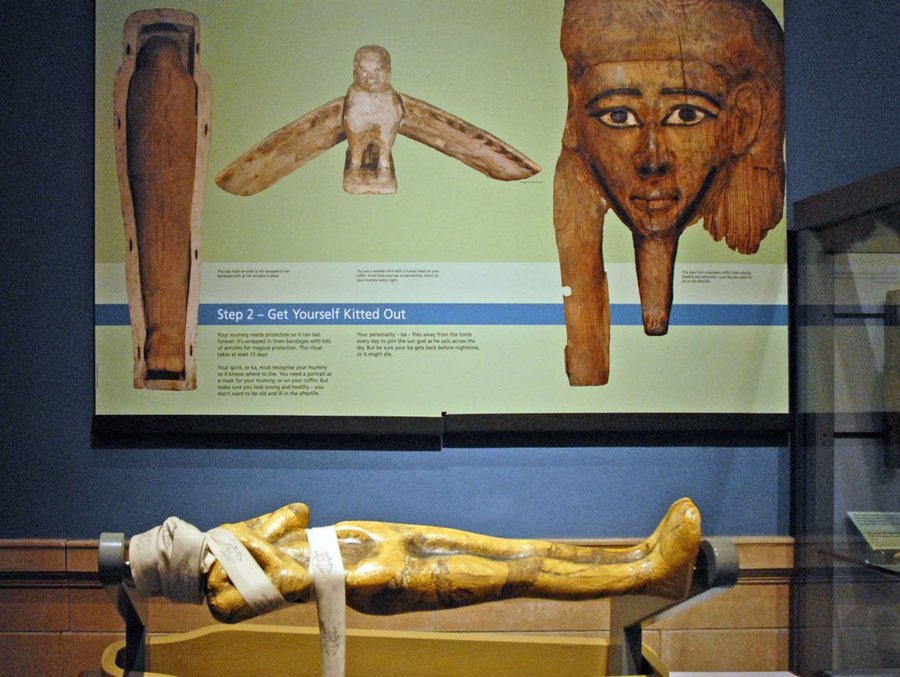
A hands-on display explaining ancient Egyptian funerary rites at Kelvingrove, photographed in 2009. Photo: Jean-Pierre Dalbéra, via Wikimedia Commons, CC BY 2.0
No catalog records for the head, the hand or the foot were found online, so what is known about them rests on the Daily Record's report alone. They belong to a substantial collection. A review of Scottish ancient Egyptian collections published by National Museums Scotland describes Glasgow's holdings as a Recognised Collection of National Significance to Scotland, with more than 4,300 objects.
What the Codes and Policies Say
The ICOM Code of Ethics for Museums was adopted at the organization's 41st Ordinary General Assembly in Paris on June 25, 2026. ICOM's own announcement says 85.90 percent of the vote was in favor. Section C.3 states that "Museums should uphold the inherent dignity of human remains and promote respect for their significance," and adds that "Decisions about these items and collections should be made in collaboration with descendants or communities from which they originate, if known."
The same section says that "In all cases where human remains hold continuing cultural or spiritual importance, museums should consider restricted use or repatriation as appropriate." Section E.5 covers requests from communities to limit access to sensitive materials or remove them from display. It says such requests "should be addressed promptly, respectfully and transparently," with policies that comply with the law "while balancing accessibility, educational use, and the long-term care of collections."
However, the word consent does not appear in C.3. ICOM uses the phrase free, prior and informed consent elsewhere in the Code, in passages on working with communities, Indigenous heritage and traditional knowledge. The documented consent test that Glasgow Life describes is set out in its own draft, and the Code does not contain an equivalent test for human remains.
Glasgow Life's published Collections Development Policy for 2024 to 2029, approved by Glasgow City Council in January 2024, points to existing Scottish guidance. Section 9.1 reads: "As the Museum holds human remains it will follow the guidelines in the 'Guidance for the Care of Human Remains in Scottish Museums' issued by Museums Galleries Scotland in 2011." The draft Human Remains Policy described in the statement could not be found on the Glasgow Life website or in council papers. Its full wording could not be checked.
A Child-Sized Coffin and an Adult Skeleton
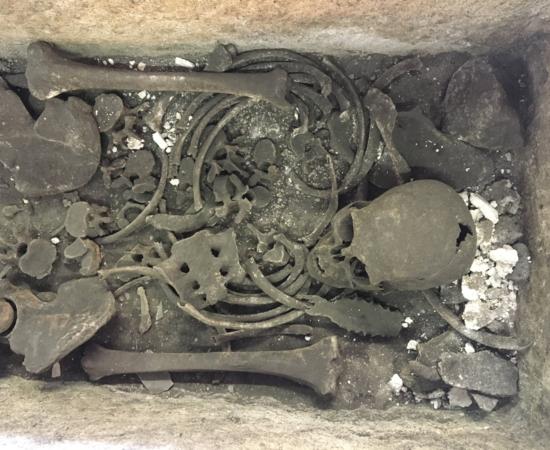
The coffin at the center of the coverage belongs to a man the press calls Nekht and the museum catalog spells Nakht, and it dates to the 12th Dynasty, 1985 to 1797 BC. John Garstang excavated it in Tomb 130 at Beni Hasan in Middle Egypt, during the University of Liverpool digs of 1902 to 1904. The Egyptian Research Students' Association (Glasgow Branch) gave it to Glasgow in 1923.
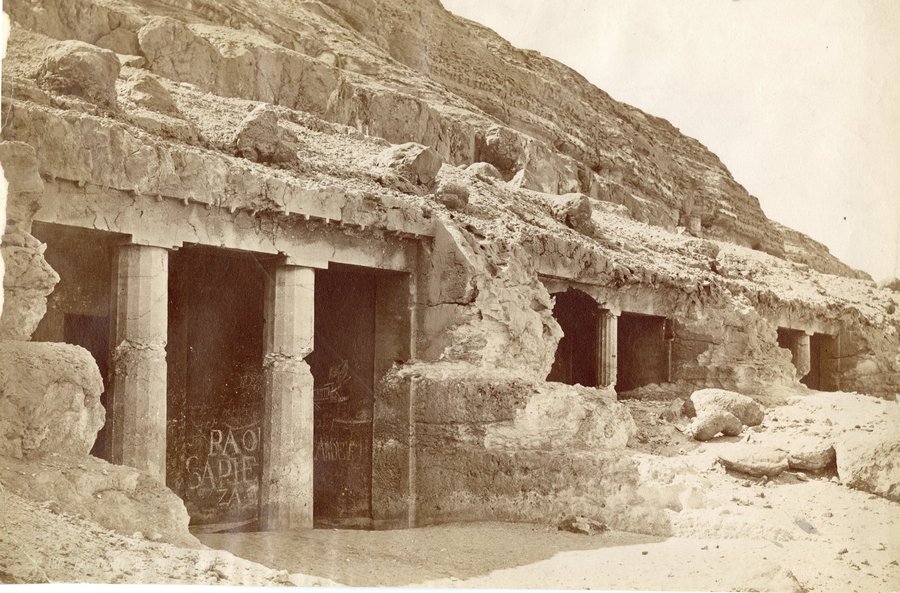
Rock-cut tombs at Beni Hasan in Middle Egypt, photographed between 1870 and 1880. Nakht's coffin came from Tomb 130 at the same site. Photo: Hippolyte Béchard, Museo Egizio, Turin, via Wikimedia Commons, CC0
The painted wooden box is just 1,000 mm long, roughly 3.3 feet, and the catalog record explains what that means. "Its small size shows it was intended for a child. It contains the skeleton of an adult man, Nakht, whose mummy must have decayed and been reburied." The most widely reported of the Kelvingrove removals is therefore a skeleton inside a container made for someone far smaller.
The coffin is painted to resemble the recesses and buttresses of a mudbrick palace, a house for Nakht in the afterlife. A pair of eyes on the left side allowed the dead man to be reborn daily by watching the rising sun. Bands of hieroglyphs carry the offering formula and name the owner, and the catalog notes that "The leopard skin painted on the lid shows Nakht was a sem-priest."
A sem-priest was a major figure in the Opening of the Mouth ceremony, which took place after the deceased had been mummified. The ritual was performed on statues or coffins representing the dead, to magically open the mouth so that the deceased could breathe, speak and receive food and drink. The catalog now lists the coffin's location simply as in storage.
How Does Egypt Display Its Own Dead?
Egypt's own official practice offers a useful comparison. The National Museum of Egyptian Civilization (NMEC) in Cairo describes its showpiece in these terms: "Considered the crown jewel of the museum, the Royal Mummies' Hall is specially designed to display the mummies of the ancient Kings and Queens of Egypt." The museum adds that "The design aims to give the visitor the feeling of strolling down the Valley of The Kings, where most of these mummies were originally resting."
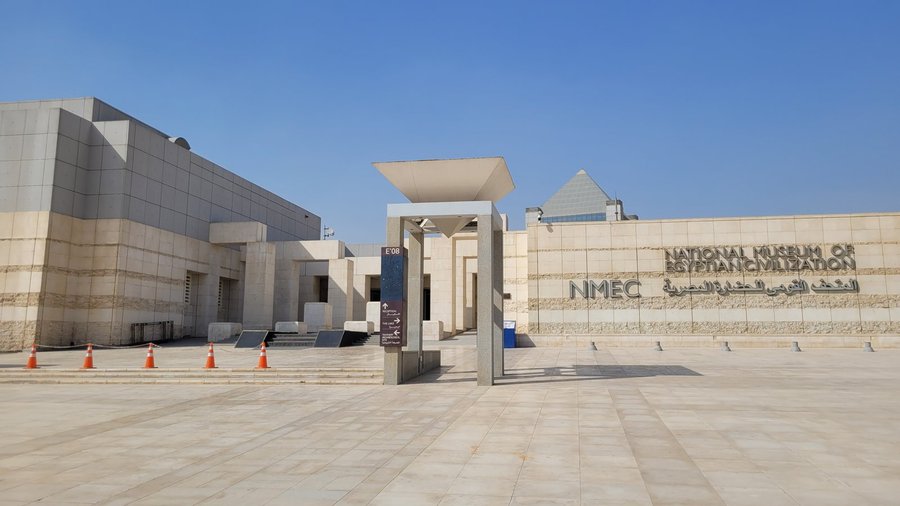
The National Museum of Egyptian Civilization in Cairo, home of the Royal Mummies' Hall, photographed in 2025. Photo: Nabbegat, via Wikimedia Commons, CC BY 4.0
The hall holds 20 royal mummies from the 17th to the 20th Dynasty, with Hatshepsut, Thutmose III and Seqenenre Taa II named among the most famous. They came in the Pharaohs' Golden Parade on April 3, 2021, when 22 mummies traveled through the streets of Cairo from the Egyptian Museum in Tahrir. According to the Ministry of Tourism and Antiquities, the parade coincided with the opening of the hall.
The practice is not limited to royalty. The ministry reports that its Supreme Committee for the Museums Display Scenario placed mummies of priests and priestesses of the god Amun in show cases at the Museum of Egyptian Capitals. They were found in the royal cache at Deir el-Bahari in 1881. The ministry said those cases "were prepared and sterilized in a special way to preserve the mummies inside."
However, no official Egyptian comment on the Glasgow decision could be found, and Egyptian practice does not bind a Scottish museum. Egypt's state museums place ancient priests and rulers on public view. In Cairo, the royal hall was designed to evoke the Valley of the Kings.
Where the Evidence Stands
The removal of Nekht's coffin and remains and the reasons Glasgow Life gave for it are Established. So are the catalog details of Nakht's coffin and Egypt's official display of royal mummies at NMEC and of priests' mummies at the Museum of Egyptian Capitals. The full wording of the draft Human Remains Policy remains Unverified, as do the head, hand and foot, which are known only from the Daily Record's report.
Until Glasgow Life publishes the draft, the decision can be assessed only through a short statement relayed by the press. For now, the display case where a sem-priest's coffin once stood holds a sign instead.
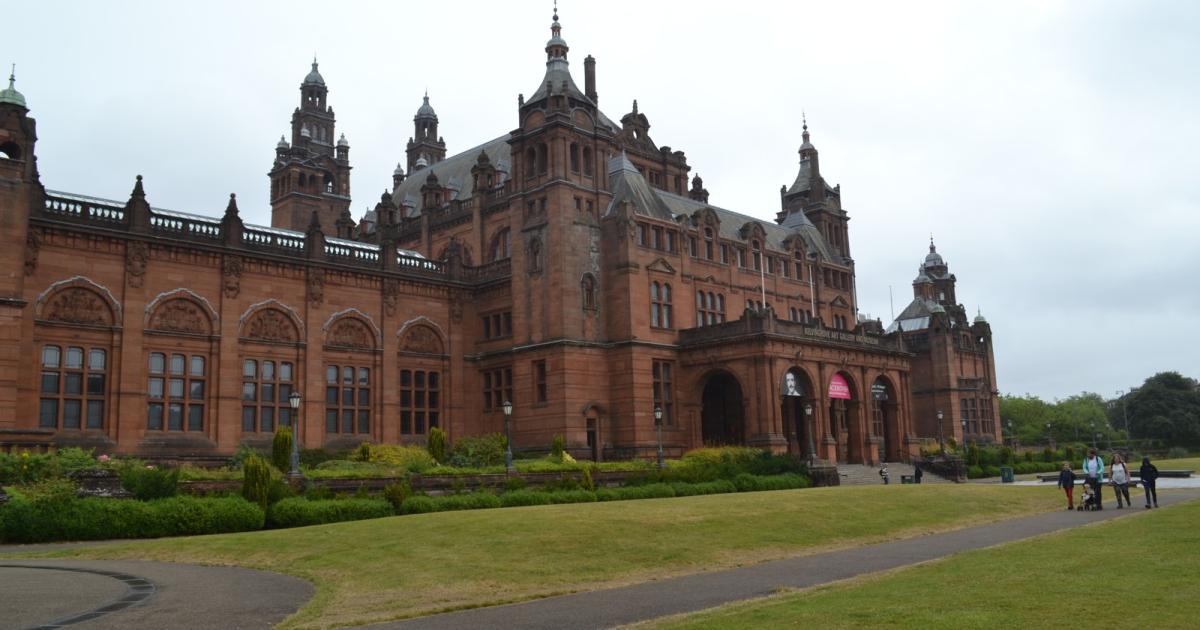
Kelvingrove Art Gallery and Museum in Glasgow. Photo: Daniel from Glasgow, via Wikimedia Commons, CC BY 2.0
By Aris Manus
Sources
- Gaddi, B. 2026. "Kelvingrove Museum removes Egyptian mummies from display due to lack of 'consent'." Daily Record, October 21, 2026. https://www.dailyrecord.co.uk/news/scottish-news/kelvingrove-museum-removes-egyptian-mummies-37797560
- Glasgow Life. 2024. Collections Development Policy 2024 to 2029, approved January 2024. https://www.glasgowlife.org.uk/media/tw1nyo5k/gl-museums-collections-development-policy-2024-2029-final-approved-by-gcc-jan-2024.pdf
- International Council of Museums. 2026. "ICOM Code of Ethics for Museums." https://icom.museum/wp-content/uploads/2026/07/ICOM-Code-of-Ethics-for-Museums_2026_EN.pdf
- International Council of Museums. 2026. "The revised ICOM Code of Ethics is officially adopted." June 25, 2026. https://icom.museum/en/news/the-revised-icom-code-of-ethics-is-officially-adopted/
- Glasgow Museums. Collections record 1923.33.a.1, painted coffin of Nakht. Glasgow Museums Collections Online. https://collections.glasgowmuseums.com/mwebcgi/mweb?id=134871&request=record&type=101
- National Museums Scotland. Scottish Ancient Egyptian Collections Review, Glasgow Museums entry. https://files.nms.ac.uk/production/Documents/Our-Impact/Collections-reviews/Ancient-Egyptian-collections/glasgow-and-strathclyde.pdf
- National Museum of Egyptian Civilization. "Mummies Hall." https://nmec.gov.eg/mummies-hall/
- Ministry of Tourism and Antiquities, Egypt. "Pharaohs' Golden Parade." https://egymonuments.gov.eg/en/events/pharaohs-golden-parade
- Ministry of Tourism and Antiquities, Egypt. "The mummies of the priests and priestesses of the god Amun, in their show cases." https://egymonuments.gov.eg/news/the-mummies/