
Around 400 BC, the fortified villages of northern Iberia emptied out, and they emptied fast. A new study of 109 archaeological sites has found that the hilltop settlements of the Early Iron Age were abandoned within less than a hundred years, and that inside any one region the social landscape turned over in roughly a generation. The villages that replaced them took two centuries to spread.
The work was led by Samuel Nión-Álvarez of INCIPIT-CSIC in Santiago de Compostela and published open access in the Journal of Archaeological Science. It draws on 272 radiocarbon dates from five zones: the Atlantic seaboard, the western and eastern Cantabrian strip, and the western and eastern Meseta explains an Archaeology Magazine report. Northern Iberia was chosen because it holds an unusually dense body of dated sites, and because its social changes look homegrown rather than colonial.
Dating this event has never been easy. Between roughly 750 and 420 BC the calibration curve flattens into the Hallstatt plateau, so samples from different centuries can produce near-identical readings. Nión-Álvarez approached the problem by trusting many dates at once, feeding them into Bayesian models that also weigh what excavation shows about which layer came first.
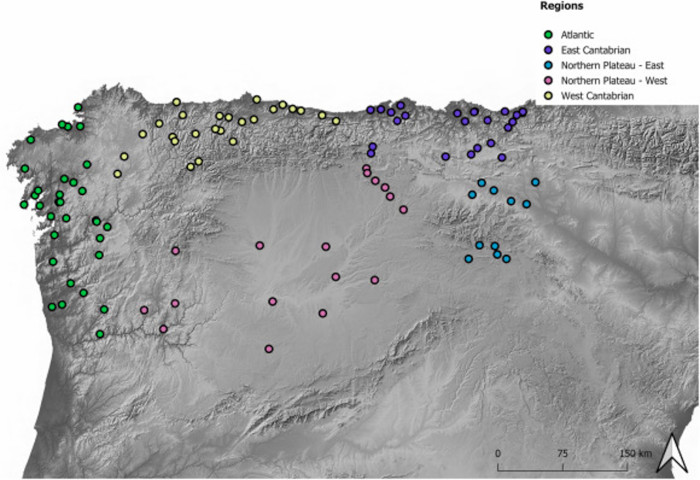
Map of settlements in the area of study. (Nión-Álvarez 2026/ Journal of Archaeological Science)
A Fast Collapse, then a Slow Rebuild
The abandonments did not happen everywhere at once. The first come from the western Cantabrian area, the strip that includes Asturias, between the last decades of the sixth century BC, and the opening of the fifth. The trend then moved west to the Atlantic coast and the western Meseta.
Old and new barely overlapped. On the Atlantic coast the two phases probably ran side by side for around 69 years on average and in the eastern Cantabrian area that overlap shrinks to a few years. At 18 of the 109 sites there are dates for both phases, and they point to a gap rather than a handover. Pelou, Llagú and San Chuis in Asturias are among them.
- The Hillforts Of Iberia: Ruins Of Proto-Celtic Tribes Who Resisted The Romans
- Celtic Symbols Unearthed at San Vicenzo, Spain
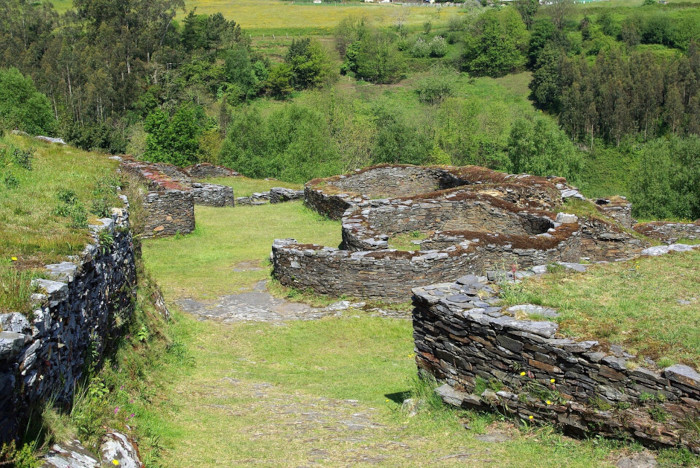
The ruins of Castro de Coaña in western Asturias, one of the most thoroughly explored fortified villages in the region where the abandonment began. (David Perez/CC BY 3.0)
Rebuilding Was Slower, and Uneven
New settlements began appearing in the early fourth century BC, first in the western Cantabrian and Atlantic zones. Bigger, more complex villages followed, many with defensive walls and close to good farmland. The spread rolled across the Meseta in waves over at least two centuries, and in the far east fortification only became common around the start of the third century BC.
Why the hillforts were abandoned remains open, and the paper says so plainly. Climate shifts, migration, population growth and conflict have all been proposed, and a combination is the likeliest answer. One thread the study picks up is the argument by researcher Carlos Marín Suárez that communities shifted from an egalitarian ethos towards a warrior one, hardening the identity of the Astures, the people Rome would fight in the Cantabrian Wars of 29–19 BC.
- The Powerful Hallstatt Culture: Foundation of the Proto-Celtic World
- How the Great La Tene Culture Changed Iron Age Europe
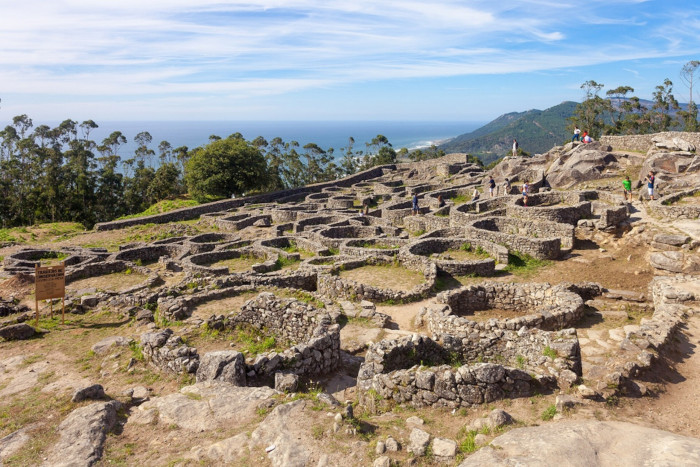
Castro de Santa Trega in Galicia, where Late Iron Age settlements were larger, denser and more sharply ranked than the villages they replaced. (Luis Miguel Bugallo Sánchez / Wikimedia Commons / CC BY-SA 4.0)
A Timeline Others Can Reuse
Between the two phases the record holds a surprise: short-lived open settlements and ritual or burial spaces, clustered in the last third of the fifth century BC and mostly along the Atlantic coast. Open villages and cemeteries were previously unknown there for the Iron Age, though the sample is small.
Violence does surface elsewhere. At La Hoya, near Laguardia in Álava, a team led by Teresa Fernández-Crespo reported in Antiquity that the settlement was attacked, its inhabitants killed and the site burned between the mid-fourth and late third centuries BC.
The limits of the study are worth keeping in mind. The 109 sites are a fraction of the 4,500 to 5,000 estimated for the region, and they are spread unevenly, with far more in Galicia than in the east. The Hallstatt plateau still forces the study to speak in decades rather than years. What it delivers is a firmer clock for each stage, so competing explanations can finally be tested against solid dates.
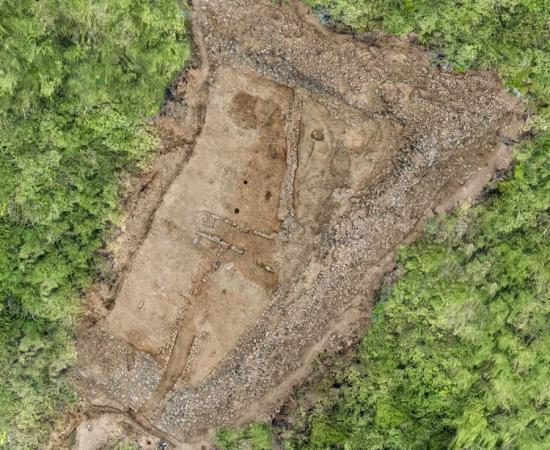
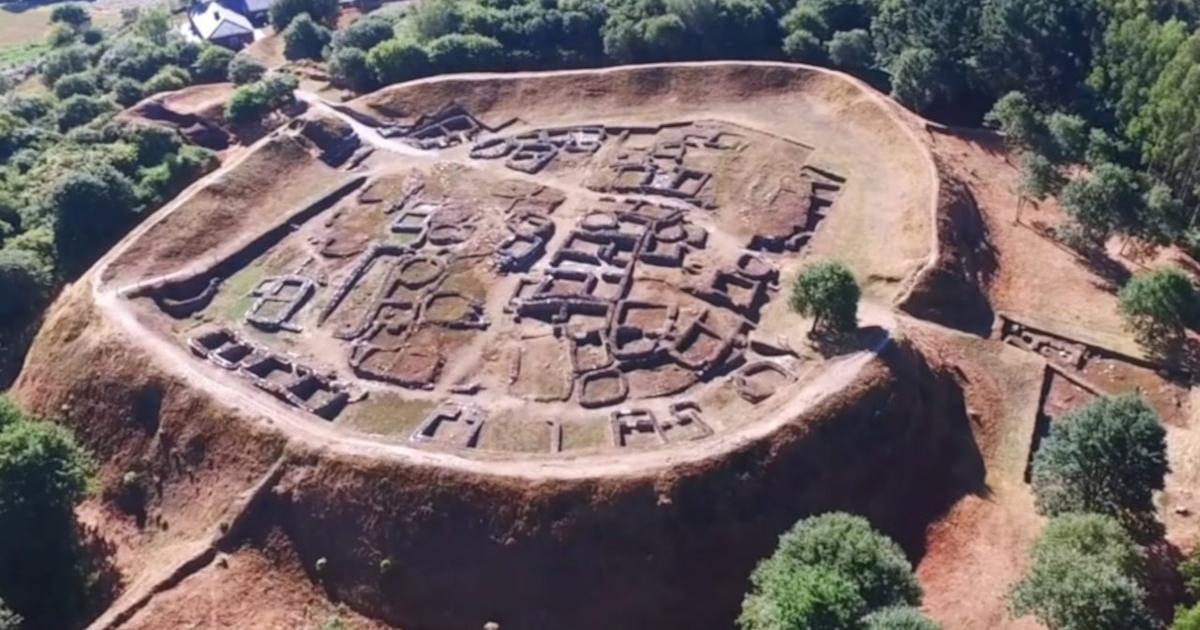
Top image: Aerial view of the Viladonga hillfort in Galicia, Spain, one of the sites investigated in the study. Source: Xunta de Galicia (Department of Culture
By Gary Manners
References
Fernández-Crespo, T. et al. 2020. Make a desert and call it peace: massacre and arson at the Iberian Iron Age village of La Hoya. Antiquity, 94(377), pp. 1245–1262. Available at: https://doi.org/10.15184/aqy.2020.161
La Brújula Verde. 2026. Northern Spain's Iron Age Hillforts Emptied Out Around 400 BC and No One Knows Why: Rebuilding Took at Least Two Centuries. Available at: https://www.labrujulaverde.com/en/2026/10/northern-spains-iron-age-hillforts-emptied-out-around-400-bc-and-no-one-knows-why-rebuilding-took-at-least-two-centuries/
Nión-Álvarez, S. 2026. Close to the edge: A chronometric approach to Early-Late Iron Age transition (450–350 BCE) in the Iberian Peninsula. Journal of Archaeological Science, 194, 106689. Available at: https://www.sciencedirect.com/science/article/pii/S0305440326002190
Radley, D. 2026. Northern Iberia Abandoned Its Fortified Iron Age Settlements. Archaeology Magazine. Available at: https://archaeologymag.com/2026/10/northern-iberia-abandoned-its-fortified-iron-age-settlements/