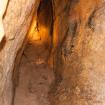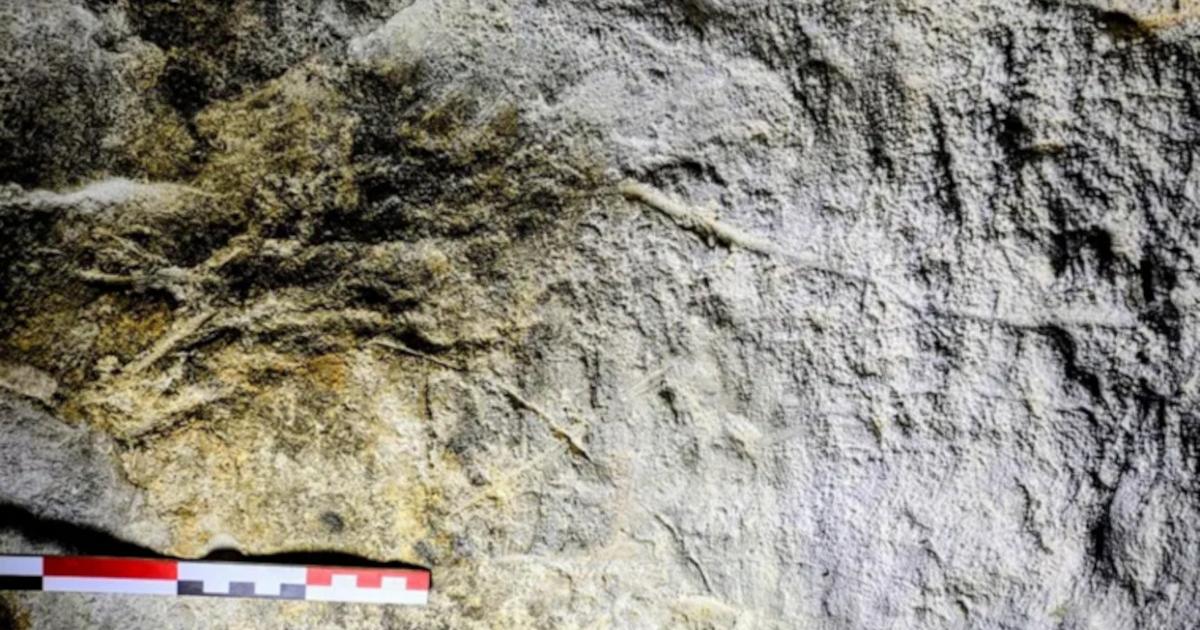

Cave art located in eight caves in Ireland may indicate that people were there thousands of years before conventional views suggest. The findings support a daring hypothesis that Ice Age hunter-gatherers traveled from Wales to Ireland across a land bridge now beneath the sea. According to the Lost Land Bridge Project, the art in these caves dates back to at least 15,000 years ago, around 5,000 years before the previous oldest example of humans in Ireland.
Eight Caves Found with a Welsh-Trained Model
BBC Wales reports that the research team were able to analyze the characteristics of known cave art sites of south Wales using a computer model, which compiled a list of 28 promising caves in southwestern Ireland to start their examinations. Of those caves, eight had possible artwork in them, which was deemed very encouraging for a targeted survey. The rock art found was comprised of engraved limestone, colored using charcoal and ochre with finger drawn lines, and depicting possible animals such as the deer and mammoth.
The project was run by rock art expert George Nash together with Genevieve von Petzinger and Barbara Oosterwijk, and the precise locations of the caves are kept secret to secure them against any possible vandalism.
- Red Stripes in Welsh Cave Reclassified as UK's Oldest Cave Art
- 14,500-Year-Old Stone Engravings: Archaeologists Uncover Earliest Known Art in Britain
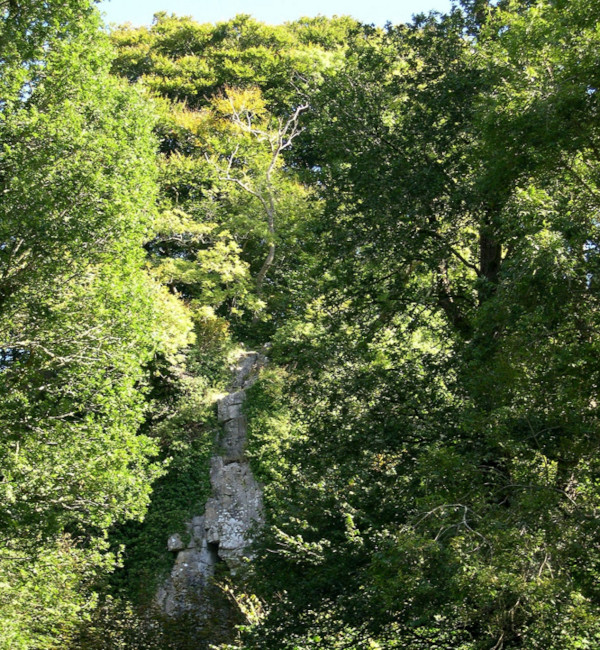
Cathole Cave on the Gower Peninsula provides context for the region’s prehistoric cave landscape; it is not one of the newly reported Irish sites. (John Duckfield//CC BY-SA 2.0)
The new claim needs careful wording because Ireland’s early human timeline is already complicated. A butchered reindeer bone has been used to argue for human activity in ancient Ireland around 33,000 years ago, while firmer evidence for settlement belongs to the post-Ice Age world of Irish hunter-gatherers. The Irish cave art would therefore be important evidence of Upper Palaeolithic presence, but not necessarily the island’s first trace of people.
According to the BBC report, Nash explains:
"The sites we've currently explored are in south-west Ireland, but it's illogical to presume that early humans just bypassed Wexford, Waterford and Cork, and ploughed on west. There must be more, and even earlier places which are just waiting for us to find them. This project is now pushing the boundaries of what we consider to be the final vestiges of a north-west European frontier. It's all very exciting."
- Timeline of Human Activity in Ancient Ireland is 33,000 Years Old!
- First Evidence of Habitable Forests in North Sea's 'Lost World'
Did Ice Age Travelers Cross from Wales?
The decrease in sea levels during the last Ice Age changed the coastlines and exposed extensive land areas that became submerged afterwards. This project suggests that a corridor around 46 miles (76 kilometers) long linked Pembrokeshire and the Rosslare area, which enabled people to travel to the west following the herds and habitable terrain. Similar movements took place in other migrations, e.g. the hunter-gatherers returning to Britain by traveling through now-submerged landscapes like Doggerland.
Although this reconstruction makes it possible that the artists came from Wales, it does not prove where they were born or how they got to Ireland. No known DNA or isotope evidence, Welsh stone source, or uniquely Welsh motif has been found that provides a direct connection between the groups. For now, the argument relies on geography, a survey model based on Welsh sites, and a study of regional traditions such as the red marks recently recorded at Bacon Hole.
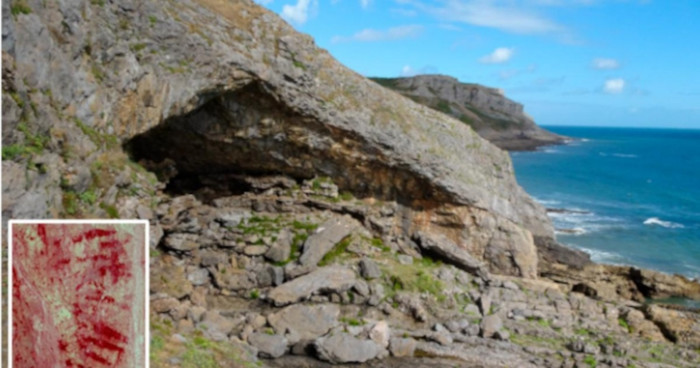
General view of Bacon Hole cave on the Gower Peninsula, Wales, overlooking the Bristol Channel, where Britain's oldest cave art has been authenticated. Insert, image of the cave art. (George Nash/Quarternary Journal)
Irish Cave Art Still Awaits Firm Dates
Despite the excitement, determining the age of the Irish cave art is the key to the enquiry, notes Heritage Daily. Although the researchers currently estimate a minimum age of 15,000 years, the reports do not provide actual samples, measurements, calibration ranges, or any information on the stratigraphic sequence. The Debrief coverage agrees that reliable dating represents an important next step, similar to how having a context is important when studying any archaeological evidence.
A separate peer-reviewed study of Bacon Hole in the Gower, Wales, used pigment analysis and uranium-thorium dating of calcite overlying the painted surfaces, and found a dating back at least 17,100 years. Although this indicates early human presence on the potential land bridge route proposed, to offer real evidence that journey took place, dating of the Irish cave art is needed.
No peer-reviewed paper describing the eight Irish caves could be identified at the time of writing, so authentication, direct dating, and independent review remain essential. Even with that caution, the discovery offers an exciting lead that could connect Ireland’s hidden Palaeolithic record with the long history preserved in Welsh caves.
Top image: Evidence of cave art found in caves in Ireland. Source: George Nash
By Gary Manners
References
Hanks, M. 6 September 2026. 15,000-Year-Old Cave Discovery in Ireland Could Push Back Earliest Evidence of Humans on the Island by 5,000 Years. Available at: https://thedebrief.org/15000-year-old-cave-discovery-in-ireland-could-push-back-earliest-evidence-of-humans-on-the-island-by-5000-years/
Milligan, M. 5 September 2026. 15,000-year-old cave art discovery could rewrite the story of Ireland’s first humans. Available at: https://www.heritagedaily.com/2026/09/15000-year-old-cave-art-discovery-could-rewrite-the-story-of-irelands-first-humans/159177
Nash, G. H., et al. 26 May 2026. Rediscovered Late Upper Palaeolithic Painted Imagery at Bacon Hole, Gower Peninsula, South Wales. Quaternary 9(3 ), 43. MDPI. Available at: https://www.mdpi.com/2571-550X/9/3/43
Prior, N. 4 September 2026, updated 5 September 2026. Ancient cave art discovery suggests first known humans in Ireland walked over from Wales. Available at: https://www.bbc.co.uk/news/articles/c5y75dl0jpko