
New research into Indigenous population dynamics in the New World of the pre-Columbian Americas is producing some fascinating results, thanks to the deployment of new analytical tools that allow for a more in-depth and comprehensive probing.
In a study just published in the Proceedings of the National Academy of Sciences, a team of researchers report on the population variations they identified when looking back over thousands of years of the history of Indigenous peoples living in the pre-European United States and Canada. Their work involved an exhaustive survey of radiocarbon dating results obtained from tests on tens of thousands of bones, textiles, food scraps, food and drink residues on pottery, and charcoal bits taken from archaeological sites across North America, which it took them a full decade to compile.
From this invaluable data, the researchers found that Native American populations reached their maximum around 1150 AD, before experiencing a 30% decline between then and 1500, or before Europeans began exploring the lands of North America in earnest. It seems the numbers showed signs of rebounding about that time, but that trend would be reversed by the impact of contact with Europeans, who brought diseases, weapons, and a conquering mentality that would ultimately decimate native populations.
- Study of Ancient Teeth Reveals Native American Origins Lie in Siberia
- Did Paleoamericans Reach South America First?
Significant Population Decline Revealed by Artifacts
The researchers involved in this study were led by archaeologist Robert Kelly of the University of Wyoming, and the team used a previous population study carried out by Canadian academics as their starting point. They eventually expanded their survey to include more than 60,000 radiocarbon dates from a variety of organic artifacts found in the United States and Canada, dating back to the dawn of the first millennium AD.
At no time did the research team attempt to estimate total numbers of Native Americans living in the region. Their focus instead was on identifying population trends, to get a handle on how populations rose or fell in pre-European times. By measuring fluctuations in how many organic artifacts were found in different locations in different time periods, they were able to chart populations increases and decreases in those areas.
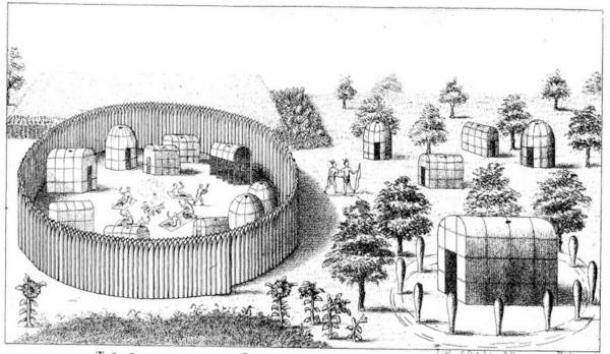
19th century illustration of Indigenous village in Virginia, not long after first contact between native population and Europeans. (Robert Beverley/Public Domain).
What they found is that Indigenous populations in North America grew steadily for about 2,000 years until around 1150 AD, when they reached their peak, with a nearly one-third decline experienced after that. The nature of this ebb and flow varied between regions and specific populations, undoubtedly impacted by climate change, disease, conflict, and other natural and societal factors that could have caused population levels to drop (or rise when things got better).
“The entire continent is not in lockstep,” said Kelly, lead author of the new study, said in an article about his ‘steam research published in Science.
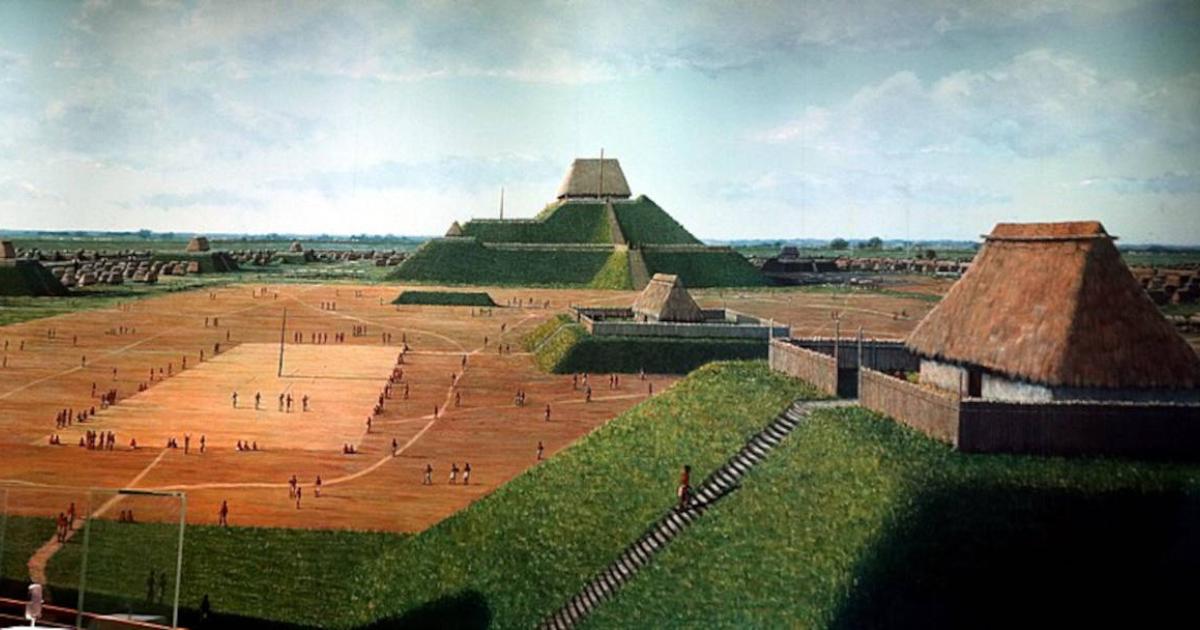
One of the starkest examples of regional differences was demonstrated by their study of the Cahokia people, who built the largest known settlement in prehistoric North America (also known as Cahokia), which was located near the confluence of the Mississippi and Missouri rivers in Illinois. This prosperous mound-building culture saw its population surpass 10,000 by the year 1100, but a series of droughts after that led to crop failures and mass migrations to other regions, and by 1350 their huge settlement had been completely abandoned.
“Agriculture can raise the carrying capacity and a population will quickly grow,” Kelly explained. “Then … Mother Nature pulls the rug out.”
By about 1450, continental populations overall were starting to rebound. But the arrival of the European ships put an end to all that, ultimately leading to an Indigenous population crash that can be classified as the largest genocide in human history.
A Clash of Civilizations
“This study is incredibly innovative,” said Carlton Shield Chief Gover, an archaeologist at the University of Kansas and citizen of the Pawnee Nation who was not directly involved in the researrch. “It’s the first large-scale data set looking at population trends by subregion.”
However, María Nieves Zedeño, an archaeologist at the University of Arizona who also was not involved in the study, noted that a continental view can be somewhat misleading.
- Native American Art: Thousands of Artists But Only a Fraction of Their Masterpieces Have Survived
- Did a Native American travel with the Vikings and arrive in Iceland centuries before Columbus set sail?
“During the time of apparent decline, there were regions across North America that actually witnessed population growth,” she pointed out.
People living on the northern plains, for example, saw their populations grow between 1500 and 250 years ago, thanks to expansion of grasslands and bison herds, plus improvement in hunting strategies and techniques. So the picture was always complex, regardless of the macro-trends.
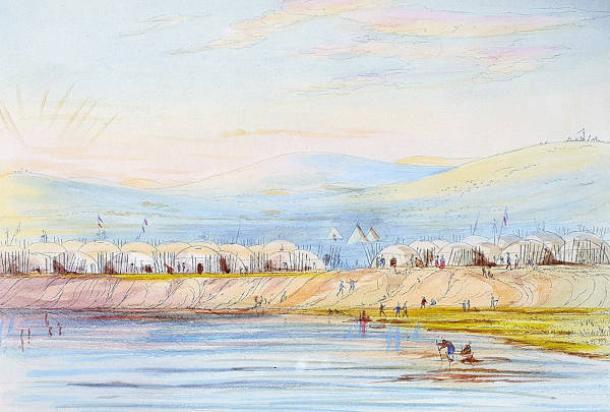
Painting of a village of the Arikara, a North American Indigenous people, in the 19th century. (Public Domain).
The researchers involved in the study speculate that the 30% population loss experienced just before European contact may have influenced the outcome of that “clash of civilizations.” If Europeans had encountered Indigenous populations at their peak, they might have faced stronger opposition from the various tribal confederacies that existed when native numbers were high, resulting in a different outcome for Native Americans and Europeans alike.
Calculating Total Indigenous Population Numbers
Attempting to calculate the total Indigenous population of the Americas before the 1500s has been notoriously difficult for academics, because of the fragmentary nature of the available data that can be used to answer this question. What is known for sure is that the large majority of Native Americans during those times lived in Mexico, Central America, and South America, with much smaller numbers occupying the vast but colder landscapes of the lands of modern-day Canada and the United States.
Based on the most recent studies, it seems that there were somewhere between 3.5 and seven million Indigenous people living in what are now Canada and the United States before the European “discovery” of America (with somewhere between 60 million and 100 million living in the Americas overall).
As of 2020 it is estimated that there are about 50 million Indigenous people living in the Americas, about six million of whom live in the United States and Canada, so it has essentially taken five centuries for native populations to return to something resembling their original levels (albeit with little control over the lands they used to completely occupy.
While the new research on population trends doesn’t relate directly to total population, it should help experts refine their estimates somewhat, as knowledge about these trends will add some new data points for those who are studying the question and seeking to further refine their estimates.
Presumably, the trends would have been impacted by factors like epidemics, natural disasters, warfare, and resource depletion on the negative side, and increases in food production through the greater use of agricultural techniques, the discovery of fertile new hunting grounds, improvements in Indigenous medical practices, migrations to less harsh climate regions, etc., on the positive side. Now that increases and decreases in ancient Indigenous populations have been measured, researchers will be better prepared to search for answers to explain them.
Top image: Re-creation of the great settlement of the Cahokia in Illinois.
Source:Thank you (24 millions)/CC BY-SA 2.0.
By Nathan Falde