

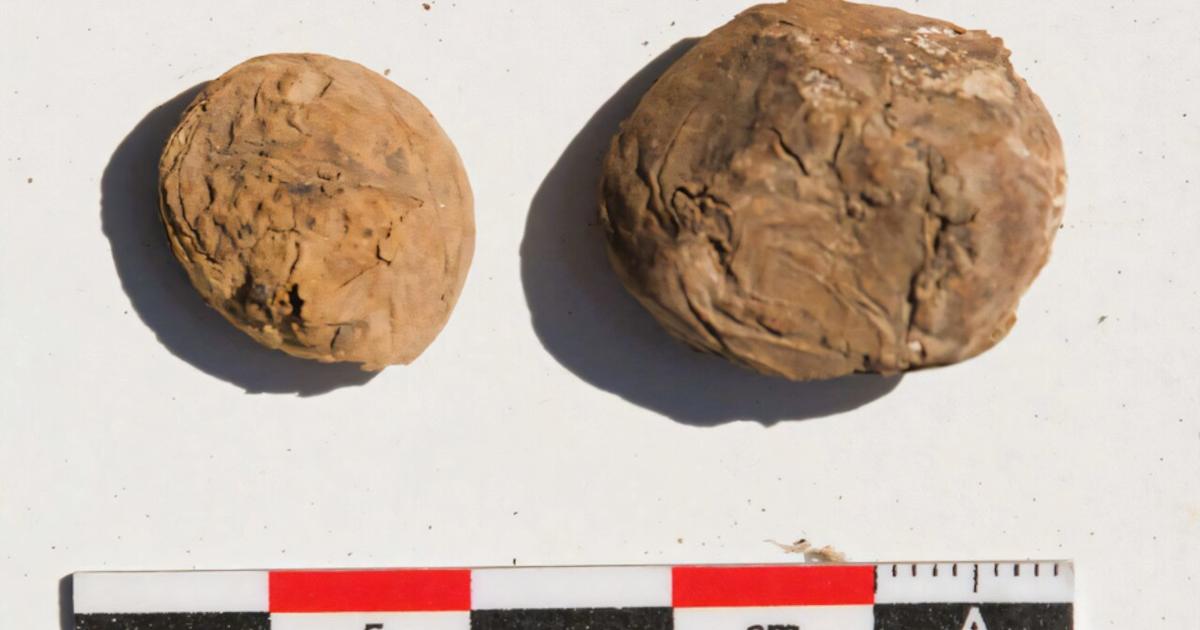

Archaeologists excavating the ancient Inca provincial center of Tambo Viejo on Peru’s arid southern coast have made an extraordinary discovery: two 500-year-old freeze-dried potatoes. Known as chuño, these preserved tubers offer rare physical evidence of the vast food storage and transportation networks that sustained the mighty Inca Empire. According to a recent study published in the Journal of Field Archaeology, the presence of chuño at a coastal site confirms that this essential highland food was distributed across the imperial realm to feed its workforce.
The find is exceptionally rare, as organic materials like potatoes typically decay rapidly. "It was obvious that this was not just any find, but a special one," stated Dr. Lidio Valdez, an archaeologist at the University of Calgary, who led the excavation alongside Dr. Katrina Bettcher.
The discovery sheds new light on the ingenious agricultural and preservation techniques developed by Andean civilizations long before the advent of modern refrigeration.
The Ingenious Process of Making Chuño
Potatoes are indigenous to the Andes, where thousands of varieties have been cultivated for millennia. However, fresh potatoes are prone to rotting, especially in warm, moist environments. To overcome this, ancient South American farmers developed a remarkable preservation method. They created chuño by exposing frost-resistant, often bitter potato varieties to the freezing night temperatures of the high Andes, then thawing them under the intense daytime sun.
- Andean Agriculture: What Were The Inca Building At Moray?
- First Naturally Mummified Inka Llama Sacrifices Found!
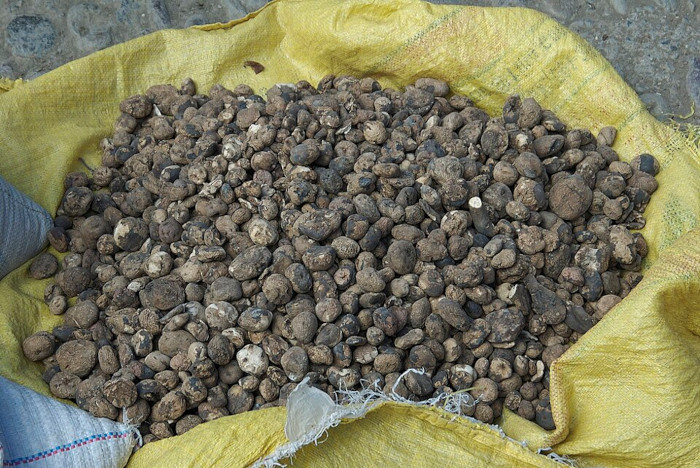
Chuño, the traditional freeze-dried potatoes of the Andes. (Eric in SF / CC BY-SA 3.0)
This natural freeze-drying cycle, repeated over several days, breaks down the cell walls of the potatoes. The tubers are then trampled by foot to extract the remaining moisture and remove the skins. The result is a lightweight, durable food product that can be stored safely for decades. The white chuño found at Tambo Viejo, also known as tunta, requires an additional step of soaking in water for several weeks to remove natural toxins before a final sun-drying phase.
Sustaining the Empire
During the height of the Inca Empire, chuño was considered the "bread of the people." Because it was lightweight and had an incredibly long shelf life, it was ideal for sustaining armies on the march and feeding laborers across the vast territory. Llama caravans transported large quantities of chuño and other staples along the extensive Qhapaq Ñan road network to state-controlled warehouses known as qollqas.
At Tambo Viejo in the Acarí Valley, the two freeze-dried potatoes were discovered inside a ceramic jar set into the floor, likely used for storage. Found alongside a broken piece of Inca pottery and a damaged spindle whorl, these items helped researchers date the find to the 15th or 16th century. The arid coastal environment and the protection of the jar created the perfect microclimate for these ancient potatoes to survive for half a millennium.
- 10 Jaw-dropping Engineering Marvels of the Inca Empire
- Ollantaytambo: The Inca Fortress That Defied Conquistadors
A Legacy of Resilience
The discovery at Tambo Viejo is one of the only instances of chuño being found in an archaeological context in over a century, with a previous comparable find made at Pachacamac. While historical Spanish chronicles extensively documented the importance of chuño, physical evidence has remained elusive. The researchers hope that future chemical analysis might reveal the exact mountainous origins of these coastal potatoes.
The legacy of chuño extends far beyond the fall of the Inca, remaining a vital dietary staple for many Andean communities today. The enduring practice of making chuño is a testament to the profound understanding of agriculture and the environment possessed by ancient Andean peoples, offering a sustainable model for food preservation that has stood the test of time.
Top image: Freeze-dried potatoes (chuño) from Tambo Viejo, Peru. Source: L. M. Valdez in Valdez and Bettcher 2026/Journal of Field Archaeology
By Gary Manners
References
Valdez, L. M., & Bettcher, K. J. 2026. Inka Freeze-Dried Potatoes from Tambo Viejo, Acarí Valley, Perú. Journal of Field Archaeology. Taylor & Francis. Available at: https://www.tandfonline.com/doi/full/10.1080/00934690.2026.2658319
Oster, S. 2026. Rare 500-year-old freeze-dried potatoes unearthed at Inca coastal site. Phys.org. Available at: https://phys.org/news/2026-06-rare-year-dried-potatoes-unearthed.html
Wikipedia. 2024. Chuño. Available at: https://en.wikipedia.org/wiki/Chu%C3%B1o






















