
A groundbreaking archaeological discovery in West Africa is challenging long-held assumptions about early human adaptability and migration. Evidence from a site in Côte d'Ivoire reveals that Homo sapiens inhabited dense tropical rainforests around 150,000 years ago, pushing back the earliest known occupation of such environments in Africa by more than 80,000 years. This revelation suggests that our ancestors were far more versatile than previously believed, mastering extreme environments much earlier in their evolutionary journey.
For decades, the prevailing narrative in human evolution posited that early Homo sapiens primarily thrived in open grasslands and coastal regions, actively avoiding the harsh and resource-scarce conditions of dense tropical rainforests. The thick vegetation and humid climate were thought to act as formidable barriers to human settlement and migration across the continent. However, the recent findings from the Bété I site in southern Côte d'Ivoire are dismantling this theory, proving that early humans not only survived but successfully adapted to these challenging ecosystems.
- Revolutionary Study Shows Humans Lived in African Rainforests 150,000 Years Ago
- Human Mastery Over Extreme Environments Happened Before the Great Migration
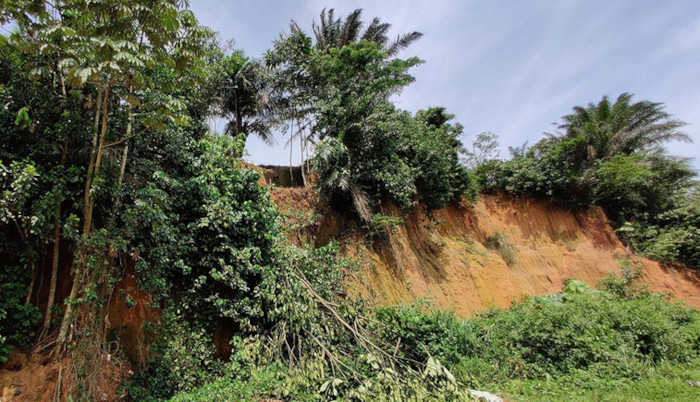
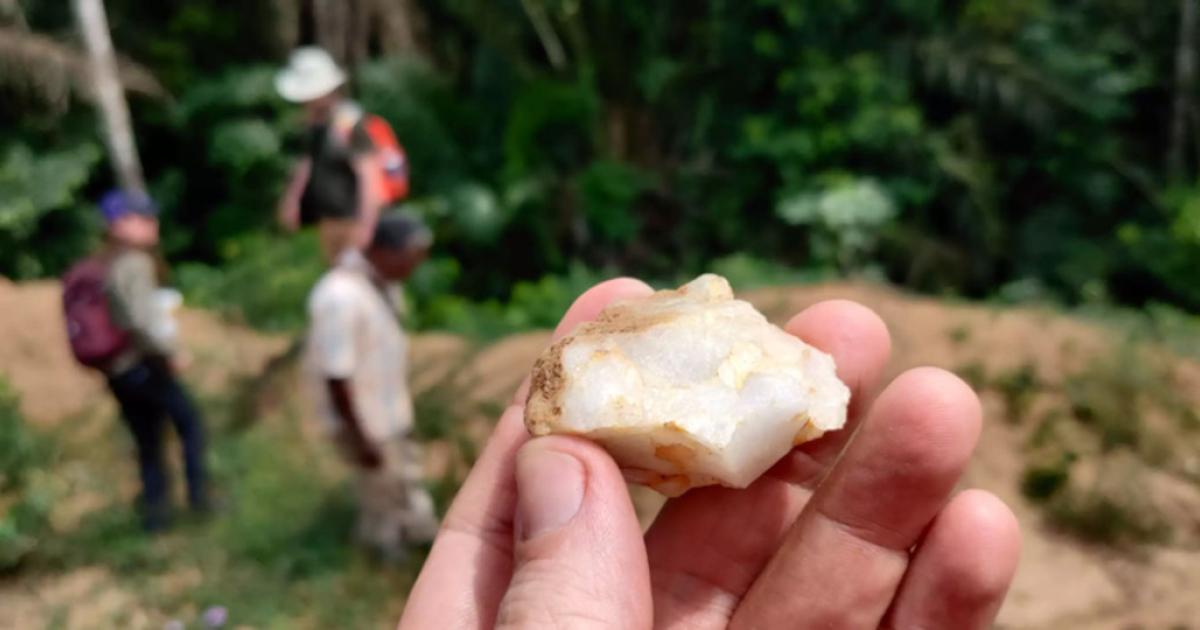
Bété I has been lost to mining following the recent excavation, but scientists are hopeful similar sites in Africa are still to be found. (© Jimbob Blinkhorn/MPG)
Uncovering the Secrets of Bété I
The story of this remarkable discovery traces back to the 1980s when Professor Yodé Guédé of l'Université Félix Houphouët-Boigny participated in a joint Ivorian-Soviet research mission. During their excavations at the Bété I site, located near Anyama, the team unearthed a deeply stratified sequence containing numerous stone tools. While the artifacts clearly indicated ancient human presence in what is now a rainforest, the dating techniques available at the time were insufficient to determine their exact age or the environmental conditions during their deposition.
Decades later, an international team of researchers, led by the Max Planck Institute of Geoanthropology, returned to the site. Equipped with state-of-the-art methodologies, they aimed to resolve the mysteries surrounding Bété I. The timing of their renewed investigation was fortuitous, as the site has since been destroyed by local mining activities. Using advanced techniques such as Optically Stimulated Luminescence and Electron-Spin Resonance, the scientists successfully dated the sediment layers containing the larger stone tools, such as picks, to approximately 150,000 years ago.
Reconstructing an Ancient Ecosystem
Determining the age of the artifacts was only half the puzzle; the researchers also needed to understand the environment in which these early humans lived. To reconstruct the paleoecology of the site, the team meticulously analyzed sediment samples for microscopic plant remains. They examined pollen grains, silicified plant structures known as phytoliths, and leaf wax isotopes preserved within the layers.
The results were unequivocal. The analyses revealed a high concentration of pollen from trees and palms, including African elemi and oil palm, which are characteristic of humid West African rainforests. Conversely, the presence of grass pollen was notably low, indicating that the site was situated within a dense woodland rather than a transitional forest edge. This comprehensive environmental data confirms that the human occupants of Bété I were indeed living deep within a wet tropical forest ecosystem.
- Survival Tactics of Homo Sapiens That Brought World Domination
- Million-Year-Old Skull Discovery Rewrites Human Evolution Timeline
Redefining Human Evolution and Migration
Prior to this study, the oldest secure evidence for human habitation in African rainforests dated back to around 18,000 years ago, while the earliest global evidence came from Southeast Asia, dating to approximately 70,000 years ago. The findings from Bété I push back the timeline for rainforest occupation by more than double the previous estimates. This significant chronological shift highlights the remarkable ecological flexibility of Homo sapiens early in our evolutionary history.
"Convergent evidence shows beyond doubt that ecological diversity sits at the heart of our species," stated Professor Eleanor Scerri, senior author of the study published in the journal Nature. This adaptability likely played a crucial role in the successful dispersal of modern humans out of Africa and across the globe, allowing them to conquer a wide array of environments, from arid deserts to dense jungles. The discovery at Bété I not only reshapes our understanding of early human habitats but also opens new avenues for exploring how ancient populations interacted with and potentially altered pristine natural environments long before the advent of agriculture.
Top image: Stone tool recovered at the site of Bété I, Côte d’Ivoire. Source: Jimbob Blinkhorn/MPG
By Gary Manners
References
Arous, E.B. et al. 2025. Humans in Africa’s wet tropical forests 150 thousand years ago. Nature. Available at: https://doi.org/10.1038/s41586-025-08613-y
Ashworth, J. 2025. Earliest evidence of Homo sapiens living in rainforests uncovered. Natural History Museum. Available at: https://www.nhm.ac.uk/discover/news/2025/february/earliest-evidence-homo-sapiens-living-rainforests-uncovered.html
Max Planck Institute of Geoanthropology. 2025. Earliest Evidence for Humans in Rainforests. Available at: https://www.gea.mpg.de/134818/humans-in-rainforests
News Staff. 2025. Homo sapiens Were Living in African Wet Tropical Forests as Early as 150,000 Years Ago. Sci.News. Available at: https://www.sci.news/othersciences/anthropology/homo-sapiens-african-wet-tropical-forests-13705.html