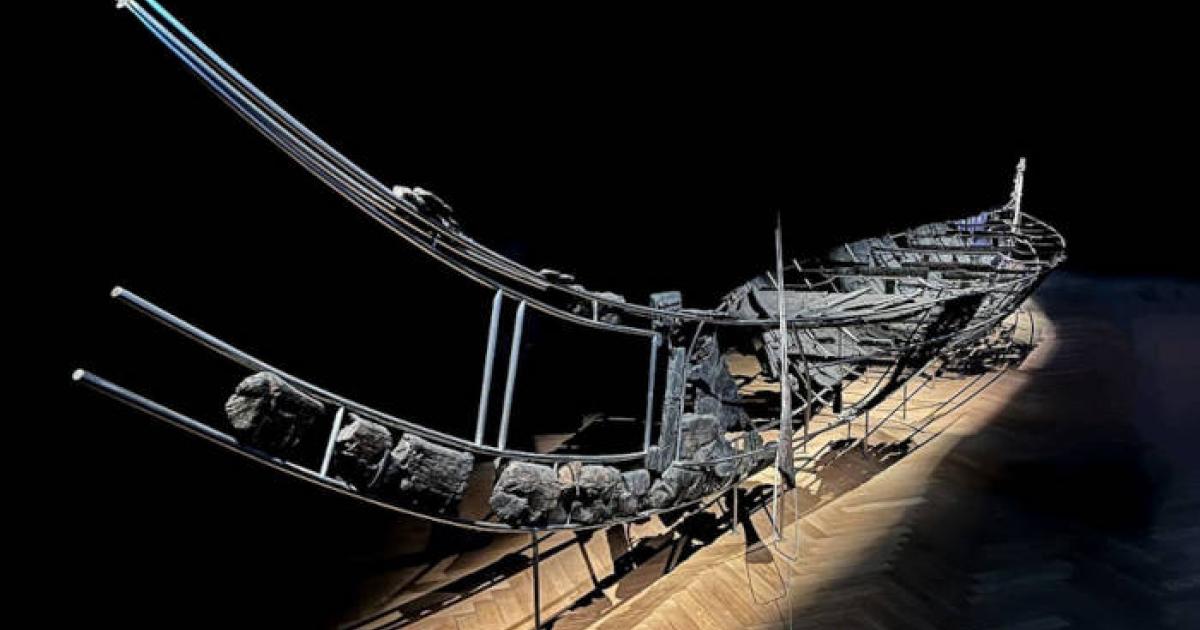

The vessel, capable of carrying approximately 80 warriors, was first unearthed from a Danish bog in the 1880s and systematically excavated in the early 1920s. New analysis published in the journal PLOS One reveals that the boat likely originated from the Baltic Sea region east of Denmark, suggesting the Iron Age attackers undertook an ambitious maritime raid spanning hundreds of kilometers of open water. The research, led by archaeologist Mikael Fauvelle of Lund University in Sweden, focused on previously unstudied caulking and cordage materials that had been stored untreated for over a century at the National Museum of Denmark.
- 1500-Year-Old Iron Age Weapons Found Below Chieftain's House in Denmark
- Scandinavians Were Building Advanced Boats Way Before the Vikings
Chemical Fingerprints Point East
The breakthrough came through gas chromatography-mass spectrometry analysis of the tar-like substance used to waterproof the vessel's wooden planks. According to The Independent, scientists discovered the caulking was composed primarily of animal fat and pine pitch. This finding proved crucial because Denmark had virtually no pine forests during the first millennium BC, having been cleared for agriculture during the Neolithic period.
"The boat was waterproofed with pitch from pine trees, which were rare in both Denmark and northern Germany during the first millennium BC," the researchers explained in their study. "We argue that this means the boat and its crew most likely came from further east along the shores of the Baltic Sea where pine forests were more abundant."
The eastern Baltic coastline, encompassing regions of modern-day Sweden, Finland, the Baltic states, and northwestern Russia, maintained extensive pine forests throughout this period. The presence of pine pitch suggests either the material was traded over considerable distances or, more plausibly, that the vessel was constructed in a pine-rich region.
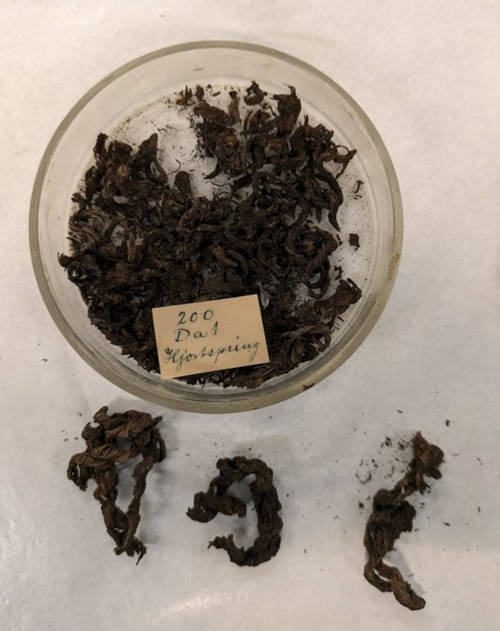
Cordage fragments from the Hjortspring boat. (Mikael Fauvette/PLoS ONE)
Direct Dating and Ancient Craftsmanship
Radiocarbon dating of lime bast cordage from the original excavation produced dates between 381 and 161 BC, with a narrower range of 356-180 BC at one standard deviation. This represents the first direct dating of materials from the vessel itself, confirming its use during the Pre-Roman Iron Age and aligning with previous estimates based on recovered weapons and shields found alongside the boat.
The cordage analysis revealed sophisticated ancient maritime technology. Researchers discovered that boat builders created both two-ply and four-ply strings by cleverly combining cordage sections, solving a longstanding puzzle about varying cord imprints found in caulking materials. The strings displayed a long lay—loose and pliable—making them ideal for threading through holes in wooden planks and tightening during construction and repairs.
- The Hanseatic League: Dominating the Baltic Maritime Trade
- Long-Distance Trade Revealed at Medieval Danish Viking Center
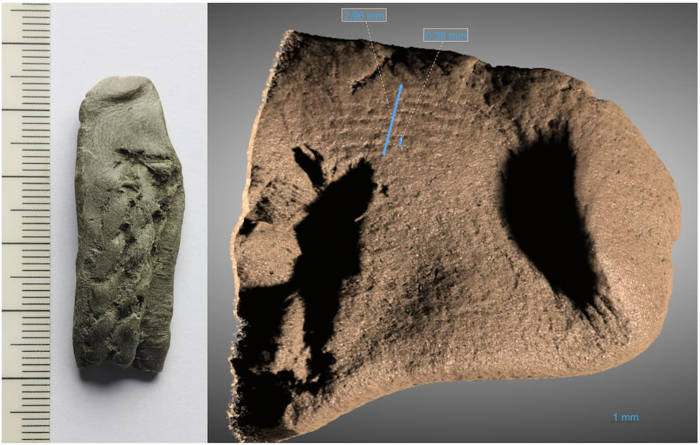
Caulking fragment showing fingerprint on the left and high-resolution x-ray tomography scan of fingerprint region on the right. (Erik Johansson / Sahel Ganji/PLoS ONE)
A Human Touch Across Millennia
Among the most extraordinary discoveries was a partial human fingerprint preserved in a fragment of caulking material. Using high-resolution X-ray tomography, researchers created a three-dimensional digital model revealing seven distinct ridges spanning 2.96 millimeters. According to La Brújula Verde, the ridge measurements fall within average distributions for both adult males and females, as well as juvenile adults, making precise identification challenging.
"Fingerprints like this one are extremely unusual for this time period. It is great to have found a direct connection with one of the people who used this ancient boat," the researchers noted. The fingerprint likely belongs to a crew member who applied repair caulking while at sea, offering an intimate glimpse into the lives of Iron Age seafarers.
Such discoveries of ancient fingerprints remain exceptionally rare in archaeology, providing tangible connections to individuals separated from us by millennia. While current technology cannot extract DNA or identifying information from the fingerprint itself, future advances in ancient DNA analysis might eventually be applied directly to the pine tar.
Organized Maritime Warfare
The vessel's probable Baltic origins carry significant implications for understanding Pre-Roman Iron Age society and warfare in northern Europe. If the Hjortspring boat originated from Bornholm, Gotland, or the northern Polish coast, its crew and accompanying fleet would have traversed hundreds of kilometers of open sea to attack the island of Als in southern Denmark.
"The invaders were defeated and the local defenders sunk the boat into a bog as an offering to give thanks for their victory," researchers explained. This practice of sacrificing weapons and military equipment in bogs was common throughout Iron Age northern Europe, representing votive offerings to deities in gratitude for military success.
The organized nature of such a long-distance raid suggests sophisticated logistical planning and regional political networks. The attacking force would have bypassed larger Danish islands including Zealand, Falster, and Lolland, indicating the assault was premeditated rather than opportunistic. This adds to growing evidence of organized regional conflicts during European prehistory, exemplified by discoveries like the massive Bronze Age battlefield at Tollense.
Top image: The Hjortspring boat displayed at the National Museum of Denmark in Copenhagen. Source: PLoS ONE
By Gary Manners
References
Fauvelle, M. et al. 2025. New investigations of the Hjortspring boat: Dating and analysis of the cordage and caulking materials used in a pre-Roman iron age plank boat. Available at: https://journals.plos.org/plosone/article?id=10.1371/journal.pone.0336965
McEvoy, K. 2025. Mystery behind 2,400-year-old Danish canoe that carried 80 warriors finally unravelled. Available at: https://www.independent.co.uk/news/science/archaeology/hjortspring-boat-origin-mystery-denmark-b2882365.html
Staff Writer. 2025. Fingerprint of a Crew Member Found and the Hjortspring Boat's Origin Identified. Available at: https://www.labrujulaverde.com/en/2025/12/fingerprint-of-a-crew-member-found-and-the-hjortspring-boats-origin-identified-the-vessel-that-attacked-a-danish-island-in-350-bc-and-became-a-votive-offering/