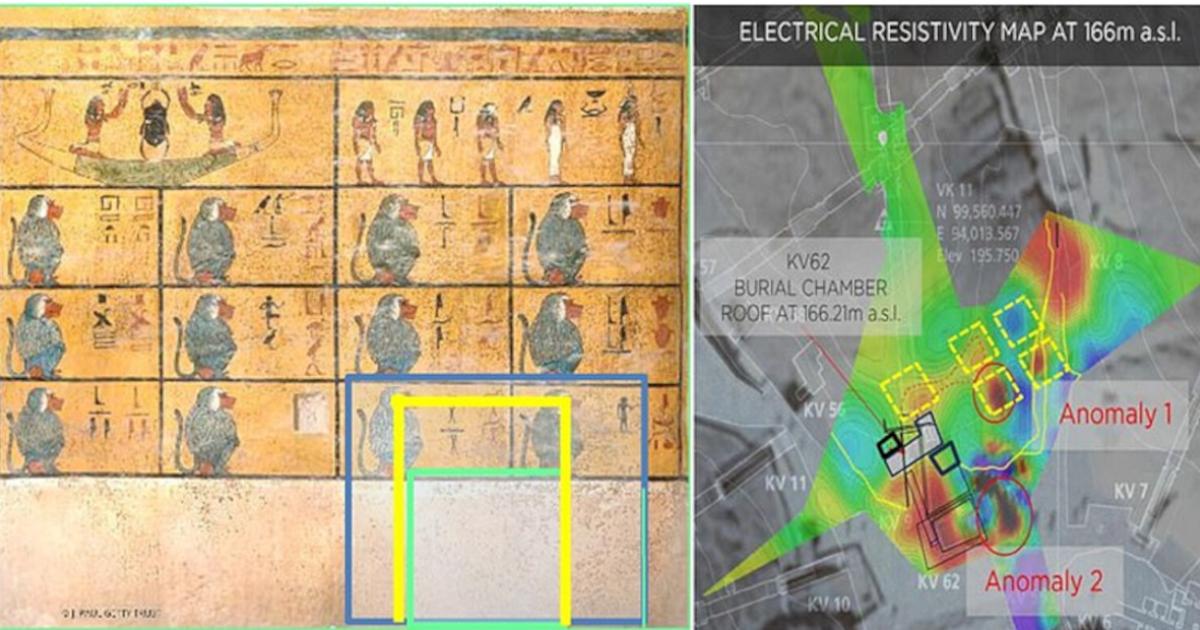

More evidence emerges that Tutankhamun's tomb might stretch beyond the painted walls that mark its end. New research has found that observations made via ground-penetrating radar, microgravity readings, and information from previous electrical-resistivity studies suggest the existence of corridors and chambers past the KV62 tomb, which has revived the old quest for the tomb of Queen Nefertiti. This information looks promising, but archaeologists are a long way from opening the suspected spaces, and no mummy or treasure has been found.
A possible complex beneath the Valley of the Kings
According to a report published by Nature magazine on September 17, 2026 to accompany the review by Mamdouh Eldamaty, Abbas Mohamed Abbas, George Ballard and Nicholas Reeves in Occasional Paper 8 of the Amarna Royal Tombs Project, the team revisited seven major field campaigns from 2015 and two seasons of field work of 2023 and 2024. Their findings suggest that KV62 could have been larger than what was traditionally understood and could have predated the burial of Tutankhamun. The report published in IFLScience noted that the authors consider five to six chambers are possibly present, interconnected with passages filled with rubble in antiquity.
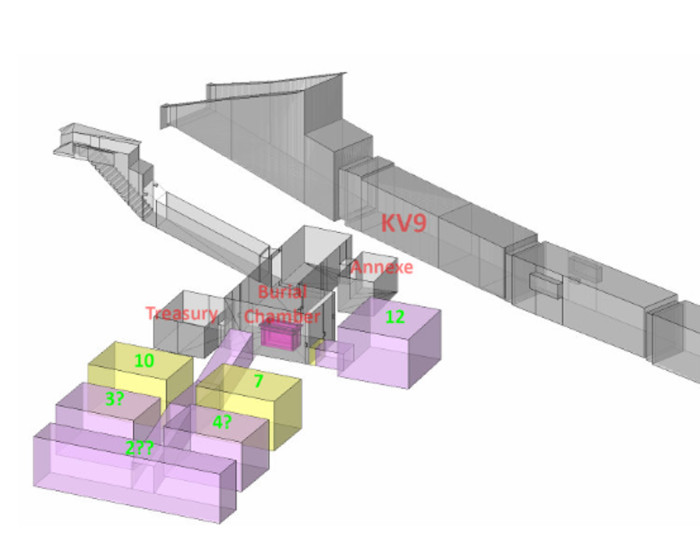
Possible arrangement of proposed funerary chambers and system beyond the decorated north and west walls of the KV 62 Burial Chamber (J), as based on the new geophysical evidence and corroborated where possible from the data of previous investigators. (Eldamaty et al/GBG Group/Academia)
While working in the tomb, the group of investigators found what George Ballard describes as a corridor about two meters wide and packed with rubble. Since the radar can only penetrate rock for a limited distance, the crew took more than 1,200 micro-gravity readings over an area measuring roughly 35 square meters around the tomb. Ballard explained to Nature that the collected information shows that there are low-density structures at right angles to the north wall, while a feature they have named “anomaly 7” may refer to a chamber containing objects, although he acknowledged that he was “looking at the very limits of detection.”
- The Elusive Tomb of Queen Nefertiti may lie behind the walls of Tutankhamun’s Burial Chamber
- Was Tutankhamun’s Tomb built for a Female Pharaoh?—Part I
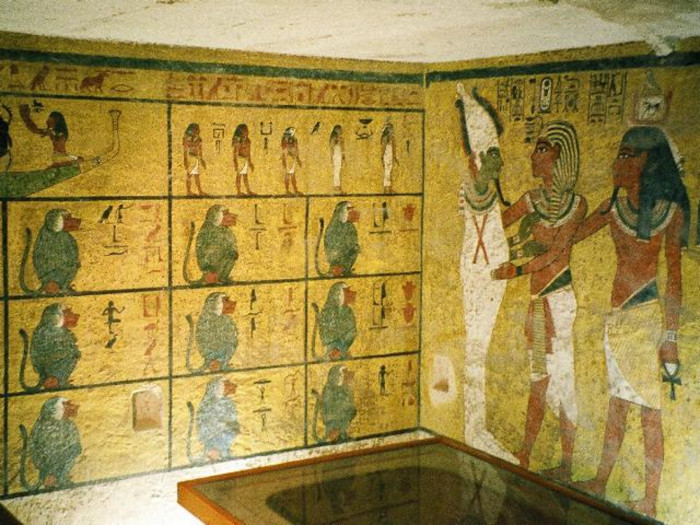
Experts believe there could be a false wall here in Tutankhamun’s burial chamber, KV62. (Hajor / CC BY-SA 3.0)
Why Nefertiti is part of the mystery
The possibility of concealed chambers is important since KV62 is unusually small for a royal tomb, but still it contained over 5,000 items at the time when it was opened by Howard Carter in 1922. The Egyptian Ministry of Tourism and Antiquities refers to it as a small tomb with little decoration, which makes people speculate about its previous owner. An Ancient Origins article with photos from the time of the discovery reveals just what a tomb of wonders it was when entered by Carter.
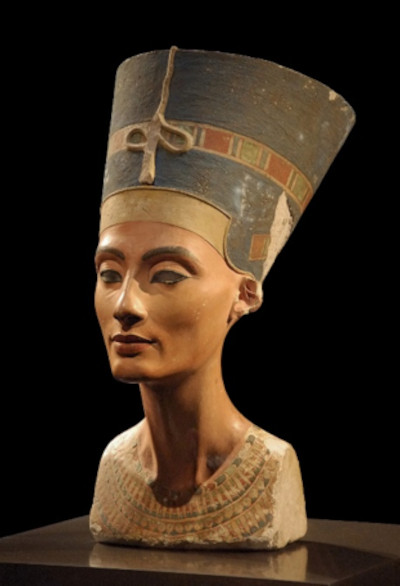
Nefertiti’s famous bust in Berlin’s Neues Museum. (Philip Pikart / CC BY-SA 3.0)
In 2015, Reeves presented evidence derived from high-resolution scans, wall fractures, and the unique configuration of the tomb that Tutankhamun’s burial space might actually be a repurposed version of a larger monument. In this theory, the chambers of a former occupant were sealed at the time of the untimely death of the young ruler. Nefertiti remains a possibility, as her burial has not been discovered, but the evidence does not support the claim that she was the original occupant; other royals of Amarna or a storage facility unlinked to royal families are also possible options for explanation. Earlier Ancient Origins coverage of the KV62 design debate also records how sharply the interpretations have differed.
- Wealth of Mysteries in the Curious Tomb of Tutankhamun—Part II
- Egyptian Ministry of Antiquities Announces there are NO Hidden Chambers in Tut’s Tomb
A tantalizing clue, not a discovery
The newly released document doesn’t remove the contradictory past of the search. The Egyptian authorities hailed an investigation undertaken in 2018 by an Italian group from the University of Turin as “decisive evidence” showing absence of hidden chambers in KV62 or surroundings. The current researchers say that previous explorations might have missed a debris-filled corridor because scientists were looking for wide empty space behind the wall, while they should have searched for a narrow corridor further away.
Independent experts opinions that were also recorded by Nature urged caution. Christopher Gaffney of the University of Bradford called the results "fascinating" but stated that there wasn't enough data to draw definitive conclusions, while Peter Styles of Keele University said the chambers looked plausible from the microgravity data but wanted more detail.
The next step may be small but important: boring out holes approximately seven to eight cm in diameter to enable miniature remote-controlled vehicles to carry out camera readings through the suspected areas. Permission is needed from the Supreme Council of Antiquities of Egypt, with Nature reporting that the scientists plan to start their investigative work in November. In the meantime, the concealed chambers remain an interesting geological possibility—rather than the evidence that Nefertiti or any other lost kingly figure is located beyond the walls of Tutankhamun’s tomb.
Top image: Left; Area in Tutankhamun’s burial chamber where the researchers believe there could be a false wall. Right; Map of the tomb and surrounding area using microgravity scanning. Source: Eldamaty et al./Source: Eldamaty et al./Academia
By Gary Manners
References
Britannica. 2026. Nefertiti. Available at: https://www.britannica.com/biography/Nefertiti
Eldamaty, M., Abbas, A. M., Ballard, G. & Reeves, N. 2026. An Archaeo-Geophysical Review and Assessment of the Structure and Morphology of Tutankhamun’s Tomb (KV 62 ) (The Burial of Nefertiti? IV). Occasional Papers of the Amarna Royal Tombs Project No. 8. Available at: https://www.academia.edu/175580520/An_Archaeo_Geophysical_Review_and_Assessment_of_the_Structure_and_Morphology_of_Tutankhamuns_Tomb_KV_62_The_Burial_of_Nefertiti_IV_
Marchant, J. 2026. Exclusive: New evidence for hidden chambers beyond Tutankhamun’s tomb. Available at: https://www.nature.com/articles/d41586-026-02621-2
Ministry of Tourism and Antiquities. n.d. Tomb of Tutankhamun. Available at: https://egymonuments.gov.eg/monuments/tomb-of-tutankhamun/
Taub, B. 2026. Tutankhamun’s Tomb May Contain Hidden Chambers Housing The Body Of His Predecessor, Queen Nefertiti. Available at: https://www.iflscience.com/tutankhamuns-tomb-may-contain-hidden-chambers-housing-the-body-of-his-predecessor-queen-nefertiti-84694