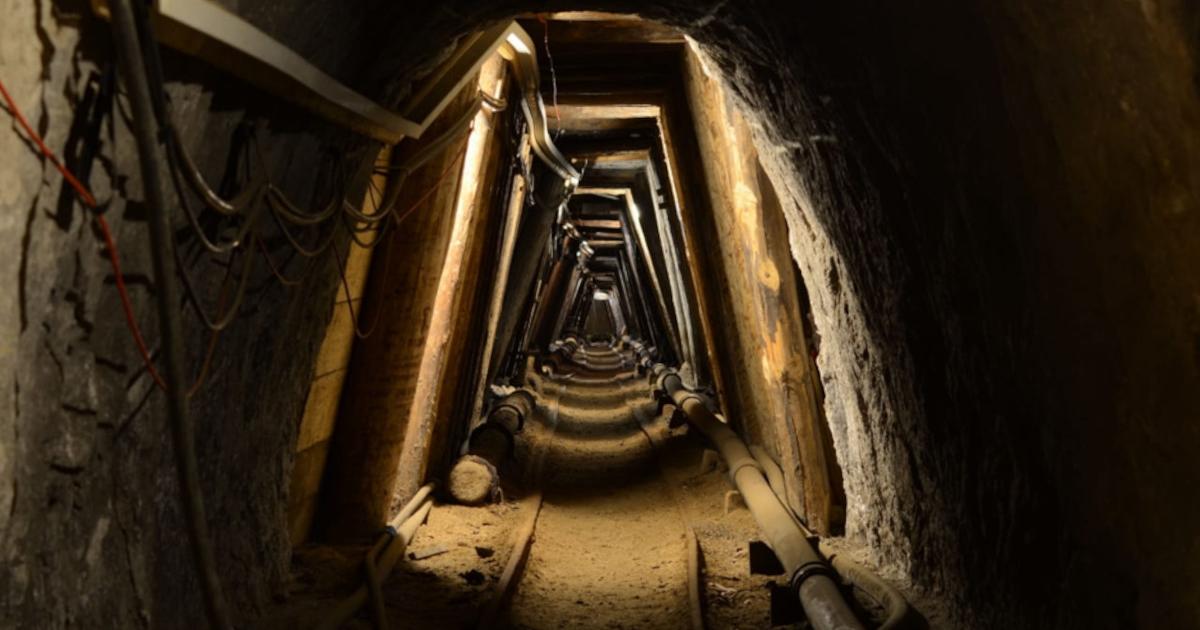

A concealed network of Iron Age workings has been identified beneath Hallstatt, Austria, covering over 300 meters (984 feet), and proving that prehistoric salt mining was more complicated than expected. The newly found Hallstatt salt mine complex consists of several chambers which are positioned next to, above, and under each other as opposed to a single large cave. Some of these chambers are approximately 25 meters (82 feet) wide and about 20 meters (66 feet) high. The discovery, first detailed by the Austrian Press Agency and published in Salzburger Nachrichten, provides a unique insight into how the miners worked way back in the sixth century BC.

AI Illustration representing the Hallstatt salt mine in operation, including people inside a large chamber, working with torches and fire pits, climbing, and using tools and wooden poles. (NHM Wien/Dominik Groebner)
Drilling Finds a Labyrinth in the Mountain
The Natural History Museum Vienna researchers commenced exploratory core drilling in 2022 with equipment provided by Salinen Austria AG. Modern galleries had previously only disclosed ancient workings whenever later miners happened to cut into them; therefore, the majority of the ancient system remained inaccessible. Drilling is capable of reaching depths of hundreds of meters without digging a new access tunnel, so researchers could inspect sealed cavities that exist inside the salt mountain. As excavation director Daniel Brandner said, this parallel arrangement has been something that archeologists have “never seen before in Hallstatt.”
- 7000-Year-Old Austrian Salt Mine Holds Bronze Age Secrets
- The Powerful Hallstatt Culture: Foundation of the Proto-Celtic World
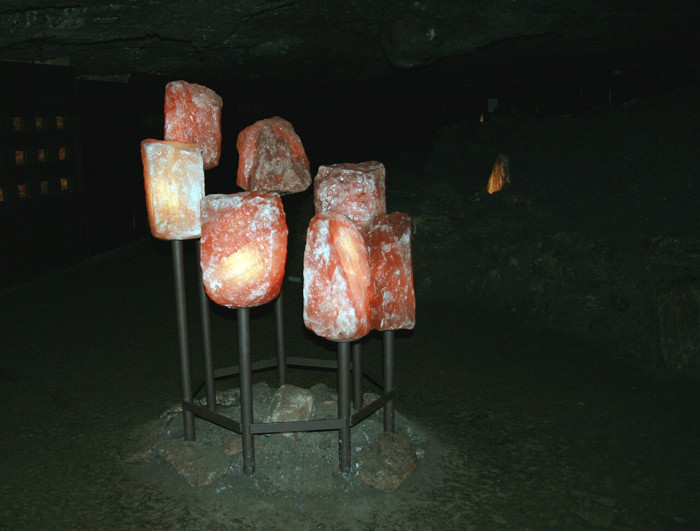
Halite crystals inside the Hallstatt salt mine. (Karelj / Public Domain)
The chambers have been created following natural seams of rock salt. It is clear that miners possessed knowledge of the geology of the mountain, as they adjusted their approach according to the conditions they found. This represents an evolved method within an older method of mining in the Alps, since there is evidence from other places in Austria that mining activities began much earlier than had been known known. Tree-ring studies in Hallstatt show that large-scale underground salt mining happened in the Middle Bronze Age, and the later Hallstatt culture became the name of a major period of European prehistory. Salt has remained the source of prosperity in this area as stated by UNESCO.
Nine Meters of Iron Age Rubbish
The most useful material for the archaeologists may be found beneath the surface. Eight to 9 m (30 ft) of mining spoil on the floors of the chamber acts as a layer of protection for burnt wooden torches, broken tools, pieces of clothing, wooden dishes, food remnants, and even human excrement. Salt slows many decay processes, thus preserving objects that might not usually survive. According to the museum information, Hallstatt benefits from stable underground conditions under which organic tools, techniques, food, and clothing have survived almost intact.
- The Iron Age Diet: Lots Of Blue Cheese and Beer, Poop Study Confirms
- Salt: Treasure of the Ancient World and Highly-Valued Currency of the Roman Empire
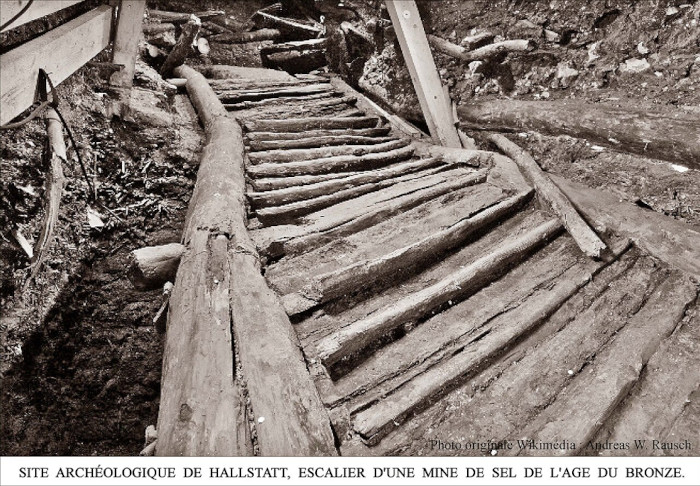
The Bronze Age wooden staircase from Hallstatt, dated by tree rings to 1344–1343 BC. (Image source: Andreas W. Rausch / CC BY-SA 3.0)
Deposits can provide information on more than just mining techniques. DNA can be found from the miners’ bodies and the plants and animals they consumed, thus extending previous studies of Iron Age Hallstatt miners. Earlier studies uncovered signs of grains, beans, and fermented food. Investigations in a different Austrian mining site indicated that the Bronze Age miners were sometimes given ready-made food. Hence, the new deposit can possibly link individual miners, food, clothing, and working conditions within the same short timeframe.
New Tools and Wider Connections
Tool handles from the chambers are unlike those from earlier phases when the tools that were in use tended to be quite standardized. Archaeologists have found remarkable similarities between the artifacts from Dürrnberg, near Hallein, where evidence of salt extraction dates back to the sixth century BC. Further investigations may help see whether the two communities exchanged ideas or were involved in the same Celtic trade routes. Their relationship may help understand the transition between Hallstatt traditions and the later La Tène culture.
The new findings present a great contributing chapter to a location that is already well-known for its wooden construction, textiles, and a figure known as "Man in Salt". As reported by ORF Upper Austria, restoration processes are now securing access tunnels from 200 to 300 years ago, thereby allowing scientists to return to the much older excavation sites armed with modern analytical methods. Thus, the underground archive of Hallstatt stands out as an excellent prehistoric version of latter structures like the Wieliczka Salt Mine in Poland. For now, the full limits of the Iron Age Hallstatt salt mine remain unknown, and the core samples suggest much more of the story is still sealed inside the mountain.
Top image: View along a tunnel inside the Hallstatt mine. Source: © NHM Wien/Daniel Brandner
By Gary Manners
References
Grabner, M., Wächter, E., Nicolussi, K., et al. 2021. Prehistoric salt mining in Hallstatt, Austria. New chronologies out of small wooden fragments. Dendrochronologia, 66. Elsevier. Available at: https://doi.org/10.1016/j.dendro.2021.125814
Natural History Museum Vienna. n.d. Hallstatt-Research Mining. Available at: https://www.nhm.at/en/research/prehistory/research/hallstatt-resarch_mining
ORF Oberösterreich. 2026. Sensationsfund im Salzberg von Hallstatt. Available at: https://ooe.orf.at/stories/3370725/
Radley, D. 2026. Huge Iron Age salt-mining complex found beneath Hallstatt in Austria. Available at: https://archaeologymag.com/2026/09/iron-age-salt-mining-complex-beneath-hallstatt/
Salzburger Nachrichten / APA. 2026. Neue Funde im prähistorischen Salzbergwerk von Hallstatt. Available at: https://www.sn.at/panorama/wissen/neue-funde-im-praehistorischen-salzbergwerk-von-hallstatt-art-672384
UNESCO World Heritage Centre. n.d. Hallstatt-Dachstein / Salzkammergut Cultural Landscape. Available at: https://whc.unesco.org/en/list/806/