
What did people in Bronze Age Cyprus bring to the graves of their dead besides pottery and gold? At Hala Sultan Tekke, on the island's southeastern coast, two researchers have sifted burned seeds out of tomb vessels and found something unexpected in among the barley. Remains of wild flowering plants such as field marigold, mallow and poppy turned up beside the grain, and the authors think some of them may have been burned as bouquets.
The findings, published in the journal Levant on September 9, 2026, come from Teresa Bürge of the University of Bern and the University of Gothenburg and Dominika Kofel of Nicolaus Copernicus University in Toruń, Poland. They studied plant remains from four tombs dug between 2020 and 2024, a well in the settlement dug in 2015, and a shaft excavated in the 1970s. Archaeology News Online Magazine reported the study on October 13, 2026.
A Harbor City and Its Tombs
The authors describe Hala Sultan Tekke as an important harbor city of the Eastern Mediterranean in the Late Bronze Age. Its best attested phase runs from the second half of the 13th century to the first half of the 12th century BC, and its end in the 12th century BC is most likely connected to the silting up of the harbor, they write. Geophysical surveys show a densely built city center of about 14 hectares (35 acres).
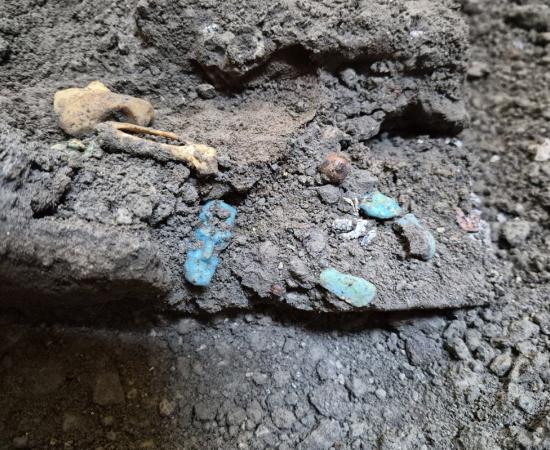
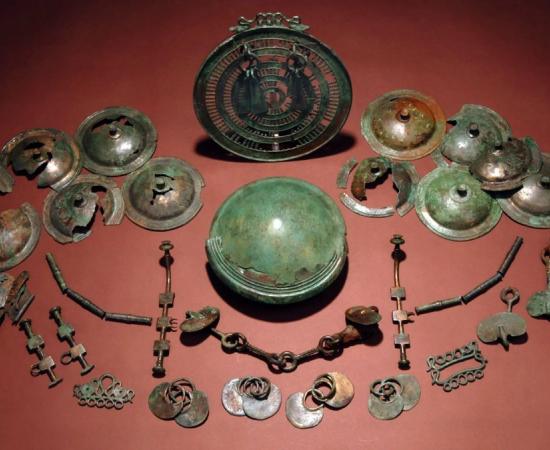
The Swedish expedition led by Peter Fischer has dug the site for years. In 2023 the University of Gothenburg said tombs outside the city "rank among the richest ever found in the Mediterranean region." According to the university, about half of the artifacts in two of those tombs were imported, with gold and ivory from Egypt and lapis lazuli from Afghanistan.
The new paper looks at something those headlines skipped. The authors point out that botanical remains are rarely recovered from Late Cypriot sites, partly because the large tomb excavations carried out until the mid 20th century largely ignored such material. Bürge and Kofel thank Fischer, the director of the excavations, for allowing them to study and publish the samples.
Meals for the Dead in Tombs UU and XX
The first kind of deposit looks like food. A clay container in Tomb UU, found in 2023, held 23 charred barley grains, a fruit fragment similar to Pistacia, a grapevine pedicel and wild grass grains. In Tomb XX, one sample held 18 barley grains, and a painted jug held barley, other cereals, wild grass, an olive stone and a grape pip.
The authors read these as "ready-made food" placed in the graves. That fits other finds from the site, they note, such as a jug filled with the bones of mullets, drums and shark from Tomb RR. Meals left with the dead were common across Bronze and Iron Age Western Asia, and the authors say the practice could cover feasting with the dead, food for the dead in the underworld, libations and sacrifices.
What the plant remains cannot show is which of these happened. Animal bones at Hala Sultan Tekke, the authors add, do not occur in quantities that would point to large funeral feasts.
Flowers in the Jugs
The second kind of deposit is the surprise. A plain jug numbered N387, from a pottery deposit beside the burials in Tomb SS, contained what the authors call "one of the most taxonomically diverse archaeobotanical assemblages from Late Cypriot contexts published so far." It held barley, emmer, einkorn, common wheat and a spelt-like wheat, along with chaff, straw, oats, fig and lentils.
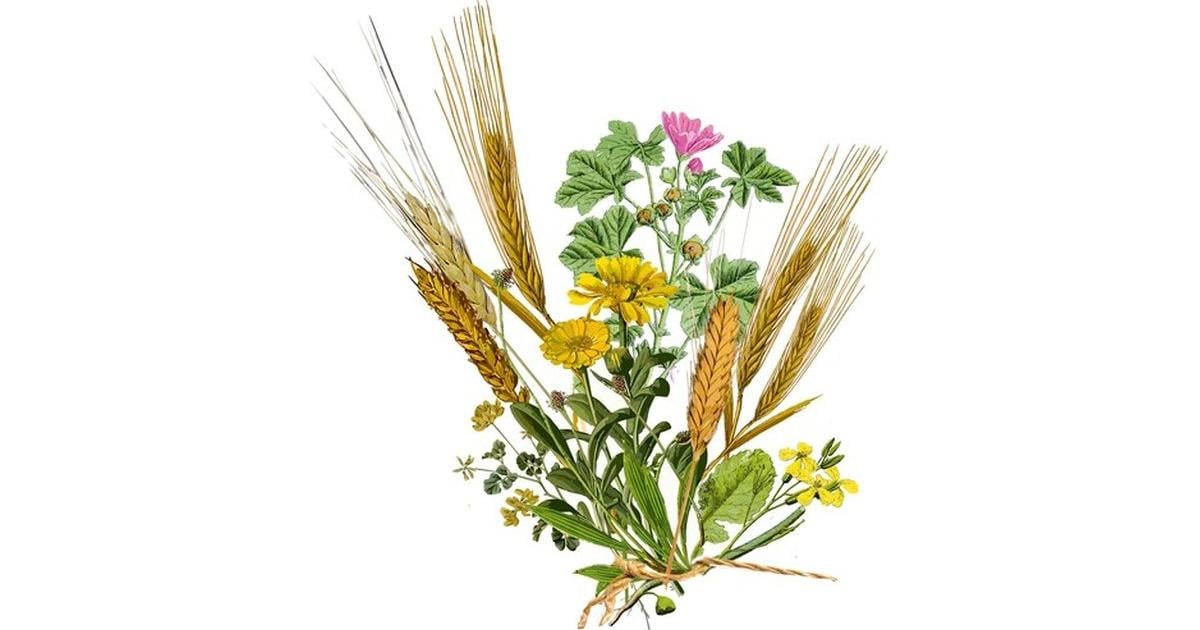
It also held a long list of wild plants. Among them were field marigold, garland chrysanthemum, common mallow, wild radish, centaury, campion and viola, plus remains from the poppy and mint families and a thorny twig. A second jug from Tomb SS held a smaller mix of the same kind, and a Mycenaean jar from Tomb YY held cereals with croton, centaury and poppy.
The case for bundles rests on the plant parts. The authors say the chaff, straw and twigs found together suggest "the crops were burned as complete plant bundles, perhaps prepared as bouquet-like offerings" and then placed in the vessels. The plants also point to early summer. That timing may simply reflect when people died, or it may match recurring commemorations at reopened tombs around harvest time, the authors write.
A Well That May Have Been Closed With Fire
The same mix of grain and flowering plants turned up in the city itself, in a well in City Quarter 3. Three small samples, of 300 milliliters or less, held barley, emmer, an einkorn-like wheat, grape pip fragments and seeds of corn chamomile. The authors note that corn chamomile has white flowers but is "neither edible, nor known for medicinal use."
They admit it could have entered the well by accident, since it grows among cereals and is present at harvest. Even so, they argue that the samples came from discrete ash deposits at different depths, with a consistent makeup unlike ordinary hearth waste. They suggest the deposits "may represent a form of ritual sealing," made when the well went out of use.
That is promising, but it is indicative rather than conclusive. The authors themselves say the bouquet reading for the well "is not straightforward, but neither can it be ruled out." They also allow that small fires may have been lit to dry or disinfect the well, or that the plants were burned elsewhere and then dropped in.
The shaft dug in the 1970s tells a different story. Excavated under Paul Åström in the 1970s, it held about 730 uncharred grape pips, most likely from wild grapevine, along with fig, pomegranate, caper and other plants. The authors read these as stored crops, random backfill or refuse rather than offerings.
Why Burn Them?
Every new sample survived because it was charred, so fire was involved in some way. Accidental ignition "cannot be ruled out," the authors write. If the burning was deliberate, they list practical reasons such as hygiene and masking smells, as well as symbolic ones tied to fire's power to purify and transform.
Tomb UU adds a sensory detail to the picture of these rites. Its sample held charred wood identified as Mediterranean cypress and a cedar similar to Lebanese cedar. The authors say the resinous cedar "may indicate a desire for faster combustion, additional scents, smoke or visual and sound effects."
Ritual at the site is not a new idea. After the 2020 season, Fischer told the University of Gothenburg that a large structure his team had exposed outside the city should be read as a place of worship where rites connected with death took place, not just a large tomb. The new plant study leaves that claim untested and adds a botanical layer to the same burial ground.
What the Study Can and Cannot Show
The sample sizes are small, and most samples from Tomb SS held fewer than five items. The final publications for Tombs UU, XX and YY are still in preparation, and a detailed volume on Tomb SS by Bürge was listed as in press when the paper appeared. Several details come from earlier excavation reports, and here they rest on the paper's own summary of them.
The wider argument of the paper is a careful one. The authors conclude that plant remains in archaeological sites do not always mean food processing or eating, and that stronger plant evidence is still needed to understand the role of plants in ritual across the region. Tombs at Hala Sultan Tekke have already yielded imported treasures from Egypt, Afghanistan and the Baltic, the University of Gothenburg says, and a cluster of charred mallow and marigold seeds is a far humbler find. For now, the bouquets of Hala Sultan Tekke remain less a proven rite than a well argued possibility.
How we label claims
Established: the charred cereals, fruit and wild plant remains identified in Tombs SS, UU, XX and YY and in the well in City Quarter 3, and the uncharred remains from the older shaft, all as reported in the Levant paper. Disputed: that the Tomb UU and XX remains were meals left for the dead, that the Tomb SS, YY and well deposits were burned bouquet offerings, and that the well was closed with a ritual. The authors argue for these readings from the plant evidence, but they also allow that the burning may have been accidental and that some plants may have been gathered with the harvest by chance. Unverified: that cedar was chosen for its scent or smoke.
A reconstruction drawing of the plant bundle the authors think may lie behind the charred remains in jug N387 from Tomb SS. It is an artist's interpretation, not a photograph of the find. Drawing by M. Polaczek, Figure 7 in Teresa Bürge and Dominika Kofel, "The power of plants: a botanical perspective on ritual activities in Late Bronze Age Hala Sultan Tekke, Cyprus," Levant (2026), doi:10.1080/00758914.2026.2709994, licensed under CC BY 4.0 (CC BY 4.0). Placed on a wider white background.
By Aris Manus
Sources
- Teresa Bürge and Dominika Kofel, The power of plants: a botanical perspective on ritual activities in Late Bronze Age Hala Sultan Tekke, Cyprus, Levant, published online September 9, 2026 (open access)
- Dario Radley, Burned flowers and food offerings point to Bronze Age burial rituals in Cyprus, Archaeology News Online Magazine, October 13, 2026
- Tombs rich in artifacts discovered by Swedish expedition in Cyprus, University of Gothenburg, July 6, 2023
- 3,500-year-old place of worship with mass burials discovered, University of Gothenburg