
The Hittites were one of the most powerful peoples of the Late Bronze Age, a kingdom in Anatolia that grew to rival New Kingdom Egypt. Most of what they left in writing speaks with the voice of the state, in treaties, festival rules and royal decrees. Yet among a new group of clay tablets from central Türkiye is a record of something much smaller and more human, a princess still being breastfed who fell ill and did not recover. Could the working archive of a royal court really reveal how the people inside it worried and grieved?
The tablets come from Kayalıpınar, in the Yıldızeli district of Sivas province, a site widely identified with the Hittite city of Šamuḫa. Turkey's Minister of Culture and Tourism, Mehmet Nuri Ersoy, announced on October 8, 2026, that excavators had recovered 131 cuneiform tablets and fragments during the 2026 season, according to Ancient Cyprus. Added to the 53 pieces found in the same area in 2025, the group now numbers 184.
According to the Anadolu Agency, the excavations at Kayalıpınar have been run since 2021 by a team led by Associate Professor Çiğdem Maner of the Department of Archaeology and History of Art at Koç University. The texts are written in Hittite and Hurrian and date to the reign of King Tudhaliya II, around 3,400 years ago. The ministry describes the find as the most comprehensive Hittite archive found in the 21st century.
That matters because the written record of the Hittites is heavily weighted toward one place. As National Geographic reports, around 30,000 tablets and fragments come from the capital, Hattusa, and so they mostly preserve elite and royal points of view. "There are very few archives that we have found outside the capital city. The ones from Šamuḫa are some of the first," said Eric Cline, an archaeologist and Bronze Age expert who was not involved in the excavation.
National Geographic describes Šamuḫa as a religious and commercial center that became an important military capital during Tudhaliya's reign, at a time when the mountain peoples known as the Kaska were attacking Hittite cities. According to the Anadolu Agency, the archive contains texts on divination, omens, letters, rituals and prayers. However, none of them has yet been published in full, and what follows rests on the summaries released by the ministry and the excavation team.
A Fever That Moved From City to City
Some of the most striking texts, as reported by the Anadolu Agency and NTV, describe a high fever that spread from city to city and fell hardest on children and infants. The tablets suggest that the health of young princes and princesses, and of the children of high-ranking officials, was followed through oracle questions, which reveals how deeply the illness worried the royal family.
What was this disease? As far as Ancient Origins can establish, nobody can yet say, and no pathogen has been identified. Theo van den Hout, professor emeritus of Hittite and Anatolian Languages at the University of Chicago and editor emeritus of the Chicago Hittite Dictionary Project, offered a first impression to National Geographic:
"The newly reported epidemic seems like a new plague."
He added a firm distinction from the epidemic that Hittite specialists know best: "It's certainly not the later one known from Muršiliš II's roughly 1321 to 1295 B.C.E. reign, which was allegedly 'imported' by Egyptian prisoners of war."
His view is careful in its wording, and it is best read as an expert's early reading of reported texts. It should not be taken as a diagnosis, and a full edition of the tablets may sharpen or change it.
The Princess at Ziulila
The documents about the infant princess are the most moving part of the archive. According to the Anadolu Agency, her condition was treated with great concern, and diviners tried to learn her future through oracle inquiries. Ancient Cyprus reports that she fell ill in Ziulila, a city whose location is not yet known. Another tablet records that she died, along with the funeral rite performed for her.
Her name has not been released, and Anatolian Archaeology describes her as an unnamed infant princess. The details of the rite have not yet been published either. Still, the simple fact that scribes kept such a record shows that the death of a royal child was a matter for the state as well as for her family, and that the court answered it with ritual.
Generals Ask for Horses and Chariots
But it didn't end there, because the archive also reflects a kingdom under military pressure. According to the Anadolu Agency, Hittite generals in western Anatolia sent a letter to the king at Šamuḫa reporting that enemies had surrounded their territory. They asked the king to send soldiers, horses and chariots so that they could defeat those enemies in the field.
The generals warned that if the help did not come, the situation would worsen and the Hittite army would be destroyed, and they told the king they would not take responsibility for what followed. Anatolian Archaeology notes that the enemy involved has not yet been identified. For readers who know the Hittites mainly from the peace treaty they later made with Egypt, the letter is a reminder of how hard the frontier could be to hold.
Reading the Will of the Gods in Birds
One tablet works like a diary of the so-called bird diviners. According to the Anadolu Agency, it records the observations they made after leaving Šamuḫa, the cities where they stayed, the routes they followed and the birds they watched. In a translated statement quoted by National Geographic, Ersoy said the inscriptions "offer previously unknown insights into the Hittites' practices of divination."
Augury was part of how decisions were made at the highest level, and specialists like the Hittite Hasawa, a priestess, healer and oracle, belonged to the same world of ritual experts. National Geographic notes that a tablet found at the site in 2023 also dealt with bird paths, and it quotes the scholar Ian Rutherford, who called the practice "largely opaque." The new records may help to change that.
The Better Known Plague of Muršili II
Readers may recall that the Hittites suffered another, far better documented epidemic decades later, in the reign of Muršili II. That plague is known from a set of prayers found at Hattusa, the royal capital whose history and ruins have been studied for more than a century. In the Second Plague Prayer, in the translation by Itamar Singer published in Hittite Prayers (2002), a scribe speaks for the king before the Storm-god of Hatti:
"What is this that you have done? You have allowed a plague into Hatti, so that Hatti has been very badly oppressed by the plague. People kept dying in the time of my father, in the time of my brother, and since I have become priest of the gods, they keep on dying in my time. For twenty years now people have been dying in Hatti. Will the plague never be removed from Hatti? I cannot control the worry of my heart, I can no longer control the anguish of my soul."
The words are a king's plea to his god, and they show how a Hittite ruler turned to prayer when sickness struck his people. However, the Kayalıpınar fever belongs to an earlier reign, and van den Hout is clear that it is not the same outbreak. Like the plague of Athens centuries later, each epidemic has to be understood on its own evidence.
There are still open questions about the find itself, beginning with how many pieces were recovered in the first season. Anatolian Archaeology gives the 2025 total as 56 tablets and 22 seal impressions, while the ministry, as reported by the Anadolu Agency, counts 53 tablets and fragments from that season. The two figures may simply count different kinds of objects, and the team's final publication of the archive should settle the matter.
For now, the archive offers glimpses rather than a full story, a fever that frightened a royal household, a baby princess mourned with ritual, and generals who feared for their army. Who the princess was, where Ziulila lay and what disease swept through the cities of Hatti are questions the team's translation work may one day answer. Until then, there is still much to learn.
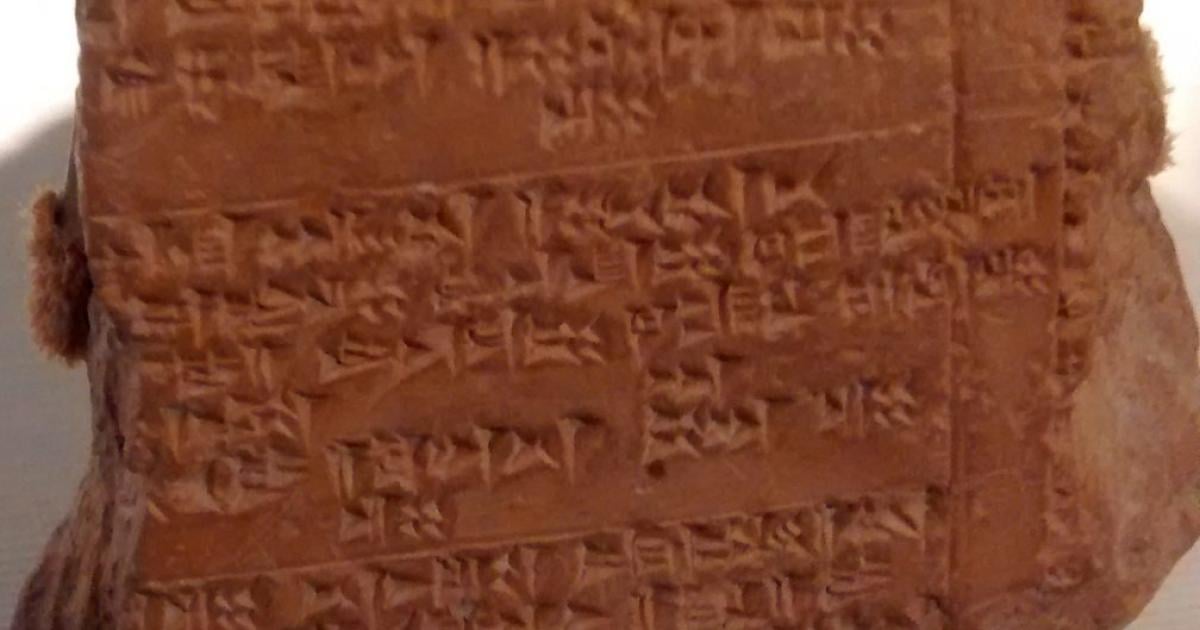
Illustration only: a Hittite cuneiform tablet from Hattusa recording a festival script, now at the Oriental Institute in Chicago (A6007). It is not one of the new Kayalıpınar finds. (Photo by Mx. Granger, released under the CC0 1.0 Universal Public Domain Dedication, via Wikimedia Commons)
By Aris Manus
Sources
- Anadolu Agency, Sivas'ta Kral 2. Tudhaliya dönemine ait 131 çivi yazılı tablet gün yüzüne çıkarıldı (Turkish), 2026
- Sarah Bond, A New Discovery Offers a Glimpse into the World of the Hittites, in Their Own Words, National Geographic, October 26, 2026
- NTV Haber, Sivas'ta bulunan tabletlerle ortaya çıktı: 3 bin 400 yıl önce ateşli salgın yayılmış (Turkish), 2026
- Alexis Drakopoulos, 131 more Hittite tablets from Kayalıpınar record a royal infant's death and a plea for chariots, Ancient Cyprus, October 21, 2026
- Anatolian Archaeology, Lost Hittite Royal Archive Reveals 3,400-Year-Old Epidemic, Princess's Death and Military Crisis, 2026
- Itamar Singer, Hittite Prayers, edited by Harry A. Hoffner Jr., Writings from the Ancient World 11, Atlanta: Society of Biblical Literature, 2002, no. 11, Mursili's "Second" Plague Prayer to the Storm-god of Hatti (CTH 378.II), p. 57