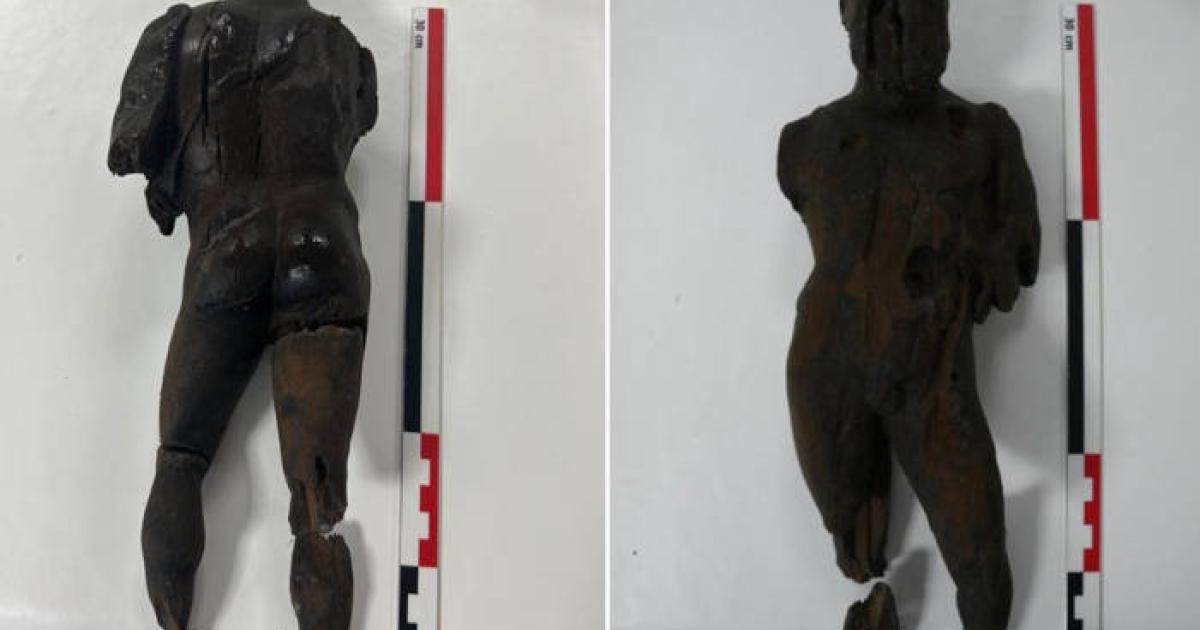

The sculpture was recovered from what was originally a Roman grain silo that had been repurposed as a refuse pit, according to Heritage Daily. Known in antiquity as Ebusus, Ibiza became integrated into the Roman world following Carthage's defeat in 146 BC, transforming into a prosperous port city with its main harbor located at present-day Ibiza Town.
A Perfect Storm for Preservation
The sculpture's surprising state of preservation stems from extraordinary environmental conditions rarely encountered in Spain's warm climate. Over centuries, the abandoned pit gradually filled with rising groundwater, creating an oxygen-free, or anaerobic environment. These waterlogged conditions prevented microorganisms from decomposing the organic material, essentially freezing the wood in time.
- Archaeologists Find Ultra-Rare Roman-Era Wooden Statue in England
- Incredible Ancient Statue of Hercules Pulled from Rome Sewer
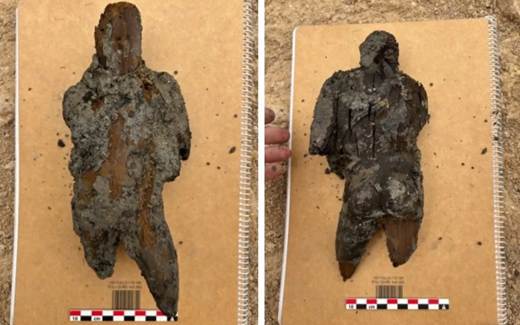
The Greco Roman Hercules statue after being extracted at the Ibiza site. (MAEF)
Archaeological experts noted that such preservation is typically observed in northern European bogs but remains virtually unheard of in Ibiza's heat and humidity. The Romans adapted the Greek hero Heracles' iconography and stories for their own literature and art, though Hercules developed several myths that were distinctly Roman in nature.
Archaeological Treasures Beyond the Statue
The wooden sculpture was not alone in the pit. Excavators also recovered ancient footwear, various tools, and plant remains, all of which have been transferred to the Archaeological Museum of Ibiza and Formentera (MAEF) for conservation. Specialists have begun the painstaking process of stabilizing the sculpture by maintaining the wood in a carefully controlled environment to prevent cracking or disintegration - a process archaeologist Juan José Mar Casanova explained will take months to complete.
- A Roman Wooden Cellar Unearthed in Frankfurt's Nida
- Archaeologists Astounded by Iberian and Roman Armor Found in Spain
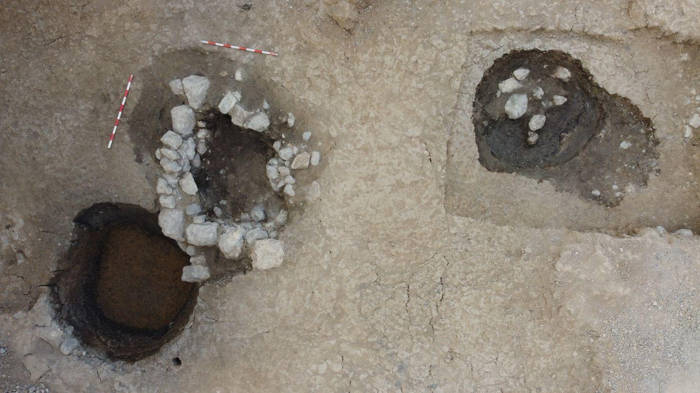
Roman excavation site in Ibiza where the statue was found. (MAEF)
Insights into Ancient Island Life
Beyond the sculpture's aesthetic value, the accompanying organic materials promise to reveal valuable information about daily life in Roman Ibiza. "We also found fruit pits that will give us insight into Ibiza's horticulture during that period," Casanova noted. "It's less spectacular than the Hercules statue, but archaeologically it's very interesting."
These botanical remains will enable researchers to reconstruct the island's ecology and agricultural practices during antiquity and the Middle Ages, providing a window into Roman port city life and commerce. The discovery underscores how refuse pits, often overlooked in archaeological surveys, can serve as time capsules preserving snapshots of ancient civilizations' material culture and environmental interactions.
The find adds to our understanding of Roman Spain and the cultural exchange that flourished across Mediterranean islands during the empire's height, when Ebusus thrived as a strategic trading hub connecting diverse peoples and traditions.
Top image: Wooden sculpture depicting Hercules discovered in ancient refuse pit on Ibiza, Spain. Source: La voz de Ibiza
By Gary Manners
References
Milligan, M., 2025. Wooden sculpture depicting Hercules found in ancient refuse pit. Heritage Daily. Available at: https://www.heritagedaily.com/2025/11/wooden-sculpture-depicting-hercules-found-in-ancient-refuse-pit/156272
Flier, D., 2025. Hercules sculpture discovery. Lavozdeibiza. Available at: https://lavozdeibiza.com/actualidad/el-pozo-que-detuvo-el-tiempo-asi-fue-la-insolita-conservacion-del-hercules-de-madera-hallado-en-ibiza/