
Researchers have identified a shipwreck off Porkkala in the Gulf of Finland as the warship Falken. The 17th-century ship was built for King Gustav II Adolf and was later used under Queen Kristina. It played a central role in the Swedish navy – both in combat and for transporting high-ranking people.
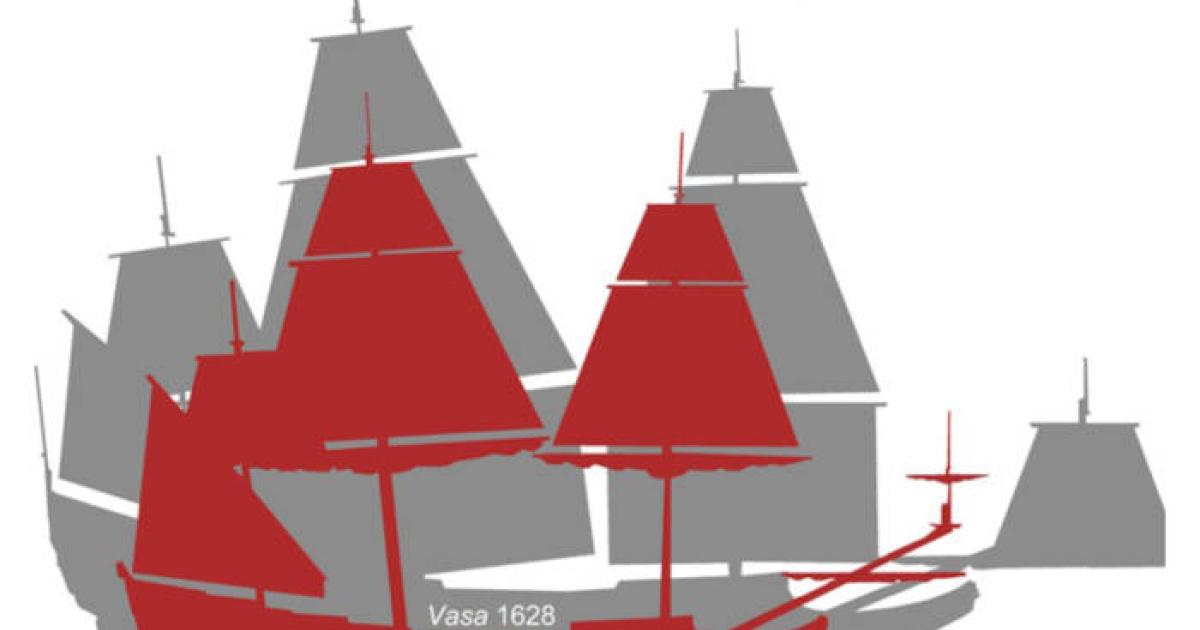
The ship was a so-called ‘pinnace’ and looked a lot like a small version of the warship Vasa. It had three masts, conspicuous sculpted decoration, a long galleon in the bow, and cannon ports along the sides. However, the Falken (Falcon in English) was smaller than Vasa, about 35 meters (115 feet) long from bow to stern and equipped with between 16 and 20 guns depending on the mission. Falken is the best-preserved example of a royal pinnace, a fast, comfortable and lavish little ship.
The wreck was discovered in 1974 and has so far been known as Varmbådan or Uunihylky. Despite previous research, the ship's identity has been unclear until now.
- The History of the Incredible Vasa Warship and its Humiliating Shipwreck
- Swedish Warships Stir From Davy Jones’ Locker

Falken most likely looked like this Dutch pinnace painted by Cornelis Verbeeck around 1625.
(National Maritime Museum, Amsterdam via Stockholm University)
Archival Studies Revealed the Ship's Name
A 3D model of the wreck, made by the Finnish Maritime Archaeological Society, has been studied by Niklas Eriksson, who is a senior lecturer in maritime archaeology at Stockholm University and a researcher in the program Glömda flottan (The Lost Navy). He found many signs indicating that the wreck is a warship from the early 1600s. Through research in the National Archives, he was able to conclude that the wreck is Falken (The Falcon).
“Falken is the oldest shipwreck in Finland that has been identified in written sources and whose original name is known to us. It is also worth emphasizing that the identification was made possible by making archaeological material freely available on the internet,” says Niklas Eriksson.

Divers from Finland's maritime archaeological society have created a 3D model of the wreck site of Falken. Although the hull has fallen apart, most of it remains at the site. Through careful documentation, it will be possible to piece together the ship and understand what it looked like. (Model: Topi Sellman/www.mas.fi/Stockholm University)
Used for War and Transport of Important Passengers
Falken was built in Stockholm between 1630 and 1631, probably by Hein Jakobsson, the same shipbuilder who had completed the ship Vasa a few years earlier. Falken was considerably smaller, but had been built with large cabins and other facilities at the behest of King Gustav II Adolf. For two decades, Falken was used not only as a warship, but also to transport councilors, diplomats, kings and other celebrities who traveled in the ship's comfortable cabins.
In the autumn of 1651, Falken ran aground off the Porkkala peninsula at the mouth of the Gulf of Finland. The ship was on its way to Stockholm after transporting Count Erik Stenbock to Narva. The details of the accident are not known, but the smaller ship Ugglan was equipped and sent to the scene to help the crew and salvage as much of Falken's guns and equipment as possible.
“Falken is a ship that, unlike the large, much more well-known, ships such as Vasa, Kronan, Äpplet or Mars, was used frequently. Falken has been present at many significant and well-known historical events, and the wreck can teach us a lot about how such a ship looked, functioned and how it was decorated," says Niklas Eriksson.
Top image: Falken was a pinnace and can best be described as a small version of the ship Vasa. The outline of Falken in red in front of Vasa in gray. Source: Niklas Eriksson/CEMAS
This article was first published by Stockholm University under the title, “The ship Vasa's little sister Falken found” and has been republished with light editing.