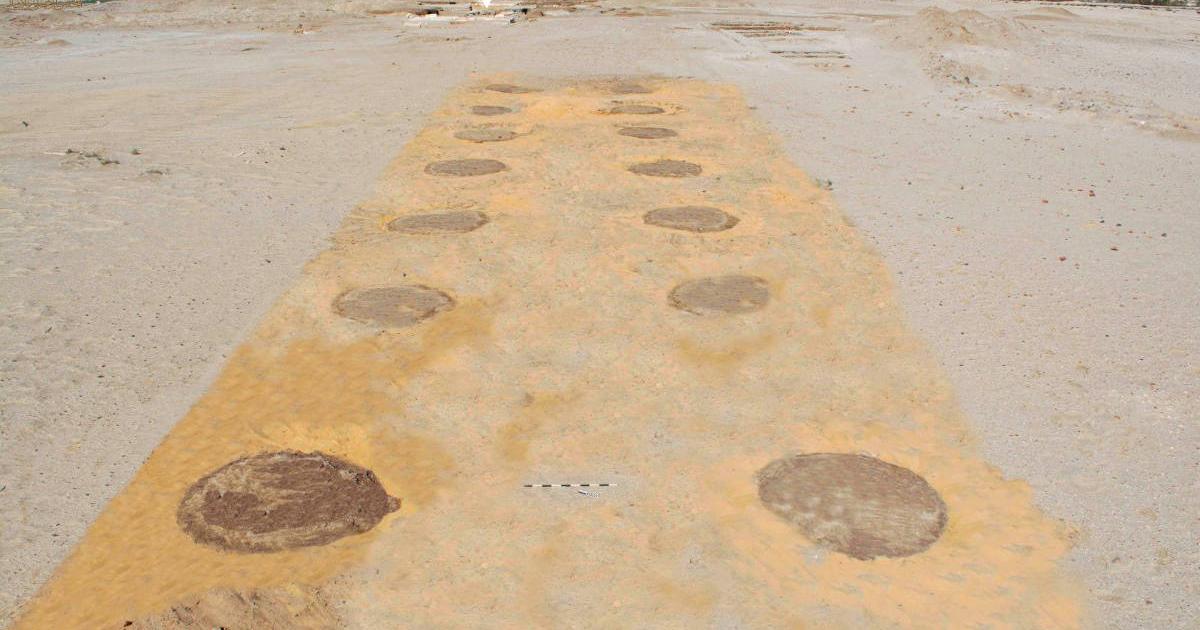

In the northern Sinai Desert, archaeologists have made a remarkable discovery. At a site known as Tell Abu Saifi, they unearthed the ruins of an ancient Egyptian fortress, accessed by an elaborate tree-lined entrance that featured more than 500 planting circles. This dramatic landscape, dating back over 2,000 years to Egypt’s Ptolemaic and Roman eras, is providing archaeologists with unprecedented insights into Egypt’s eastern defensive system, while also revealing more about their landscape modification practices.
Recent excavations by Egypt's Ministry of Tourism and Antiquities uncovered the fascinating clay-rimmed planting circles, which flanked a durable limestone-paved road leading directly to the fortress gates from a Roman structure that resembled a castle. Though the exact climate conditions of the ancient Sinai Desert remain uncertain, it is known that the region was more fertile in the past, and researchers are convinced the planting circles were designed to support trees.
If this is correct the pathway would have been quite a site to behold, and its possible that its creation had some type of spiritual or ceremonial significance.
In an interview with Live Science, Elizabeth Macaulay, a classics professor at the City University of New York Graduate Center, offered support for the Egyptian archaeological team’s conclusions.
“It is certainly possible that clay planting circles could have been used to plant trees,” she stated. She referenced papyri and archaeological evidence from the Ptolemaic period that show large-scale cultivation of trees, fruits, and vines, practices that would have continued during the later Roman period.
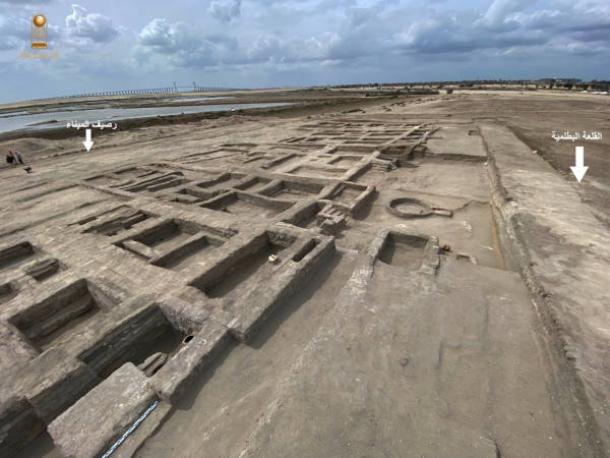
The ruins of the newly excavated fortress at Tell Abu Saifi. (Egyptian Ministry of Tourism and Antiquities).
If future excavations uncover tree root remains, it could not only confirm the function of these circles but potentially identify the species planted along the route.
- Heart-pounding Tomb Discovery In Egypt Shakes Up Ptolemaic/Roman Traditions
- Vast Roman-Period Emerald Mines Revealed in Egyptian Desert
Defending the Eastern Border
The newly discovered fortress represents an important find. It would have been in use during both the Ptolemaic (304–30 BC) and Roman (30 BC–642 AD) periods, when Egypt was ruled by the Greek descendants of Ptolemy I before being absorbed into the Roman Empire.
During the excavations the archaeologists found a trench, 6.6 feet (two meters) deep, that surrounded the fortress (it would have likely been filled with water). Dug during the Ptolemaic era, the moat-like feature would have strengthened its defensive capabilities, preventing easy attack by invaders.
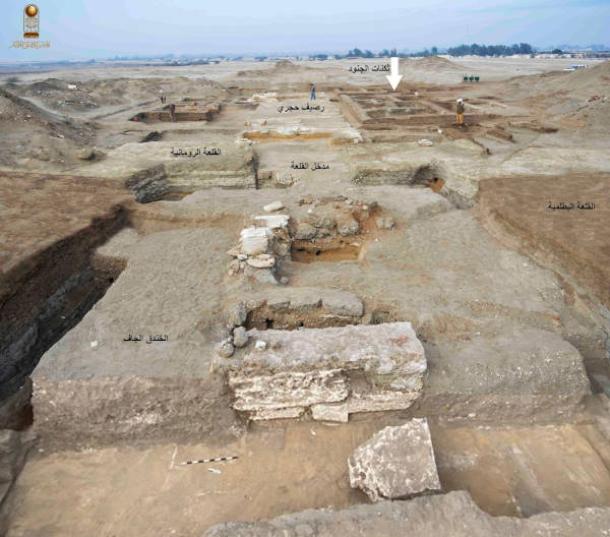
Residential structures from Roman period. (Egyptian Ministry of Tourism and Antiquities).
In addition to the defensive structures, archaeologists have uncovered residential quarters likely used by soldiers and their families during the days when the Romans occupied the site. They excavated a major section of the main road—328 feet (100 meters) long and 36 feet (11 meters) wide—which was constructed with limestone slabs and featured the tree-lined framing. This road would have supported the movement of military units into and out of the fortress.
The findings at Tell Abu Saifi suggest that it served as a strategic stronghold for centuries. Since these discoveries included both military and residential structures, it is clear that Tell Abu Saifi was occupied at all times during both the Ptolemaic and Roman periods, showing just how important the site was to the forces assigned to defend Egypt’s eastern frontier.
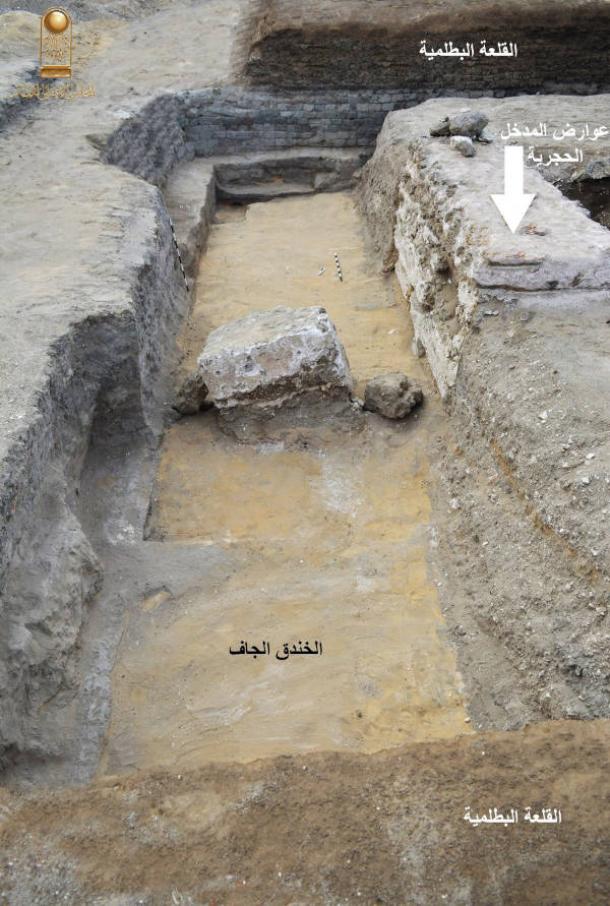
Deep Ptolemaic period trench built to surround and protect the fortress. (Egyptian Ministry of Tourism and Antiquities).
Dr. Mohamed Ismail Khaled, Secretary General of the High Council of Antiquities, emphasized that these excavations will help researchers construct a more accurate military map of Egypt’s eastern border, as it existed in the ancient past.
“Sinai has always been Egypt's eastern gateway and its first stronghold,” he noted, pointing to the new evidence of fortifications that indicate both Ptolemaic- and Roman-era occupation.
- Egyptian Alexandria - Ancient underwater finds revealed the Pharaonic roots of the Ptolemaic City
- Roman Tombs Found in Egyptian Oasis Reflect Cultural Blending Evident in Burial Practices
Tell Abu Saifi Repurposed
A particularly notable aspect of the site’s later history is the discovery of four large lime kilns, believed to have been used for producing quicklime. This industrial activity indicates a shift in the site's function around the end of the Roman era, when Tell Abu Saifi may have transitioned from a military center to an industrial zone. This shift may also explain the destruction of earlier stone structures in the area, as they would not have been suited for the tasks being performed.
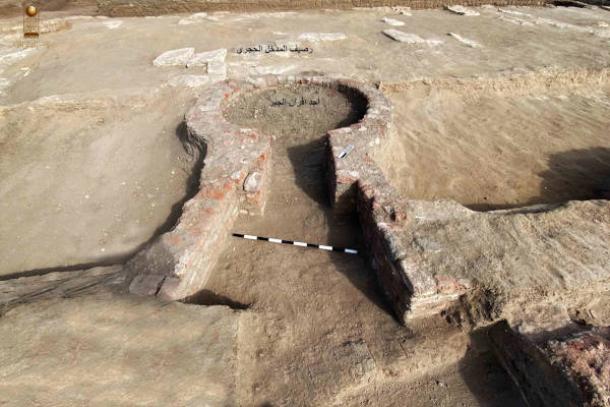
Lime kiln unearthed at site, from end of Roman period or later. (Egyptian Ministry of Tourism and Antiquities).
Tell Abu Saifi’s strategic value was closely tied to its geographical positioning. As the Nile's course shifted and Egypt’s coastline changed, the region’s military installations were moved from Tel Habwa (ancient Tharo) to Tell Abu Saifi, securing its place as a key eastern bulwark through multiple dynasties and empires. Fortunately the desert sands that buried the fortress kept its ruins extraordinarily well-preserved, benefitting the archaeologists who are pouring over this site today.
Top image: Aerial view of planting circles and road, leading to fortress ruins indicated in the distance.
Source: Egyptian Ministry of Tourism and Antiquities.
By Nathan Falde