

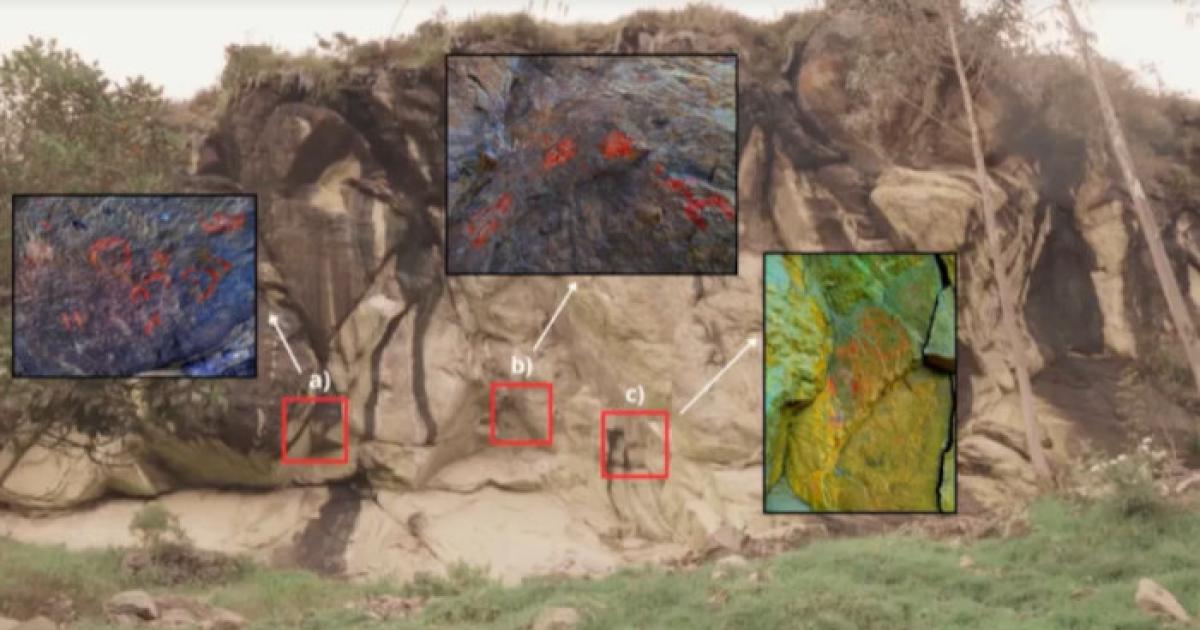

Researchers from the University of Cuenca have made what could be one of the most significant archaeological discoveries in Ecuadorian history - the country's first recorded cave paintings. The groundbreaking discovery of over 30 ancient pictographs in Paute canton has opened a new chapter in understanding Ecuador's pre-Columbian heritage and revealed the sophisticated cosmological worldview of the ancient Cañari people.
The unprecedented find emerged through the research project "Material culture, practices, social meanings and narratives around Cañari food," developed by the University of Cuenca's research group "Language, Cultures and Representations." This interdisciplinary team identified a gallery of rock paintings featuring circular motifs, anthropomorphic figures, a monkey, a serpent, and solar and lunar figures that reveal the richness of the Cañari world and their profound connection with the landscape, records a University of Cuenca report.
- Giant Petroglyphs in South America May Mark Territorial Borders
- Ten Mysterious Rock Art Examples from the Ancient World
Ancient Symbols Tell Forgotten Stories
The initial inspection by the research team, led by archaeologist Miguel Novillo, has identified at least 30 distinct figures painted on the rock surface. The artwork depicts a fascinating array of subjects including anthropoligical and zoological images and astronomical symbols - motifs that appear throughout pre-Columbian South American cultures.
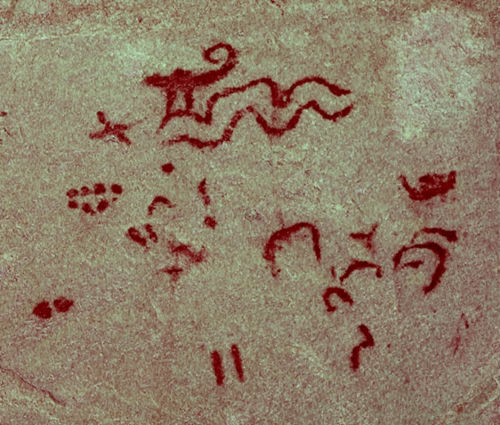
Some of the figures discovered on the rock shelter in Paute, Ecuador. (Courtesy of the University of Cuenca)
El Mercurio reports that the team immediately recognized the significance of their find and began comprehensive documentation procedures. The discovery gains additional significance through local oral traditions. Community conversations revealed narratives connecting the area to huacas (sacred places), rivers, caves, and burial sites. These oral histories may provide crucial context for understanding the cultural and religious significance of the painted imagery, potentially linking them to ancient Cañari traditions that dominated the region before Inca conquest.
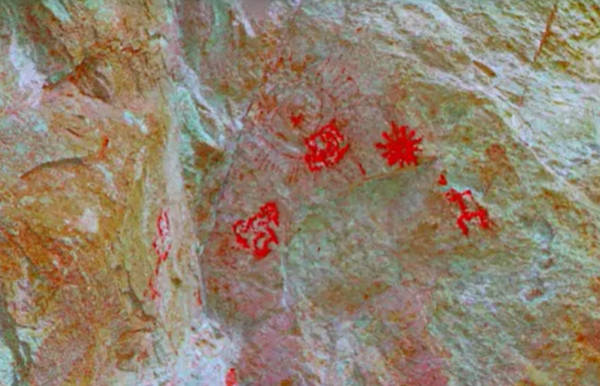
Anthropomorphic and other images. (Courtesy of the University of Cuenca)
Racing Against Time to Preserve History
The research team faces an urgent challenge beyond academic investigation. The rock shelter housing these invaluable paintings is in precarious condition and could collapse, potentially destroying this unprecedented archaeological treasure. Novillo has immediately contacted both the Municipality of Paute and Ecuador's National Institute of Cultural Heritage (INPC) to implement emergency conservation measures.
This discovery places Ecuador firmly on the map of South American rock art, joining countries like Colombia, which recently revealed 12,500-year-old Amazon paintings depicting Ice Age megafauna, and Venezuela, where 4,000-year-old rock art has been uncovered in Canaima National Park. The Ecuadorian find represents a crucial missing piece in understanding the distribution and cultural significance of ancient artistic expression across the continent.
- Ice Age Colombian Art Found Painted On Remote Jungle Cliffs
- Ingapirca: Proof that the Inca Respected the Cultures of those they Conquered
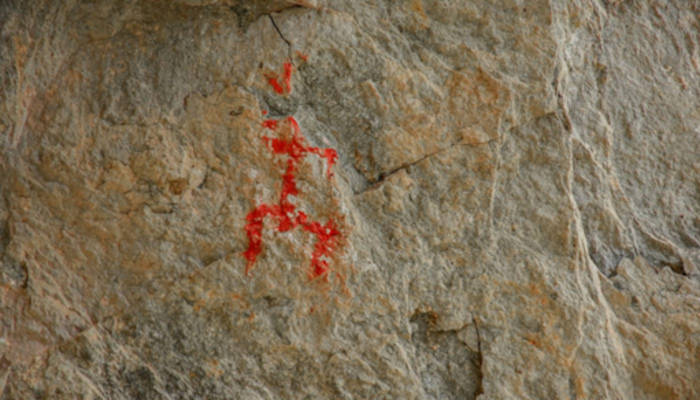
Representation of an anthropomorphic figure. (Miguel Novillo/University of Cuenca)
Unlocking Secrets of Ecuador's Past
The University of Cuenca is now preparing an ambitious two-year research project specifically focused on these cave paintings. The comprehensive study will employ cutting-edge archaeological technologies and require collaboration with various institutions to provide proper context for the painted figures. This interdisciplinary approach mirrors successful investigations of other pre-Columbian rock art sites across the Americas.
The potential implications extend far beyond Ecuador's borders. The paintings may provide insights into ancient migration patterns, religious practices, and cultural exchanges between indigenous Andean cultures. The discovery particularly excites researchers studying the relationship between pre-Inca cultures and their Amazonian neighbors, as the Paute region sits at the crucial intersection between highland and lowland ecosystems.
Azuay Province, where the paintings were discovered, has already yielded significant archaeological treasures, including ancient funerary urns and evidence of sophisticated pre-Columbian civilizations. This latest find confirms the region's importance as a cultural crossroads where different indigenous groups interacted, traded, and shared artistic traditions.
The race to study and preserve these paintings reflects broader challenges facing South American archaeology, where many sites remain under threat from environmental degradation, development, and looting. The Paute discovery underscores the importance of continued archaeological exploration and the preservation of indigenous cultural heritage throughout the region.
As research continues, these cave paintings promise to rewrite our understanding of Ecuador's ancient past and provide new insights into the rich tapestry of pre-Columbian life in South America.
Top image: The rockshelter in Paute, Ecuador, where 30 pictograms have been found. Image: © Novillo, M/ ARQUEOLOGÍA IBEROAMERICANA
References
El Mercurio. 2025. Pinturas rupestres: descubrimiento en Paute por la Universidad de Cuenca. Available at: https://elmercurio.com.ec/principal/2025/08/08/pinturas-rupestres-descubrimiento-paute-universidad-de-cuenca/
Novillo, M. 2025. Archaeological discovery interview. El Mercurio, Ecuador.
Novillo, M. 2025. Cave painting in Paute: A discovery connects past and present!. Unicersity of Cuenca. Available at: https://www.ucuenca.edu.ec/noticias/pintura-rupestre-en-paute-un-hallazgo-conecta-pasado-y-presente/
Novillo, M et al. 2025. Symbolic Landscapes and Rock Painting at Casharumi: An Interdisciplinary Approach from the Ecuadorian Andes. © ARQUEOLOGÍA IBEROAMERICANA Available at: https://www.laiesken.net/arqueologia/archivo/2025/AI5606.pdf






















