
Fact Check verdict: Unverified. Wood from the Durupinar site will show it is Noah's Ark.
On October 26, 2026, the Noahs Ark Scans account told its X followers that "Multiple pieces of wood have been recovered from the Noah's Ark Durupinar Site and are now in the lab for carbon-14 dating," and by the next morning the post had 213,955 views. Could a carbon date from a boat-shaped formation in eastern Turkey settle whether it is the Ark of Genesis? On the evidence so far, the claim is Unverified.
According to the İhlas News Agency (İHA), the find was first announced on October 15, 2026, when Prof. Dr. Cenker Atila of Sivas Cumhuriyet University told a symposium in Ağrı that his team had found a small amount of burnt wood. The reports do not yet show where it lay, what state it is in, or whether it ever formed part of a vessel.
What the evidence says
Atila heads the Durupinar research project and spoke at the 8th International Ağrı Mountain and Noah's Ark Symposium. In Ancient Origins' translation of the Turkish report, İHA said he had sent the samples for examination to identify the tree species and their age, with carbon-14 results awaited from laboratories in Turkey and France. He expected the French result in about 15 days and the Turkish analyses in about three months.
İHA's report does not say where in the formation, or at what depth, the wood was found, and it describes the results as still awaited. The X post says the depth "indicates it is very old," yet it gives no measurement.
Reports also differ on what the wood is. İHA describes "yanmış ahşap kalıntısı", or burnt wood remains, and the X post calls the wood "damaged and charred." Writing after a visit to the site, Miriam Sela-Eitam of The Jerusalem Post reported on October 22 that "Pieces of what may be petrified wood were also found at the site and sent to Sivas for carbon dating and identification, Atila added." İHA placed the carbon-14 work at laboratories in Turkey and France, and neither report says whether the two accounts describe the same samples.
In September, Andrew Jones, founder of Noahs Ark Scans, told Newsweek that a hard layer which broke a drill bit could be "Petrified or heavily mineralized wood," with a rock block within the surrounding debris as the other possibility. No report says whether the fragments being dated came from that layer.
The radiocarbon laboratory Beta Analytic explains that plants and animals take in carbon 14 throughout their lives. "When they die, they stop exchanging carbon with the biosphere and their carbon 14 content then starts to decrease at a rate determined by the law of radioactive decay," the lab writes. It lists charcoal and wood among datable samples, while warning that "Not all materials can be radiocarbon dated."
Jones has told Newsweek that "Organic matter also accumulates naturally in soils and slope deposits, and even identifying ancient wood would not by itself establish human construction." The X post says Dr. Cenker "is clear: this is not proof that it is Noah's Ark until the carbon-14 results are in."
The alternative view
For many Christians and Jews the account in Genesis is scripture. Genesis 8:4 in the King James Version records that "the ark rested in the seventh month, on the seventeenth day of the month, upon the mountains of Ararat." Newsweek describes Noahs Ark Scans as an independent U.S. research group "whose founders believe the remains of Noah's Ark will be found in the Durupınar Formation."

Noah's Ark, painted by the American artist Edward Hicks in 1846, shows the animals entering the Ark as told in Genesis. (Edward Hicks, Philadelphia Museum of Art/Public domain)
The Jerusalem Post reported that the team drilled 12 holes inside the formation and four outside it, "going as deep as some 20 meters in places," during the recent season. By Jones's account none of them struck bedrock, which he said would have been the sign of a natural rock formation.
According to İHA, Atila said a three-level formation found by the team could be linked to the scriptures' description of Noah's Ark as three decked, but stressed that current data were not enough for a firm conclusion and that the structures might be geological. On the voids seen by radar, he told The Jerusalem Post, "I don't want to say absolutely," and added, "Maybe it can be a geological hole."
Results from Turkish universities in 2023 are known here only secondhand, through Arkeonews, which wrote that nearly 30 rock and soil samples were examined at Istanbul Technical University, and that Ağrı İbrahim Çeçen University Vice Rector Professor Faruk Kaya said they were between 3,500 and 5,000 years old. Kaya also said, "With the dating, it is not possible to say that the ship is here." The report did not name the method or the material dated.
In 1996, Lorence Gene Collins, a retired geology professor at California State University, Northridge, and David Fasold described the site as "a completely natural rock formation" in the Journal of Geoscience Education. They added that "no fossilized wood or traces of elemental carbon, wood, or reed fragments have ever been found associated with the limonite walls or in any other place during trenching or core drilling."
Andrew A. Snelling, a geologist with Answers in Genesis whose summary is quoted here secondhand from Snopes, reached a similar conclusion. He linked the shape to earthquakes in 1948 and 1978 and wrote that they "pushed up this block of basement rock and some of the mudflow material draped over it," with faults forming the steep walls. The current team's drilling results stand against that reading, though they have not yet been peer reviewed, and Jones has said "That stage is still ahead."
Where this leaves it
Laboratories in Turkey and France now hold fragments described as burnt, and possibly petrified. Until a laboratory publishes its findings, with the sample's depth and context, claims about the wood's age are indicative rather than conclusive, and the project's own scientists have said so.
When a date arrives, it could show that the wood is ancient or recent, and either answer would add to the record of a site debated since an aerial photograph appeared in Life magazine in 1960. For now the Durupinar wood remains less an answer than a question for the laboratories.
How we checked this
Read in full for this check: the İHA report in Turkish, translated by Ancient Origins, the Jerusalem Post and Newsweek reports, the X post, Beta Analytic's radiocarbon explainer, the Collins and Fasold paper, the Snopes review and the Arkeonews report.
İHA spells Atila's surname Atilla, and this article follows The Jerusalem Post and Noahs Ark Scans. No interviews were conducted, earlier Ancient Origins coverage was not used as a source, and every quote was checked against a saved copy on October 27, 2026.
How we label claims: see How we check evidence.
More in this series: The Drill Broke on Something Hard Inside 'Noah's Ark'. Nobody Knows What Yet.
Related reading on Ancient Origins: New Evidence Suggests Formation in Turkey Might Really Be Noah’s Ark, Signs of Ancient Flooding Found at Alleged Noah’s Ark Parking Spot and Does ‘New Evidence’ Prove Noah’s Ark Is Buried on a Turkish Mountain?
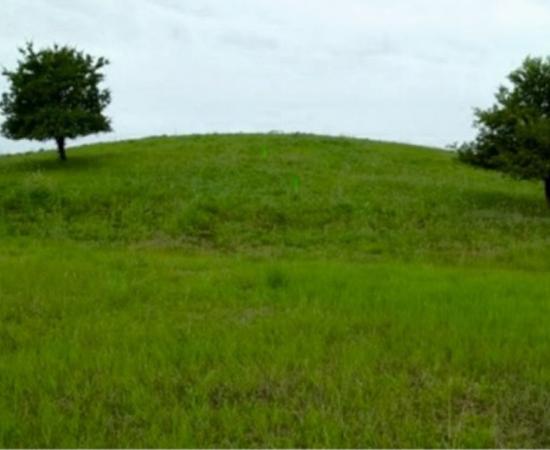
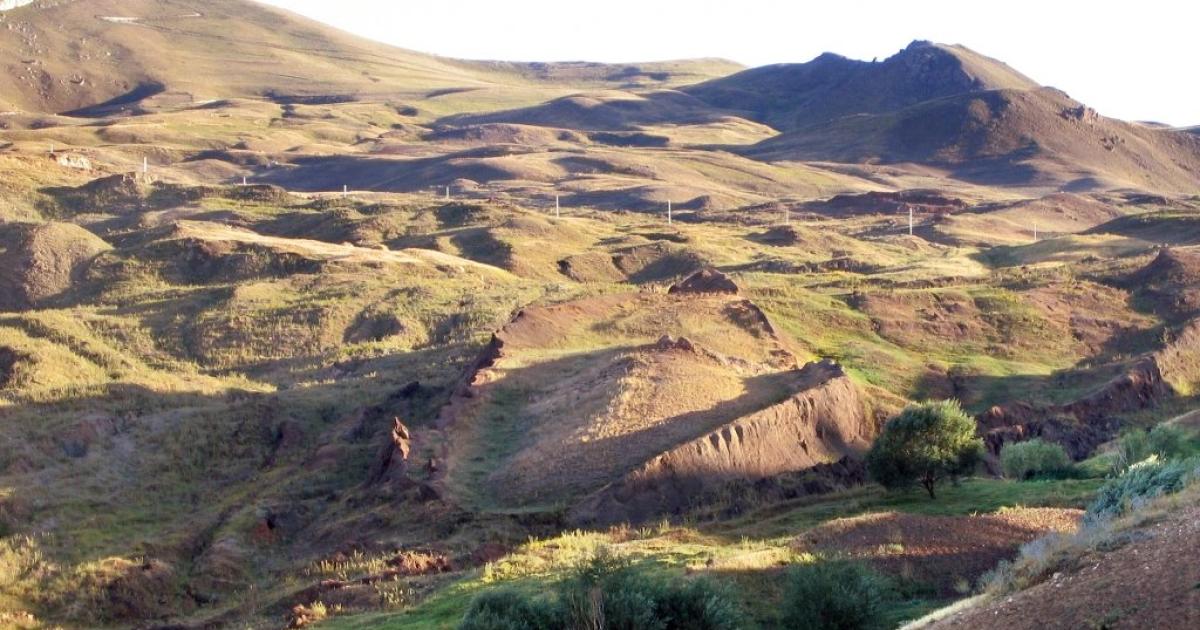
The Durupinar formation near Doğubayazıt in Ağrı province, photographed in August 2007. The photo shows the site, not the wood now being dated. Mfikretyilmaz, via Wikimedia Commons. CC BY 3.0
By Aris Manus
Claim by claim
- Unverified: Wood from the Durupinar site will show it is Noah's Ark. Reason: no laboratory has published a result, a radiocarbon date shows only when a tree died, and the project's leaders say a date would not be proof.
- Established: Wood fragments from the site were sent for carbon dating. Reason: İHA reported Atila saying burnt wood was out for carbon-14 analysis at laboratories in Turkey and France, The Jerusalem Post reported pieces sent to Sivas, and the X post says wood is in the lab.
- Unverified: Where in the formation and how deep the wood was found. Reason: İHA's account of Atila's talk gives no location or depth, and the X post refers to the depth without giving a figure.
- Unverified: Whether the wood is charred or petrified. Reason: no laboratory has identified the material, and the reports conflict, with İHA and the X post describing burnt or charred wood and The Jerusalem Post reporting pieces of what may be petrified wood.
- Established: A radiocarbon date measures when a once living organism died. Reason: the radiocarbon laboratory Beta Analytic explains that a plant or animal stops exchanging carbon when it dies, after which its carbon 14 decays at a known rate.
- Disputed: Whether the formation itself is natural rock. Reason: geologists Lorence Collins and Andrew Snelling, the latter quoted secondhand by Snopes, judged it a natural structure, while the current team reports drilling to some 20 meters without striking bedrock, in findings not yet peer reviewed.
Sources
- İhlas Haber Ajansı (2026). Ağrı'da Nuh'un Gemisi araştırmasında radar çalışmalarının yüzde 20'si tamamlandı. October 15, 2026.
- Sela-Eitam, Miriam (2026). 'Post' visits Durupinar site, where a multi-faith team hunts for Noah's Ark. The Jerusalem Post, October 22, 2026.
- King, Jordan (2026). Noah's Ark Hunters Testing for Wood After Drilling Mission. Newsweek, September 28, 2026.
- Noahs Ark Scans (@noahsarkscans) (2026). Post on X, October 26, 2026.
- Beta Analytic. What is Carbon-14 (14C) Dating? Carbon Dating Definition.
- Collins, Lorence Gene and David Franklin Fasold (1996). Bogus "Noah's Ark" from Turkey Exposed as a Common Geologic Structure. Journal of Geoscience Education, v. 44, p. 439 to 444.
- Snopes. Was Noah's Ark Found by Explorers in Eastern Turkey?
- Arkeonews (2023). The ruins believed to belong to Noah's Ark date back to 5500-3000 years BC. October 26, 2023.
- Genesis 8:4, King James Version. Bible Gateway.