



Deep within the limestone walls of Cloggs Cave in southeastern Australia, a remarkable discovery has shed light on ancient spiritual practices. Researchers have uncovered evidence that Aboriginal Australians carried whole grass plants into the cave to burn them for magic, healing, and cursing rituals, a tradition spanning an incredible 25,000 years.
The findings, published in the journal Frontiers in Environmental Archaeology, were made by a team of archaeologists working closely with the GunaiKurnai Land and Waters Aboriginal Corporation. By analyzing microscopic plant remains known as phytoliths, the researchers were able to trace the continuous use of the cave by the GunaiKurnai people from the peak of the last Ice Age up to recent times.
Unearthing the Phytolith Skeletons
The study focused on phytoliths, which are tiny, hard silica structures that form within plant tissues and remain long after the plant itself has decayed. Unlike pollen, which can be carried by the wind, phytoliths generally stay where the plant was deposited. Because Cloggs Cave lacks the sunlight and moisture needed for plants to grow inside, any phytoliths found there had to have been brought in from the outside.
- Australian Cave Holds Evidence of 12,000-year-old Ritual
- Ancient Finger Traces from First Nations Found in Glittering Cave
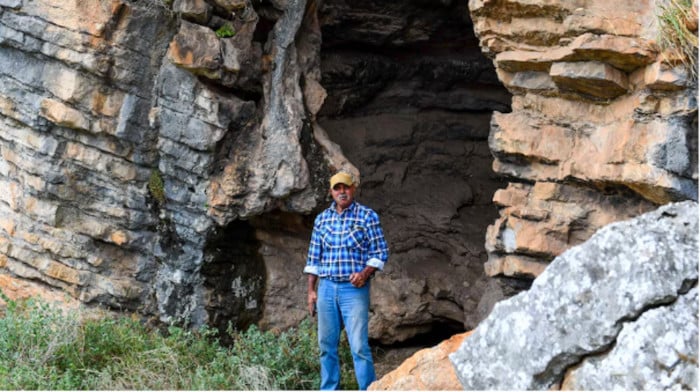
GunaiKurnai Elder Uncle Russell Mullett at the cave entrance of Cloggs Cave. (Jess Shapiro, courtesy of GunaiKurnai Land and Waters Corporation)
According to Dr. Elle Grono, lead author of the study and postdoctoral researcher at the Australian National University, the research team focused on looking for the half-burnt phytoliths in the ashy layers discovered inside the cave. These layers were formed from the fires lit by humans in the cave and excluded the option of their transportation to the cave by animals such as possums.
The study has proved that the vast majority of the phytoliths, 97% to be precise, belong to the phytoliths of grass plants. More importantly, the phytoliths of grass were extracted from different parts of it, including stems, leaves, flowers, and roots, which mean that the ancestors of GunaiKurnai took the whole grass plant to this remote cave to be burned.
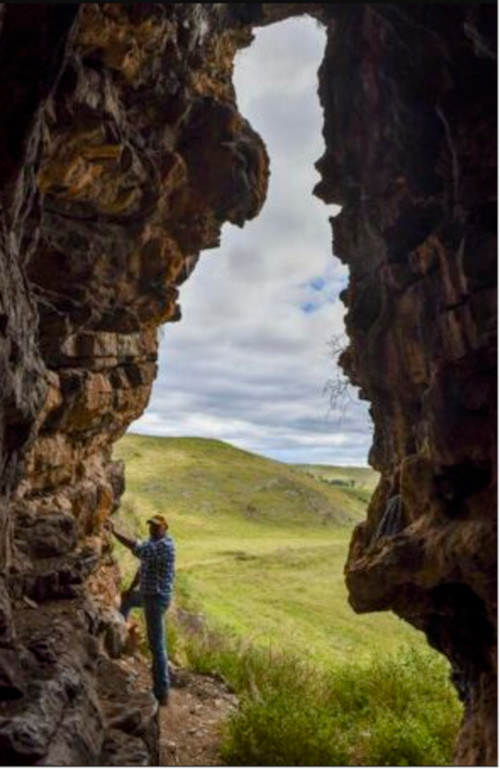
GunaiKurnai Elder Uncle Russell Mullett at the cave entrance of Cloggs Cave, showing the grassland outside. (Jess Shapiro, courtesy of GunaiKurnai Land and Waters Corporation)
A Sanctuary for the Mulla-Mullung
The continuous burning of these grasses aligns with 19th-century ethnographic accounts and the retained cultural knowledge of the GunaiKurnai community. According to these traditions, powerful learned men and women known as mulla-mullung used caves like Cloggs Cave to perform potent rituals.
These spiritual practitioners would use the ash from the burnt grasses in various ceremonies, smearing it on individuals for healing or cursing. The ash also served a practical and spiritual purpose: by spreading it on the cave floor, the mulla-mullung could track the footprints of anyone—or anything—that entered the cave, including dangerous spirit-beings thought to lurk in the darkness.
- The Aboriginal Didgeridoo Was a Tool for Healing and Peace
- How Aboriginal Australians Survived the Last Ice Age
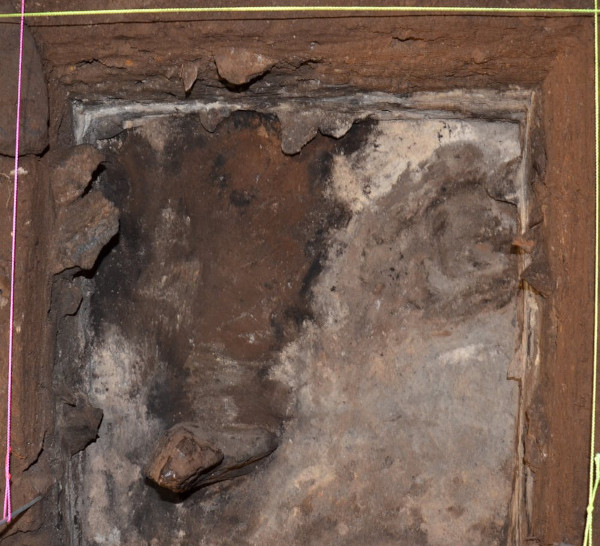
Bird’s eye view of the standing stone inside the cave (bottom left of photo), showing the white and grey ash from burnt grass all around it but not behind it. (Bruno David, courtesy of the GunaiKurnai Land and Waters Aboriginal Corporation)
The archaeological evidence paints a vivid picture of these ancient practices. In one area of the cave, researchers discovered a 28-centimeter-tall standing stone that had been erected around 2,000 years ago. Surrounding this stone were 73 thin layers of ash, representing 400 years of repeated, deliberate grass burnings.
Reconnecting with Ancestral Traditions
The collaborative nature of the research has been vital in interpreting the findings. GunaiKurnai Elder Uncle Russell Mullett emphasized the importance of these discoveries in understanding the deep history of their people. The mulla-mullung were both respected and feared within the community, acting as doctors who provided cures while also possessing powers that could cause harm.
This latest study builds on previous excavations at Cloggs Cave, which unearthed 12,000-year-old miniature fireplaces containing fat-smeared wooden sticks, further confirming the site's long-standing use for secluded ceremonies. The presence of burnt phytoliths dating back 25,000 years pushes the timeline of these rituals back to the coldest phase of the last Ice Age, demonstrating an incredible continuity of cultural practice.
As researchers and the GunaiKurnai community continue to work together, the ancient ash layers of Cloggs Cave are slowly giving up their secrets, allowing the rich stories of the Old Ancestors to be told once more.
Top image: Interior of an ancient Australian limestone cave with grass burning on the cave floor, evoking the ritual practices of the GunaiKurnai people over 25,000 years. Source: AI Generated
By Gary Manners
References
Bowler, J. 2026. Traces of grass used in Indigenous rituals 25,000 years ago unearthed in Victorian cave. ABC News. Available at: https://www.abc.net.au/news/science/2026-07-22/gunaikurnai-plant-burnt-25000-years-cave-study/106936554
Grono, E., David, B., Mullett, R., et al. 2026. Phytoliths from Cloggs Cave, GunaiKurnai Country (southeastern Australia ) reveal the gathering of whole grasses for burning practices inside the cave. Frontiers in Environmental Archaeology. Available at: https://www.frontiersin.org/journals/environmental-archaeology/articles/10.3389/fearc.2026.1871928/full
Mullett, R., David, B., & Grono, E. 2026. Microscopic plant remains reveal 25,000 years of GunaiKurnai rituals deep in a Victorian cave. The Conversation. Available at: https://theconversation.com/microscopic-plant-remains-reveal-25-000-years-of-gunaikurnai-rituals-deep-in-a-victorian-cave-287775
Popular Archaeology. 2026. Australian cave discovery shows grass was burned for magic, healing, and cursing for 25,000 years. Available at: https://popular-archaeology.com/article/australian-cave-discovery-shows-grass-was-burned-for-magic-healing-and-cursing-for-25000-years/





















