

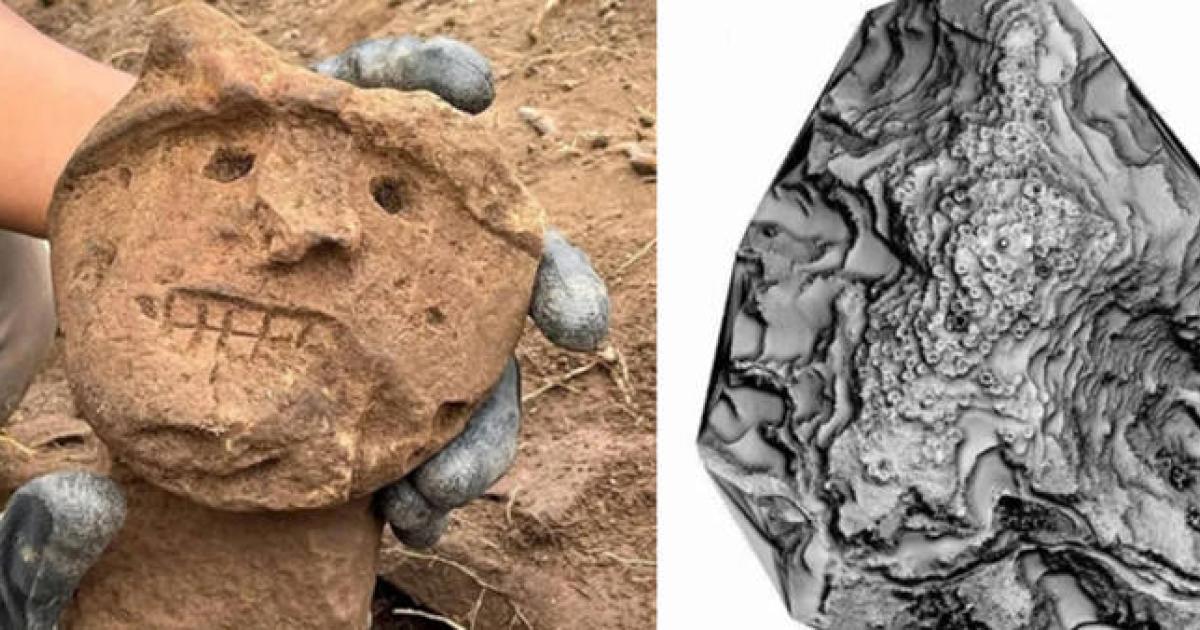

Archaeologists have unveiled an extraordinary discovery in Peru's Amazonas region, where two rare ceremonial club heads and over 200 pre-Hispanic structures belonging to the ancient Chachapoyas culture have been unearthed. The findings, made by researchers from the Kuelap Archaeology and Anthropology Research Institute (INAAK), represent one of the most significant discoveries related to the mysterious "Warriors of the Clouds" in recent years. This remarkable find not only expands our understanding of Chachapoyas territorial extent but also reveals unique ceremonial practices that may have been previously undocumented in the archaeological record.
- Craniums and Controversies of the Chachapoya Cloud Warriors
- Kuelap, Peru - Ancient Fortress of the Cloud Warriors

Excavations at the Ollape archaeological site, La Jalca, Peru. (INAAK)
Revolutionary LiDAR Technology Unveils Hidden Structures
The discovery was made possible through cutting-edge LiDAR technology, which allowed researchers to penetrate the dense cloud forest canopy that has hidden these ancient settlements for centuries, reports INAAK. The Xalca Grande Archaeological Project, working in conjunction with INAAK, employed drones equipped with Light Detection and Ranging sensors to map the La Jalca district systematically, reports Heritage Daily. This technological approach has revolutionized archaeological exploration in the region, enabling researchers to identify structures that would have been impossible to detect using traditional ground-based methods.
The survey revealed an extensive network of more than 200 previously unknown Chachapoyas structures scattered across the mountainous terrain. These findings suggest that the Chachapoyas civilization had a more expansive territorial reach than previously understood, with settlements extending far beyond the well-known fortress city of Kuelap.
- 100 Lost Monuments of 'The People of the Cloud Forest'
- AI Identifies New Geoglyphs Among Nazca Lines in Peru

LiDAR survey results revealing previously hidden Chachapoyas structures in the cloud forests of Peru. (INAAK)
Unique Ceremonial Club Heads Point to Chavín Influence
The most intriguing artifacts unearthed so far are the two ceremonial club heads found within the rubble of a perimeter wall surrounding a circular structure. These artifacts were deliberately placed in a manner that suggests profound religious or symbolic significance, indicating they were not merely discarded but positioned with ceremonial intent. The club heads exhibit stylistic characteristics reminiscent of the much earlier Chavín culture, which flourished in Peru's northern highlands from approximately 900 to 200 BC.
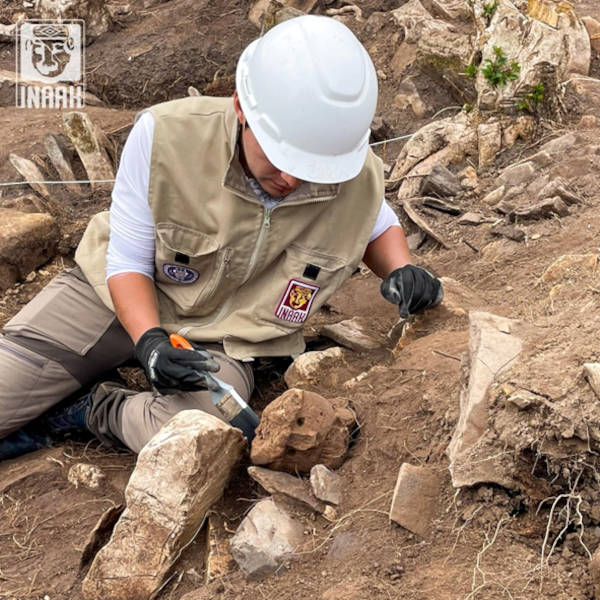
Archaeologist delicately excavates one of the club heads. (INAAK)
This connection to Chavín artistic traditions is particularly remarkable given the temporal and geographical distance between the two cultures. Experts suggest that these artifacts may represent either a previously unknown form of cultural continuity or a unique regional adaptation that developed within the Chachapoyas territory. The deliberate placement of these club heads within the structural remains indicates they held special ceremonial importance, possibly serving as offerings or markers of sacred space.
The discovery challenges existing assumptions about Chachapoyas material culture and suggests that their ceremonial practices may have been more diverse and complex than previously recognized. The stylistic elements connecting these artifacts to Chavín traditions could indicate long-distance cultural exchange networks or the preservation of ancient artistic conventions within Chachapoyas society.

The sarcophagi of Carajia, the emblematic image of the lost culture of the Chachapoya Cloud Warriors. (newfotografer / Adobe Stock)
Warriors of the Clouds: Understanding Chachapoyas Culture
The Chachapoyas, known as the "Warriors of the Clouds," inhabited the cloud forests of the present-day Amazonas state from approximately 200 to 1500 AD. Their civilization flourished in one of Peru's most challenging environments, constructing impressive stone cities and fortifications at altitudes exceeding 9850 feet (3000m) above sea level. The culture is renowned for its distinctive sarcophagi, elaborate burial practices, and sophisticated architectural techniques adapted to the steep Andean terrain.
Archaeological evidence suggests that Chachapoyas society was highly organized, with complex settlement hierarchies and extensive trade networks connecting the Amazon basin with highland Peru. Their most famous archaeological site, the fortress city of Kuelap, demonstrates their remarkable engineering capabilities and defensive strategies. The culture maintained its independence for over a millennium before falling to Inca rule in the late 15th century, shortly before Spanish conquest.
The recent discovery in La Jalca district adds crucial evidence to our understanding of Chachapoyas territorial organization and ceremonial practices. The extensive network of settlements revealed through LiDAR mapping suggests a more densely populated and politically complex society than previously imagined, with specialized ceremonial sites distributed throughout their highland domain.
Future Archaeological Research
This discovery marks a significant milestone in Chachapoyas archaeology and demonstrates the transformative potential of modern survey technologies in tropical environments. The success of the LiDAR-based approach in La Jalca opens new possibilities for systematic exploration of Peru's extensive cloud forest regions, where countless archaeological sites likely remain hidden beneath dense vegetation.

Amazing Technologies, Weapons and Gadgets of the Ancient World Ebook from Ancient Origins Store.
The ceremonial club heads represent just the beginning of what researchers expect to be a treasure trove of artifacts and architectural features waiting to be uncovered at the site. Future excavations will focus on understanding the complete ceremonial complex and its role within the broader Chachapoyas settlement network. The unique stylistic characteristics of the club heads suggest that this site may have served specialized ritual functions that differed from other known Chachapoyas ceremonial centers.
Top image: Ceremonial club heads discovered by INAAK researchers in the La Jalca district, showing distinctive stylistic elements reminiscent of Chavín culture. Source: INAAK
By Gary Manners
References
Milligan, M. (2025). Ceremonial club heads among new discoveries in lost Chachapoyas city. Available at: https://www.heritagedaily.com/2025/08/ceremonial-club-heads-among-new-discoveries-in-lost-chachapoyas-city/155739
INAAK (2025). Carved Club Heads and over 200 structures discovered at Ollape archaeological site. Available at: https://www.facebook.com/inaak.untrm/posts/1325148782948275






















