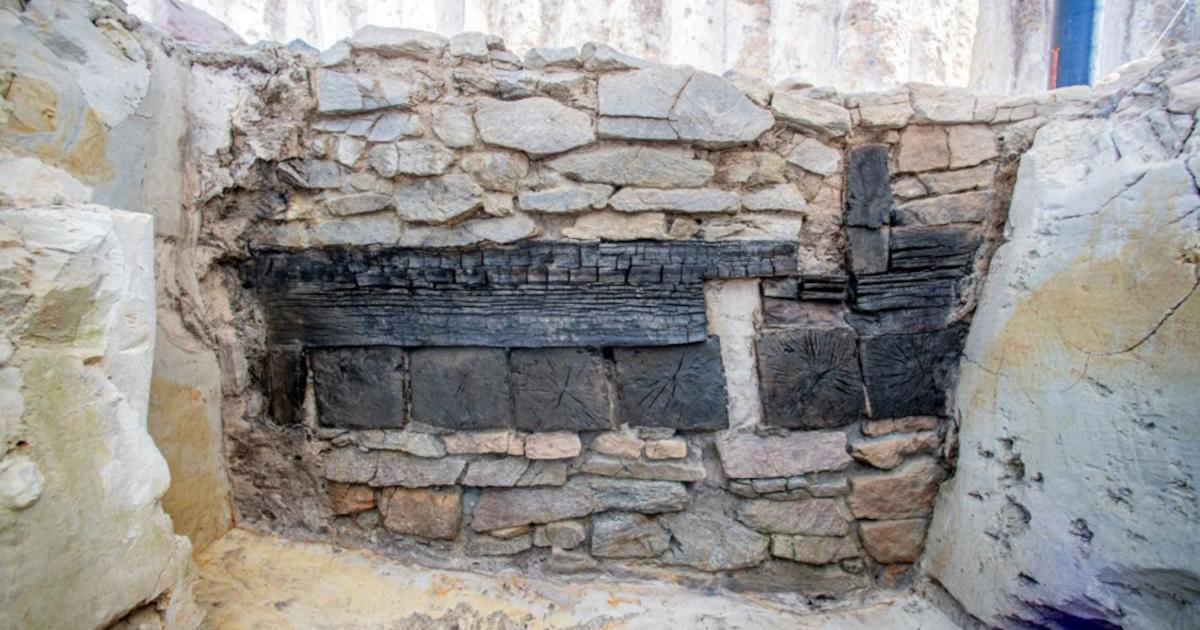

The first third of a remarkably intact riverside structure created from gigantic oak beams about 2,400 years ago has been recovered by archaeologists in Bavaria. The Celtic wood used in the structure weighed up to 250 kg and was retrieved, piece by piece, from a deep foundation pit next to the Main River in the town of Aschaffenburg. According to the Bavarian State Office for Monument Protection (BLfD), the unusual timber-and-stone structure could have been responsible for guarding the route from the river to an important settlement. It is even possible that there was a wooden platform on the riverside to serve boats unloading people or cargo.
Ancient Oaks Emerge from the Riverbank
While constructing a stormwater overflow basin in March 2026 close to the Willigis Bridge in Aschaffenburg, workers brought the wood to light for the first time in over two millennia. Since the wood was located eight meters underground and looked remarkably fresh, experts first believed it was a very recent construction according to the City of Aschaffenburg’s announcement. The tree-rings analysis from the BLfD laboratory in Thierhaupten, however, revealed that the oaks were cut down from 372 to 352 BC which indicates the period of European Iron Age, as well as the epoch of La Tène culture.
- A Wagon, Gold Rings, and a Jug From 400 Miles Away: The Celtic Grave Rewriting Iron Age History
- Archeologists discover Ancient Celtic village with more than 150 roundhouses
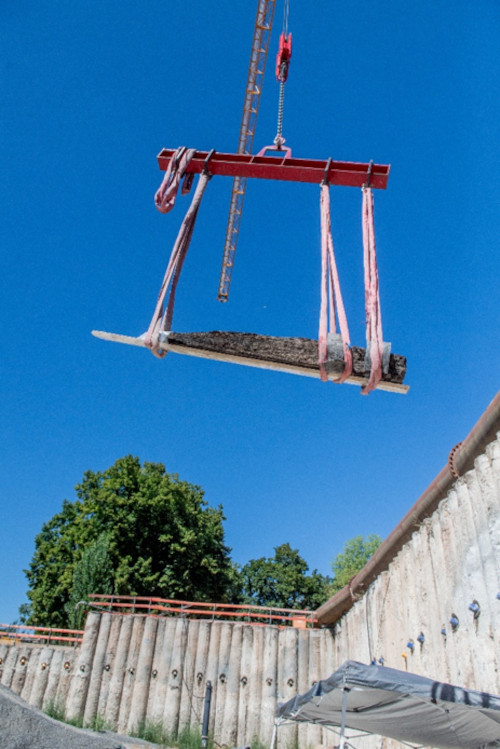
An oak beam is raised from the excavation pit by crane. (Björn Friedrich / BLfD)
Each timber measures between three and four meters (10–13 feet) long, and its removal involved a great deal of manual skill prior to hoisting it with a crane. The conservators then treated the wooden structures, putting it into wet storage, which is vital for the preservation of wet Iron Age timber after it has been removed from the protective ground. Researchers will make a 3D laser scan of every timber before detailed study, and part of the structure is intended for eventual display at Aschaffenburg’s Stiftsmuseum.
- The Powerful Hallstatt Culture: Foundation of the Proto-Celtic World
- Treasure Hunter Finds the First Celtic Chariot Burial in Wales, Rewrites Ancient History
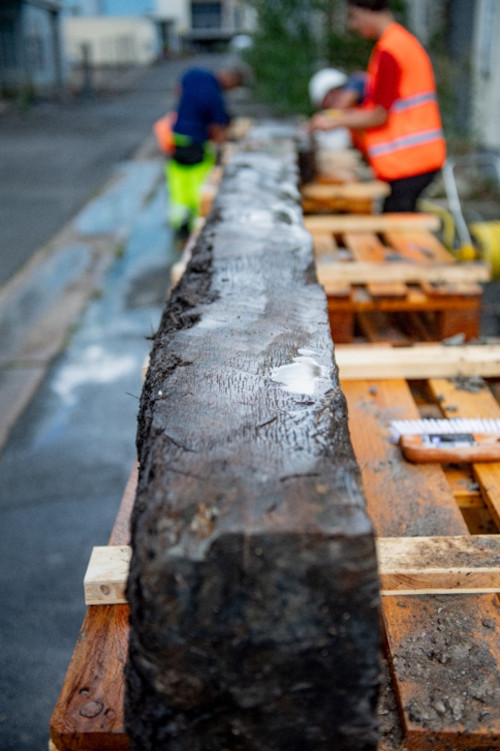
Marks left by Iron Age axes and adzes remain visible on a cleaned oak beam. (Björn Friedrich / BLfD)
River Gate, Landing Place or Statement of Power?
The function of the Celtic wood structure is still unclear. “We do not yet know what the structure was used for,” said BLfD archaeologist Dr Stefanie Berg in the official announcement, but he speculated that it was built to protect access from the river Main to the settlement. The presence of an adjacent platform implies that it could have also served as a landing place, and fitted into a broader context of ancient river ports and riverside trade. However, unlike the better known Celtic hillforts, it is interesting to note this structure is built on difficult marshy ground at the bank of the river.
The integration of dry-stone walls and precisely fitted oak wood suggests that it was constructed for use in unstable wet soil. According to Berg, the oak wood trees were obtained from Spessart and moved with the stone along the River Main, quite a feat for the age. Additionally, distinct marks of axes and adzes on the beams provide a unique opportunity to learn how people in the Iron Age worked with heavy beams.
Preserving a Window into Celtic Aschaffenburg
The construction work indicates that the local population was able to attract laborers skilled artisans, and other resources. Previous finds from the vicinity of present-day Aschaffenburg, including an animal-head fibula and a gold finger ring, made archaeologists suspect that the site was an important early La Tène center. The new finds of Celtic wood structures might provide the strongest evidence thus far regarding its organizational structure, river links, and public architecture.
Top image: The exceptionally preserved timber-and-stone structure beside the Main River. Source: Björn Friedrich / BLfD
By Gary Manners
References
Bayerisches Landesamt für Denkmalpflege. 1 September 2026. Grabung am Mainufer: 2400 Jahre alte Hölzer per Kran geborgen. Available at: https://www.blfd.bayern.de/mam/blfd/presse/pressemitteilung_++_grabung_am_mainufer_2400_jahre_alte_h%C3%B6lzer_per_kran_geborgen_++_blfd.pdf
Herder. 21 May 2026. Aktuelle Erkenntnisse zum eisenzeitlichen Bauwerk am Mainufer in Aschaffenburg. Available at: https://www.herder.de/wbg-magazine/aktuelles/2026/aktuelle-erkenntnisse-zum-eisenzeitlichen-bauwerk-am-mainufer-in-aschaffenburg/
Stadt Aschaffenburg. 21 May 2026. Eisenzeitliches Bauwerk lässt Forschende staunen. Available at: https://www.aschaffenburg.de/Politik-Verwaltung/Presse/Aktuelle-Meldungen/Eisenzeitliches-Bauwerk-l%C3%A4sst-Forschende-staunen.php?ModID=255&FID=4173.12286.1