

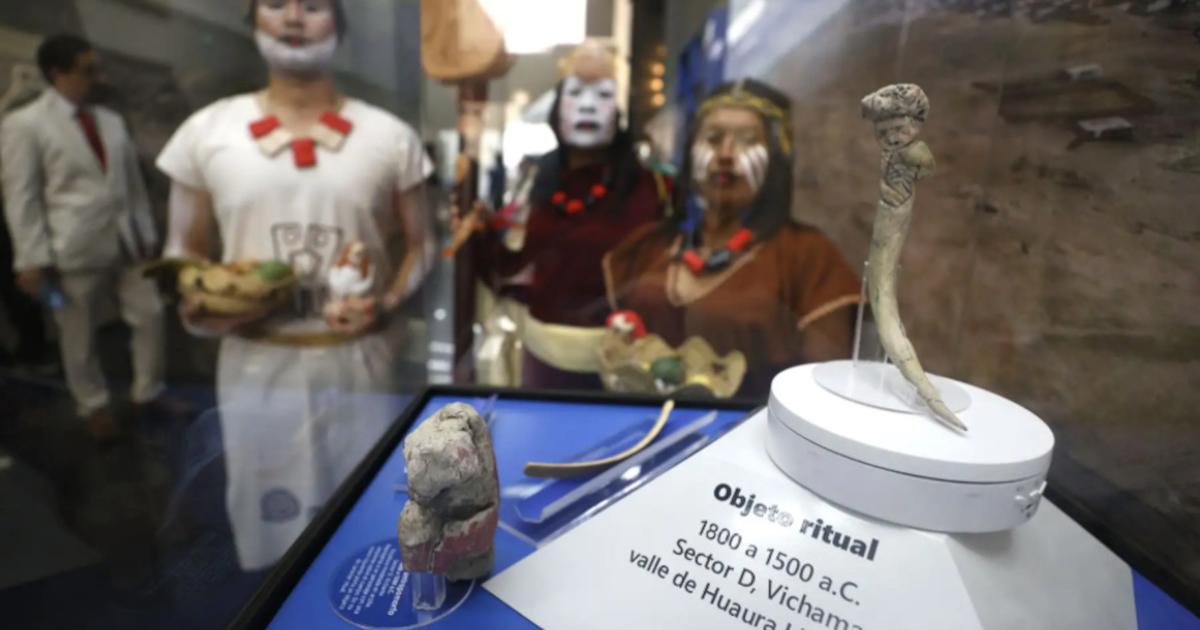

Two extraordinary serpent artifacts dating back to almost 3,800 years ago, created from deer antlers and clay, provide a rare insight into how an early civilization in Peru perceived drought, death, and recovery. According to archaeologists, these objects show how serpents or snakes were associated with water, fertility, and rebirth at Vichama, a coastal community whose residents remembered their harsh experiences with nature through their rituals. The discoveries suggest that people did not just endure climate disaster; it was also turned into a legacy for generations to come.
Serpents Among the Dead at Vichama
The discoveries were announced by Peru’s Caral Archaeological Zone, an agency of the Ministry of Culture, during events marking 19 years of work at Vichama. The town, located in Végueta of the Huaura Province north of Lima, thrived around the era of 1800 to 1500 BC within the wider culture of Caral. The excavated artifacts are adorned by snake patterns - some found in public and residential buildings, while others were placed intentionally as devoted offerings as a part of construction.
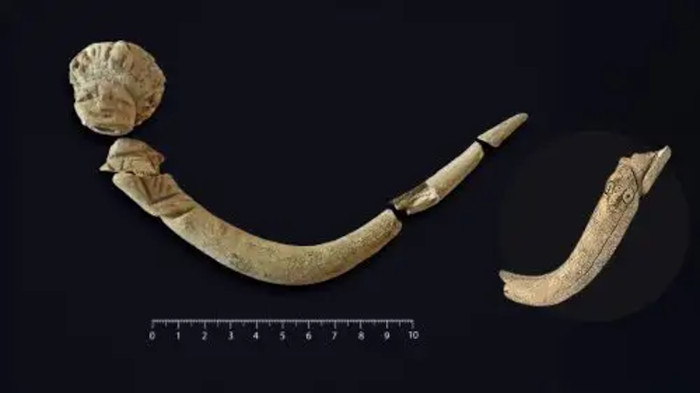
One of the most important pieces was recovered in Sector D of Vichama. It is a sculpture carved into the antler of a young deer, approximately 30 centimeters long. (Agencia Andina ©️ Editora Perú)
The largest sculpture measures almost 30 centimeters (11.8 inches) in length and has been made from a young deer’s antler. The sculpture depicts a human-like figure that seems to be dead, its eyes and mouth shut, together with a snake-like figure. The archaeologists think that this image might symbolize the transition between two forms of life, in which the snake appears to carry the essence of death on to the next phase of life. This is a symbolism found widely in the ancient world, as explored in the Ancient Origins article Tracing the Origins of the Powerful Serpent Cult.
- Toad Figurines Reveal Climate Messages From 3,800-Year-Old Peru
- 3800-Year-Old Carvings Show Starving City’s Pleas To Water God Were Answered
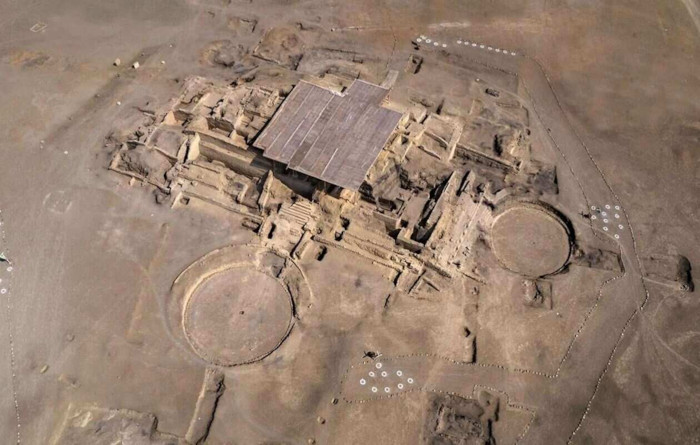
Vichama was an agricultural and fishing settlement of the Caral tradition near Peru’s Pacific coast. (Caral Archaeological Zone / Ministry of Culture, Peru)
A Symbol of Water and Renewal
Another sculpture, which is 6.9 centimeters (or 2.7 inches) long, was made of clay that had not been baked and still bears remnants of red and black paint. The sculpture has a snake with a triangular head curling on its front and has an object in its hand that probably had some ritual purpose. This sculpture provides the symbolism of toad figurines and climate messages that has already been found in Vichama, meaning that the culture already had a way to express the idea of scarcity and hope through its rain-related animals.
Vichama relied on farming in the Huaura Valley and fishing along the Pacific coast, making reliable water and stable marine conditions essential. Dependence on carefully managed water continued across ancient Peru, where later societies built sophisticated canals that remarkably still help sustain Lima to this day.
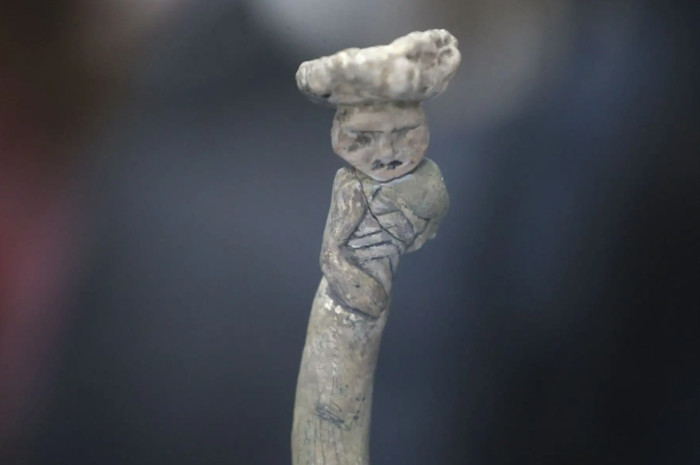
Carved bone object from Vichama linked to snakes, presented as evidence of how Caral-linked communities responded to environmental change. (©ANDINA/Vidal Tarqui)
Climate Disaster Preserved in Art
The serpent artifacts are part of a much larger visual record. In Vichama’s main public building, excavators have discovered 34 human and fish-like images, which make up the “Mural of the Dance of Life and Death”, while the “Mural of Fertility”, depicts two snakes meeting an anthropomorphized seed. Earlier reliefs show thin people with visible ribs which can be interpreted as a recollection of drought and famine, discussed in Ancient Origins account of Vichama’s starving figures and water symbolism.
Ruth Shady Solís, director of the Caral Archaeological Zone, said Vichama’s inhabitants created these reliefs so that knowledge of the climate crisis, and how to prevent its repetition, would not be lost. “The message we are recovering is this: we must reflect,” she said in the Ministry announcement, urging people to understand history before deciding what changes to promote. Her interpretation fits growing evidence that Caral communities did not simply disappear but reorganized at settlements such as Vichama and Peñico, a later trading center.
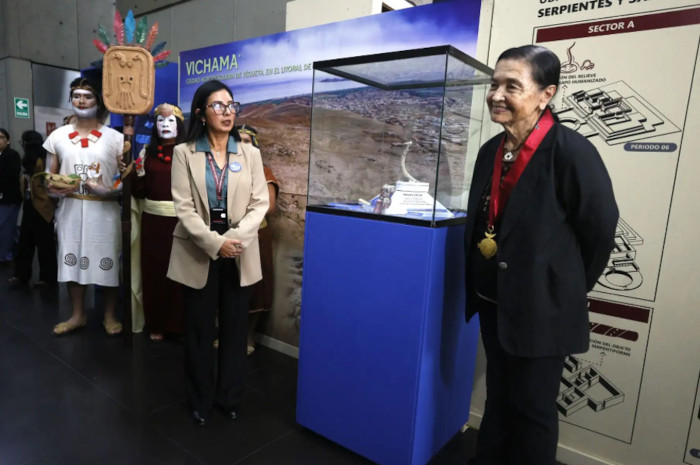
Ruth Shady Solís, director of the Caral Archaeological Zone at the opening ceremony. (Vidal Tarqui/ Agencia Andina ©️ Editora Perú)
A Message Across 3,800 Years
Caral is regarded as the earliest center of civilization in the Americas, with monumental architecture, organized agriculture, and substantial trade developing thousands of years before the rise of the Inca civilization. Researchers are beginning to understand Caral’s history not as a case of sudden disappearance but rather as that of adaptation, due to growing evidence of the culture’s apparent migration to new locations after changes in climate. The broader Norte Chico civilization shows how communities on the dry coastline of Peru managed to develop complex forms of society around river valleys and marine resources.
Consequently, the Caral artifacts hold meanings that go beyond ritual symbols. They connect a dead figure with a creature of rivers and regeneration, turning disaster and healing into small objects you can keep in your hand. As modern societies debate how to preserve knowledge of environmental risks, Vichama shows that people confronted the same challenge nearly four millennia ago—and chose to make memory visible.
Top image: A serpent-bearing artifact recovered at Vichama, one of two standout sculptures from Sector D. Source: © ANDINA / Editora Perú/ Caral Archaeological Zone / Ministry of Culture, Peru
By Gary Manners
References
Andina Agencia, 2026. Discovery of 3800-year-old sculptures in Vichama reveals the symbolism of the snake. Available at: https://andina.pe/agencia/noticia-hallazgo-esculturas-vichama-3800-anos-revela-simbolismo-de-serpiente-1089204.aspx
Moeed, A. 29 August 2026. Ancient Serpent Sculptures Linked to the Caral Civilization Found in Peru. Available at: https://greekreporter.com/2026/08/29/ancient-serpent-sculptures-linked-caral-civilization-found-peru/
Zona Arqueológica Caral. 27 August 2026. Ministerio de Cultura: Hallazgos en Vichama aportan nuevas evidencias sobre cómo una sociedad de hace 3800 años afrontó cambios climáticos. Available at: https://zonacaral.gob.pe/en/noticias/ministerio-de-cultura-hallazgos-en-vichama-aportan-nuevas-evidencias-sobre-como-una-sociedad-de-hace-3800-anos-afronto-cambios-climaticos/





















