

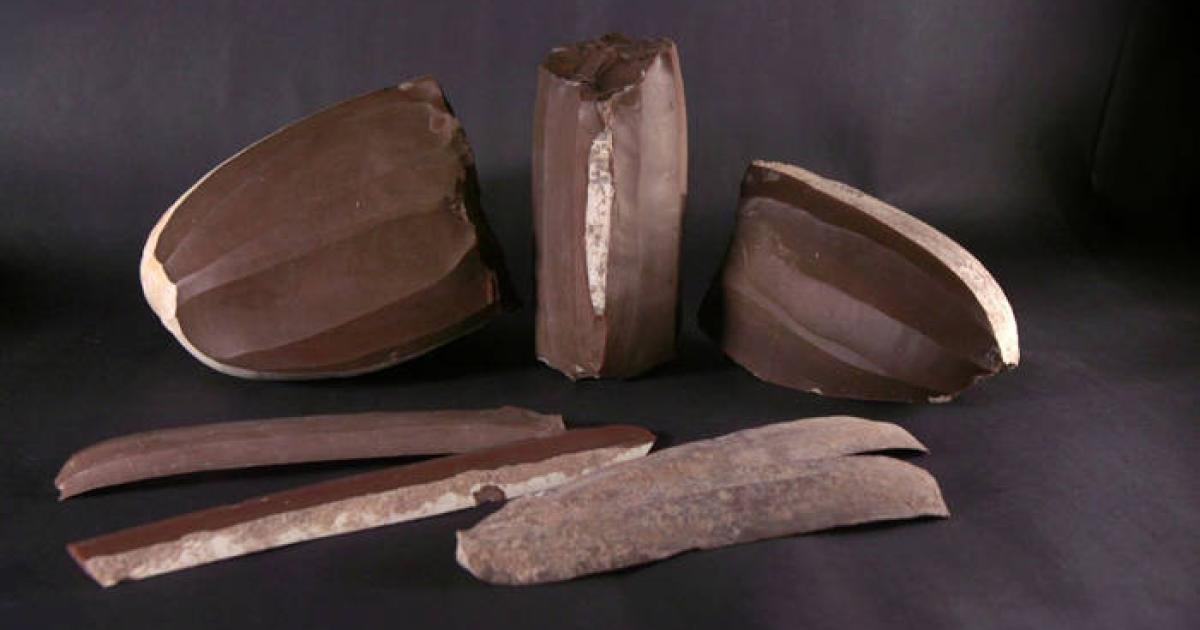

Archaeologists have uncovered a rare, 5,500-year-old Canaanite blade manufacturing workshop near Kiryat Gat in southern Israel, marking the first discovery of its kind in the region. The site at Nahal Qomem is providing unprecedented insights into Early Bronze Age craftsmanship and trade networks that flourished during the dawn of urbanization in ancient Canaan.
Revolutionary Discovery Reveals Ancient Industrial Complex
The excavation, conducted by the Israel Antiquities Authority ahead of the construction of a new neighborhood, has revealed hundreds of subterranean pits across more than half a square kilometer. Unlike previous isolated finds of Canaanite blades throughout Israel, this site presents the complete manufacturing process intact for the first time.
"This is truly extraordinary," said Dudu Biton, an IAA expert on flint tools and Canaanite blades. "We've discovered not just a few, but hundreds of them, along with the full range of materials related to their production." The site features numerous pits of various sizes, some lined with mud bricks and reaching up to three meters in diameter Times of Israel.
- The Fate of Tel Hazor: Canaanite Settlement Mentioned in Biblical Texts
- 5000-Year-Old Settlement Plus Early Temple Uncovered in Israel
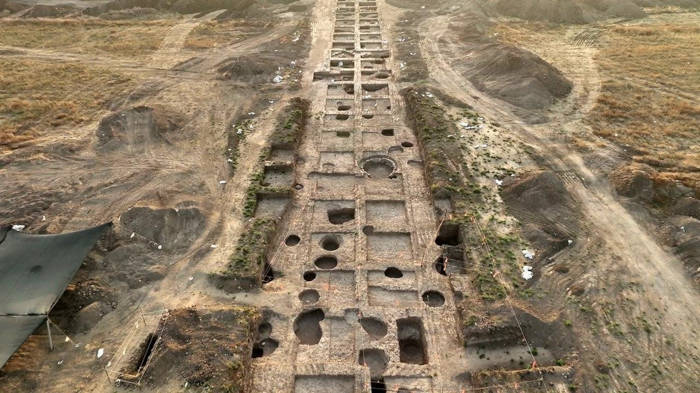
Aerial view of the 5,500-year-old Canaanite blade workshop excavation site near Kiryat Gat, Israel, showing hundreds of ancient storage pits that reveal sophisticated Early Bronze Age craftsmanship and trade networks. (Emil Aljem/ Israel Antiquities Authority)
Sophisticated Craftsmanship of the Bronze Age
The Canaanite blades discovered at Nahal Qomem demonstrate remarkable technological advancement for their era. These razor-sharp implements required highly specialized craftsmanship and were primarily used as agricultural tools, particularly as sickle blades for harvesting wheat and other crops. When vegetation came into contact with the blades, it created a distinctive gloss along the edges, which archaeologists use to identify their agricultural purpose.
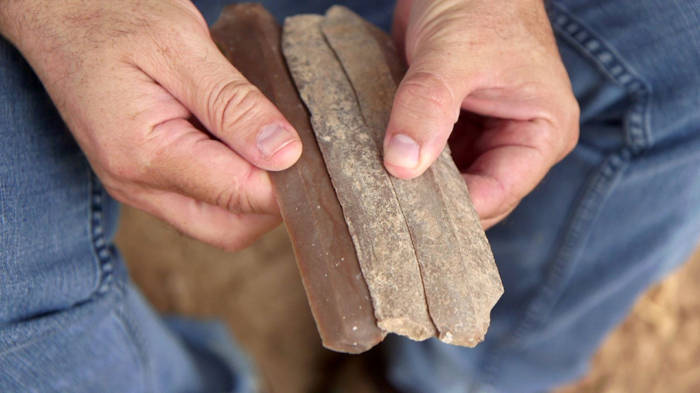
Flint blades created in the ancient workshop. (Emil Aljam/Israel Antiquities Authority)
According to the Haaretz report, the Canaanites were particularly selective about using blackish-brown local flint, and there was a significant stylistic evolution from the Chalcolithic to the Early Bronze Age. The site's use spanned hundreds of years, as evidenced by finds from both periods.
- Paleolithic weapons factory was a rich source of obsidian tools
- Lost Bronze Age Town Full of Treasures Unearthed in China
Evidence of Ancient Trade Networks and Ritual Practices
The discovery provides valuable insights into the Early Bronze Age economic systems and social organization. Geological analysis revealed that the flint used at the site originated from the Beit Guvrin area, approximately 15 km (10 miles) away, indicating established supply chains and trade relationships across the region.
One of the most intriguing finds is a cache of hundreds of unused blades buried together - a discovery that researchers believe may have been a ritual offering. "It's only speculation at this point, but we're exploring the possibility that this was some kind of ritual offering," Biton explained to the Times of Israel, "That could explain why so many unused blades were intentionally buried together."
Jacob Vardi, an IAA flint expert, noted that "the waste fragments, the debitage, were not scattered outside the site - perhaps to better protect and preserve the professional knowledge within the group of experts."
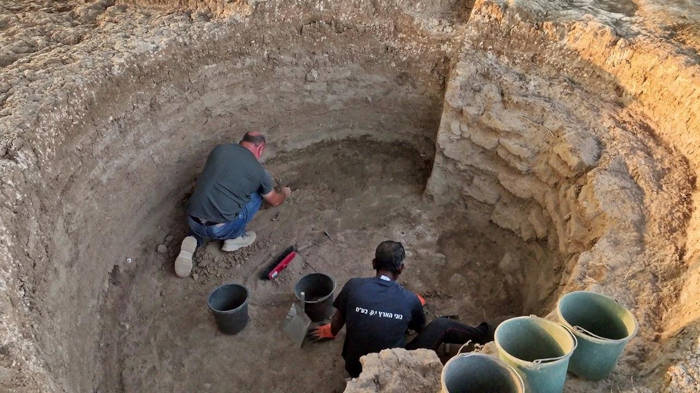
Excavated storage pits reveal the workshop's organizational complexity. (Emil Aljam/Israel Antiquities Authority)
Implications for Understanding Ancient Canaanite Society
This discovery is significant for Canaanite archaeology, as it provides the first complete context for understanding how these skilled craftspeople organized their production. The site dates to the beginning of urbanization in the region, when villages were growing larger and defensive fortifications were first being constructed around settlements.
The workshop's location near present-day Kiryat Gat places it in a region that would later become significant in biblical narratives, close to the ancient city of Gath. The continuing excavations may reveal whether the blades produced here were used only locally or traded throughout ancient Canaan, potentially reshaping our understanding of Early Bronze Age commerce networks.
"We are especially interested in determining whether the blades produced here were only used locally or traded to other sites across the region," Biton stated. The research team hopes that ongoing analysis will provide deeper insights into the connections between settlements and the extent of ancient trade networks in the Levant.
Top image: Flint blades and cores discovered at the 5,500-year-old workshop. Source: Emil Aladjem/Israel Antiquities Authority
By Gary Manners
References
Biton, D. 2025. Personal communication with Times of Israel. Available at: https://www.timesofisrael.com/rare-intact-5500-year-old-canaanite-blade-workshop-unearthed-in-southern-israel/
Tercatin, R. 2025. Rare intact 5,500-year-old Canaanite blade workshop unearthed in southern Israel. Available at: https://www.timesofisrael.com/rare-intact-5500-year-old-canaanite-blade-workshop-unearthed-in-southern-israel/
Vardi, J. 2025. Archaeologists find 'missing' Canaanite stone blade factory in southern Israel. Available at: https://www.haaretz.com/archaeology/2025-07-28/ty-article/archaeologists-find-missing-canaanite-stone-blade-factory-in-southern-israel/00000198-5116-d347-addf-57df35bb0000





















