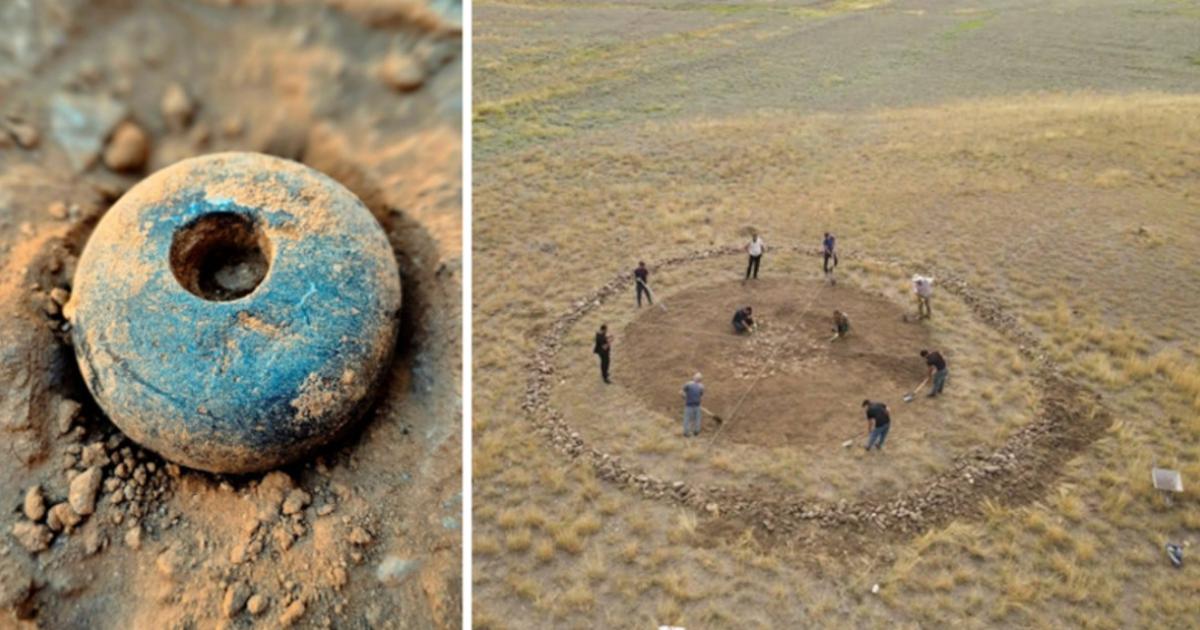

Archaeologists in western Azerbaijan have discovered a unique mace head, as well as a bronze dagger and a quiver full of arrowheads in the course of their study of an ancient burial mound or kurgan. According to the scientists, the grave dates back to the 17th or 16th century BC, which makes it approximately 3,600 years old. The weapons suggest that its occupant belonged to a military elite, although no detailed osteological assessment of the remains has yet been released. The fascinating discovery provides a close look at how martial identity and authority were displayed in death.

The mace in situ at the find site at kurgan No. 4 in the Sariyokhus Valley, Azerbaijan. (Azerbaijan National Academy of Sciences (ANAS) Institute of Archaeology and Anthropology)
Weapons Beside the Dead
The find was made in Kurgan No. 4 at Sariyokhush, within the Keshikchidagh State Historical and Cultural Reserve in Azerbaijan’s Agstafa District. According to a report published in Archaeology Magazine, the mound has a diameter of about 12 meters (39 feet), with a height of 80 centimeters (31 inches) above the level of the surrounding area. At the same time, its burial chamber is around 1-1.2 meters (3.3-3.9 feet) deep. An official press release from the Institute of Archaeology and Anthropology records the finding of a bronze knife, ceramics, as well as colored flint and obsidian arrowheads next to the decayed parts of a quiver that contained these items. All these items considered together place the burial among other rich Bronze Age burial sites with weapons in the Caucasus.
- Towering Bronze Age Warrior Found in 3,800-Year-Old Azerbaijan Kurgan
- 4,000-Year-Old Chariots Discovered in Burial Chamber of Bronze Age Chief
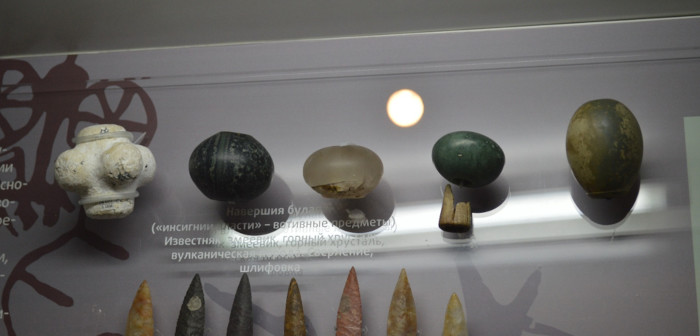
Comparative Bronze Age mace heads, described by the museum as insignia of authority. Photograph by Лапоть; State Historical Museum of the Southern Urals. (CC0 1.0)
A Mace Made to Command
One of the most fascinating objects is a smooth stone mace or club head, identified in archaeological records as diorite stone, weighing somewhere between 400 grams and 500 grams (14 ounces and 18 ounces). The shaft hole was drilled from both ends, most likely for attaching a wooden or animal bone handle. The polished finished and symmetrical design reflects the high level of craftsmanship involved. The Institute explained that the object, “indicates that the individual buried in the kurgan occupied a high position within the social hierarchy,” with a comparison drawn with symbols of authority found in the rich Varna burial.
The identity of a “warrior” assigned within this framework remains only based in the archaeological evidence of status found.
- Maikop ‘Scepters’ Are Actually the World’s Oldest Drinking Straws
- Baffling 3000-year-old Out of Place Mace Head Found in Poland
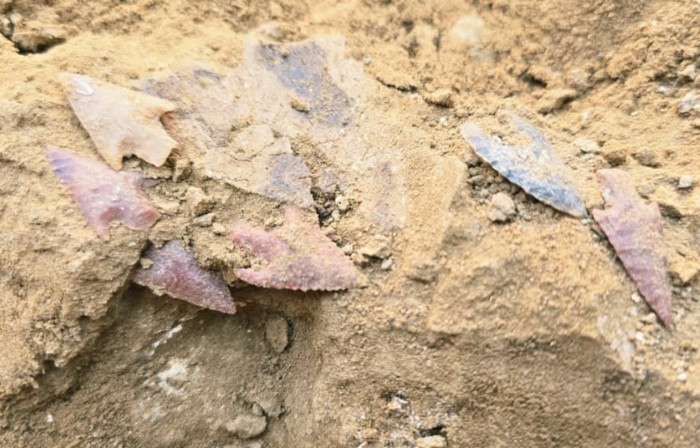
A group of arrowheads recovered from the kurgan, including obsidian and flint examples in situ. (ANAS Institute of Archaeology and Anthropology)
A Provisional Date for the Burial
The type of dagger and ceramic work used in this burial indicates that it belongs to the early stages of the Khojaly-Gadabay culture, after the middle Bronze Age. According to secondary reports from the archaeologist, there were 11 arrowheads found in the burial, of which two are made of black obsidian and nine of flint. The reports from the Institute note that colored flint use is unusual, because in other similar kurgans obsidian is the common material used. The difference in the kind of arrowhead may help in some way to detect trade routes in the region. For now, the proposed date remains provisional, with conservation, laboratory study and radiocarbon work still planned.
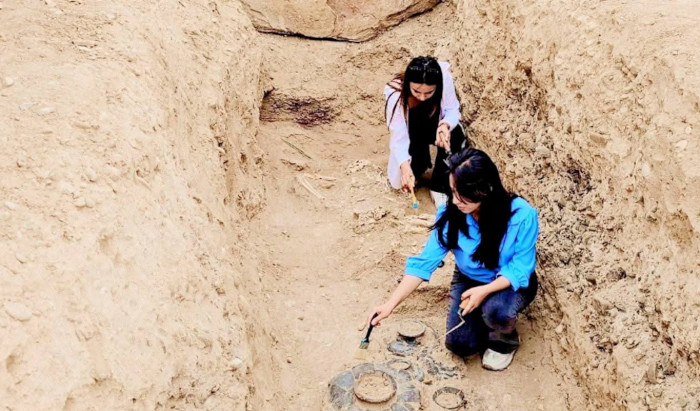
Researchers excavating human remains along with burial items at the kurgan. (Keshikchidagh State Historical and Cultural Reserve)
Archaeologist Vagif Asadov heads the excavation as part of the 6th Keshikchidagh scientific excavation and summer school, a joint program of the reserve and the Azerbaijan National Academy of Sciences. The work is conducted with the involvement of the reserve staff, students and volunteers. The ceramics recovered at the site are being processed and prepared to be added to the museum collection. As evidenced by similar elite burial sites with bronze ritual items, research into funerary assemblages is necessary because weapons could proclaim one’s identity while ritual items could raise, in addition, questions of office, lineage and influence. Kurgan No. 4 therefore offers more than a warrior’s equipment; it preserves evidence of hierarchy in Bronze Age South Caucasus society.
Top image: Left; Mace found in burial mound, Right; Archaeological excavation works being carried out at mound (kurgan) No. 4 in the Sariyokhus valley, Azerbaijan. Source: Keshikchidagh State Historical and Cultural Reserve
By Gary Manners
References
Azerbaijan National Academy of Sciences, Institute of Archaeology and Anthropology. 11 September 2026. Scientific Archaeological Excavations and Summer School in the Keshikchidagh Kurgan Valley. Available at: https://arxeologiya.az/en/news/718
Keshikchidagh State Historical and Cultural Reserve. 11 September 2026. Archaeological excavation works are being carried out at mound (kurgan ) No. 4 in the Sariyokhus valley. Available at: https://keshikchidagh-heritage.az/en_US/content/17105
Radley, D. 13 September 2026. 3,600-year-old burial of a high-ranking warrior with rare mace head found in Azerbaijan. Available at: https://archaeologymag.com/2026/09/burial-of-warrior-with-mace-head-in-azerbaijan/