
Long before the legends of Ulster began to take form in the hills of Northern Ireland, something remarkable was occurring. Haughey's Fort, located on a hill in County Armagh, is considered the oldest Bronze Age site in Ireland. New archaeological evidence indicates that Haughey's Fort was not merely used for defensive purposes; rather, it was a center of political power and specialized craft production, long-distance exchanges, and liturgical practices that exist nowhere else in pre-historic Ireland. Dating to approximately 1200 BC, Haughey's Fort was flourishing approximately 500 years earlier than Navan Fort, which would later become the legendary seat of the Lugh of the Tuatha-De-Danaan (the ruler of ancient Ulster).
Published in the journal Antiquity, a new study, “Haughey’s Fort: A Major Complex of Power, Production, and Ritual in Late Bronze Age Europe,” combines Light Detection and Ranging (LiDAR) technology, geophysical survey, targeted excavation, and archival analysis to reassess the surrounding landscape adjacent to Haughey’s Fort. The site is a Bronze Age hillfort near Armagh, Northern Ireland, established around 1200 BC, centuries before the nearby Navan Fort emerged as the ceremonial capital of ancient Ulster.
A Hub of Craftsmanship, Trade, and Power
The research, led by Dr. James O'Driscoll, University of Glasgow, and Dr. Patrick Gleeson, Queen's University, Belfast, has transformed archaeologists’ understanding of the site, revealing evidence of more than 200 timber structures within the hillfort, including several unusually large circular buildings that likely served ceremonial or social functions, shedding light on the community's organization and rituals.

LiDAR-based map of the Haughey's Fort archaeological landscape in County Armagh, showing the Late Bronze Age hillfort, ritual monuments, earthworks, and potentarchaeological finds that formed one of Europe's earliest centers of political and ceremonial power. (James O'Driscoll and Patrick Gleeson/Antiquity Publications Ltd)
More Than a Defensive Boundary
According to the authors, one of the study’s most significant discoveries concerns the Creeveroe Earthworks, which new LiDAR and geophysical surveys show once formed a large 109-hectare enclosure surrounding Haughey’s Fort, making it one of the largest Bronze Age hillforts in Britain and Ireland. The inclusion of burial monuments and high-status metalwork deposits suggests it served not only as a defensive boundary but also as a symbol of territorial authority and social hierarchy.
- Own Your Own Piece of Ancient History - Buy an Iron Age Hillfort!
- Largest Prehistoric Settlement in Britain and Ireland Discovered
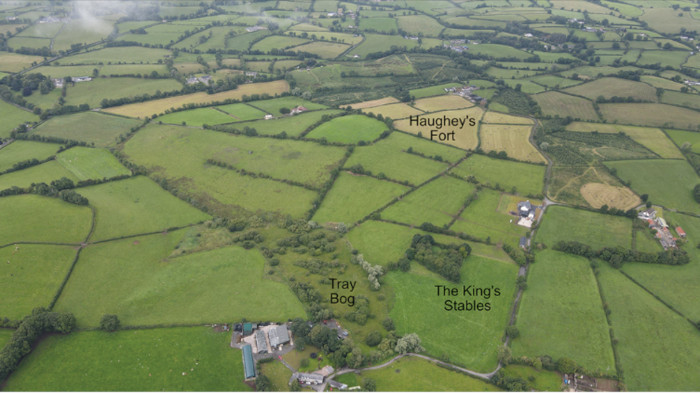
Aerial photograph, taken in 2023, of Haughey’s Fort and the King’s Stables (photograph by authors/ James O'Driscoll and Patrick Gleeson/Antiquity Publications Ltd)
One of Europe’s Earliest Proto-Urban Centers
Researchers identify the settlement, including domestic structures, monumental architecture and specialist craft production, as one of the strongest examples of Bronze Age “proto-urbanism” in north-west Europe. Proto-urbanism refers to transitional settlement phases that are large and population-dense, but do not have formal administration, civic cores, or social structures. Unlike the isolated farms that made up much of prehistoric Ireland, the settlement appears to have held a sizeable, organized population engaged in manufacturing, trade and ceremonial activity. Researchers also uncovered new evidence connecting Haughey’s Fort with the adjacent King’s Stables, an artificial ritual pool located at the foot of the hillfort. The geophysical survey revealed a unique 87-meter-long, palisade-lined avenue leading from the fort toward the pool, suggesting these two monuments were part of a unified ceremonial complex.
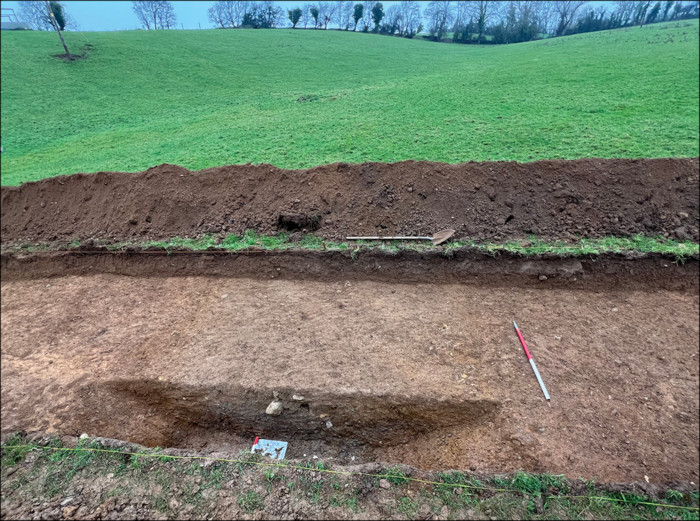
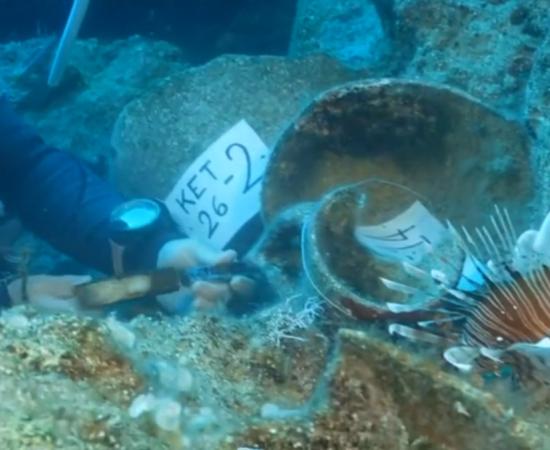
Excavation trench across the inner ditch of the Creeveroe Earthworks at Haughey's Fort, County Armagh. The 2023 investigation revealed that the earthworks formed part of a massive Bronze Age enclosure surrounding one of Europe's earliest centers of power, production, and ritual. (James O'Driscoll and Patrick Gleeson/Antiquity Publications Ltd).
Where Metalworking Met Ceremony
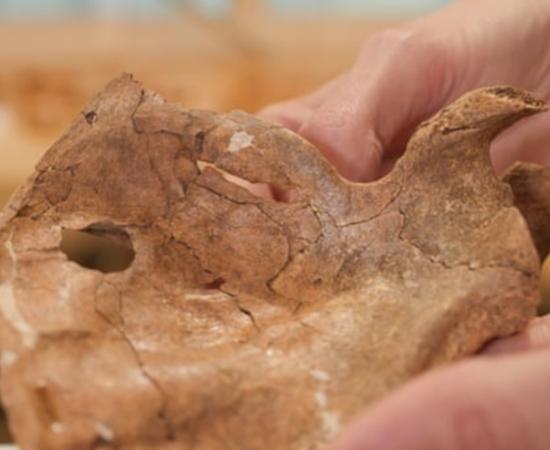
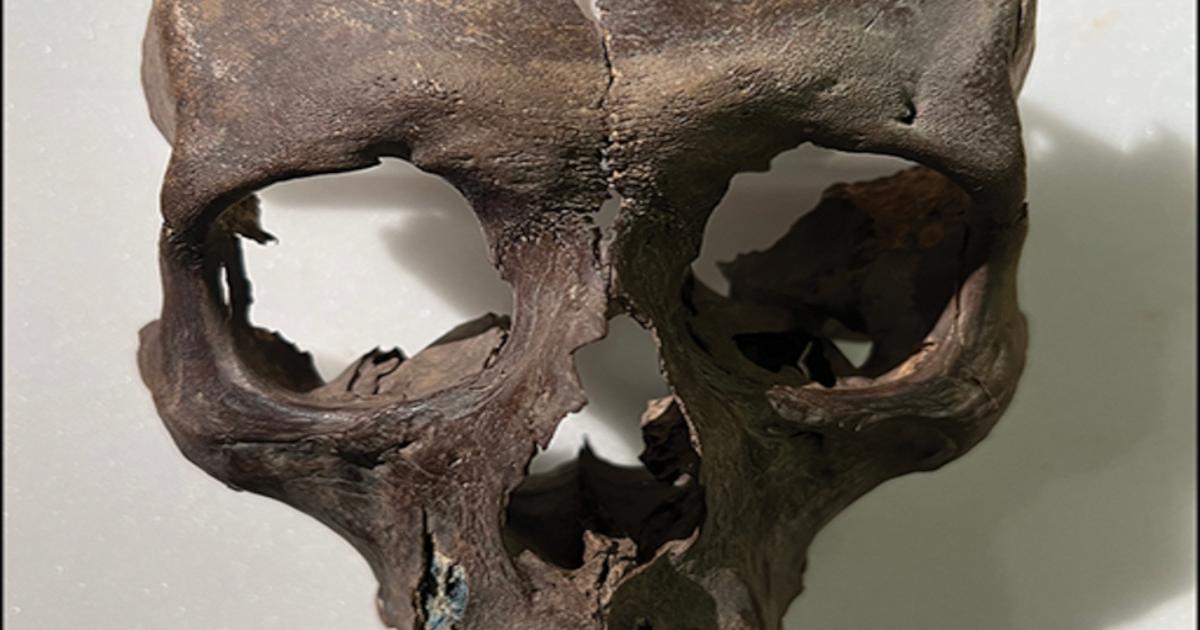
Prior excavations, primarily at the King’s Stables, recovered molds that had once been used to cast swords into a bronze leaf-shape. Animal remains and fragments of a human skull indicate that the site was also used for ritual deposition as well as everyday activities. The study authors emphasize that “the new findings strengthen the interpretation that Haughey’s Fort and the King’s Stables functioned together as interlinked centers of production and ceremony.”
- Swords of Fate: The Ancient Blades That Forged History
- Farmer in Ireland Unearths Golden Objects from the Bronze Age
The researchers maintain that the evidence found near Haughey’s Fort has been a great boon in changing the overall picture of Bronze Age Ireland. Instead of small, scattered farming groups, the area had enough resources to support a large community that could plan major building projects, organize production and ceremonies, and provide trade links that were necessary for merchants to prosper across the whole of Europe. Haughey’s Fort and the adjacent monuments are among the best examples of a well-organized Late Bronze Age center in Western Europe. The research demonstrates that complex, highly organized communities with extensive international connections once flourished at this location centuries before the rise of the first Iron Age kingdoms in Ireland.
Top Image: Human skull fragment recovered from the King's Stables ritual pool near Haughey's Fort, County Armagh, Northern Ireland. The remains were deliberately deposited as part of a Late Bronze Age ceremonial landscape associated with ritual activity and the nearby hillfort. Source: James O'Driscoll and Patrick Gleeson/CC BY 4.0
By Ramsey Hardin
References
Archaeology Magazine. “Bronze Age Settlement in Ireland Among Western Europe's Earliest Proto-Urban Centers.” July 3, 2026. Accessed July 28, 2026.https://archaeologymag.com/2026/07/bronze-age-settlement-ireland-earliest-proto-urban-centers/.
Historic Environment Division, Department for Communities (Northern Ireland). Historic Environment Record of Northern Ireland (HERoNI). Accessed July 28, 2026. https://www.communities-ni.gov.uk/topics/historic-environment.
National Museums Northern Ireland. Bronze Age Collections. Accessed July 28, 2026. https://www.nmni.com.
O'Driscoll, James, and Patrick Gleeson. “Haughey's Fort: A Major Complex of Power, Production and Ritual in Late Bronze Age Europe.” Antiquity. Published June 30, 2026. Accessed July 28, 2026. https://www.cambridge.org/core/journals/antiquity/article/haugheys-fort-a-major-complex-of-power-production-and-ritual-in-late-bronze-age-europe/95FD5478225A622BD24D4F2E39F04F75.
O'Driscoll, James, and Patrick Gleeson. “Haughey's Fort: A Major Complex of Power, Production and Ritual in Late Bronze Age Europe.” Antiquity, FirstView. Cambridge University Press, June 30, 2026. Accessed July 28, 2026.https://www.cambridge.org/core/journals/antiquity/firstview
Phys.org. “3,000-Year-Old Irish Bronze Age Site May Be One of Western Europe's Earliest Major Centers.” June 30, 2026. Accessed July 28, 2026. https://phys.org/news/2026-06-year-irish-bronze-age-site.html.