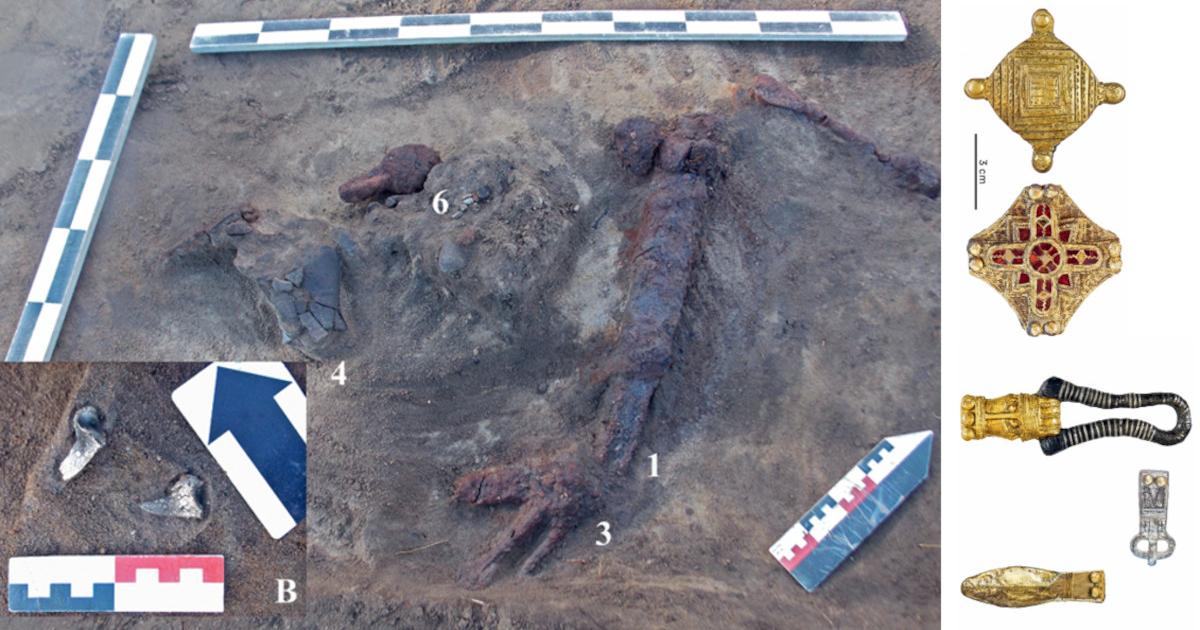

Archaeologists from the Institute of Archaeology of the Russian Academy of Sciences have uncovered brown bear claw bones in seven cremation burials dating to the sixth and early seventh centuries on the Kaliningrad Peninsula. The discovery, made during large-scale excavations in the Zelenogradsky District, points to elite status, ritual practices involving bear skins, and links to warrior traditions across Northern Europe among the Aestii people. In one grave, researchers recovered as many as 12 claws—an unprecedented find for the region—suggesting complete paws or skins were placed on funeral pyres.

Bear claws (phalanges) from the inventory of grave №X-22 at the Alejka-7 burial site. – (Photo K. Skvorcov/CC BY-SA 4.0)
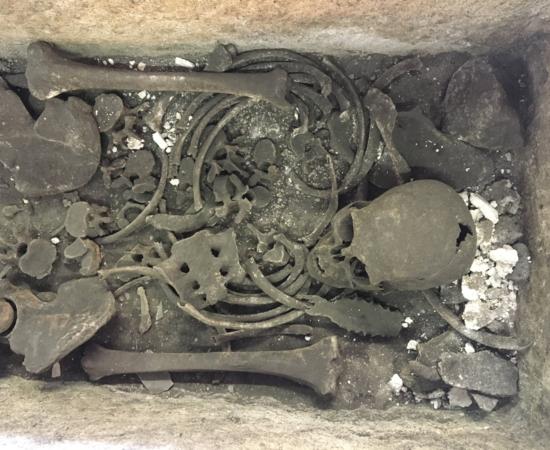
These burials belong to members of the Aestii population who had a high status in their community. All seven involved cremation, which complicates efforts to reconstruct the exact placement of the claws with the deceased. The phalanges displayed clear evidence of having been burned in a fire but show no signs of having been altered or intentionally modified, indicating that bear skin with claws still attached was part of the funeral rites.
As the team reported, “Bear claws, or more precisely, brown bear claw phalanges, have been discovered in seven burials to date.” This indicates that they likely held a significant symbolic meaning for the southeastern Baltic communities during the early Middle Ages.
According to the team, bear skins probably represented the social status associated with bear claws and were related to broader warrior traditions that have been observed in Scandinavia and throughout northern Europe. Six out of seven of these burials were identified as having belonged to adult males; however, one belonged to a female, indicating that this symbolism extended beyond just to male warriors.
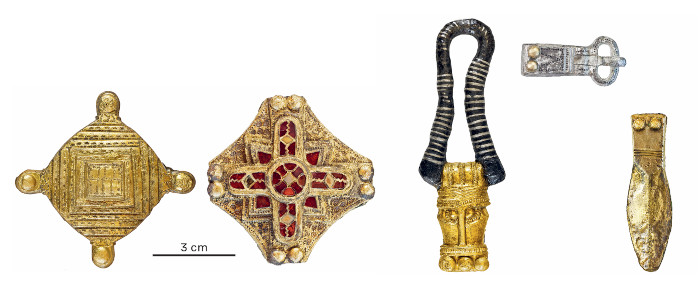
Elements of the horse bridle from burial №X-22 at the Alejka-7 burial site. – Silver, gold, bronze, almandine, iron. (K. Skvorcov/CC BY-SA 4.0)
Weapons, Horses and Precious Metals Mark Elite Status
The accompanying grave goods leave little doubt about the high standing of those interred. Weapons appeared alongside gold and silver jewelry, some pieces apparently made specifically for funerary use. Male burials included between two and four horses, complete with saddles and elaborately decorated bridles. These elements, combined with the bear remains, created carefully staged displays of wealth and authority.
Unlike the male burial, the female grave had a few distinguishing features. First of all, while horses were not part of this burial, there were three brooches made out of silver, as well as two drinking horns (one made out of silver and one made out of gold). In addition, the grave also had some beads in it. Finally, the remains of bear claws were also found in this grave, which indicates that at least some bear-associated items had positive meanings for both genders in the Aestii elite class.
The researchers note that this assemblage raises serious questions about previously held notions regarding Aestii society being relatively egalitarian in nature. In fact, according to the relative amount of funerary wealth found among both the male and female graves, it is possible to infer that Aestii society began to develop a hierarchical system as early as the 6th and 7th centuries AD.
- New Finds Show Ancient Baltic Amber Elites Weren’t Ignorant or Dumb!
- Details Emerge on Trade of Horses for Sacrifice During the Viking Age
These finds align with other high-status burials across the region, where amber trade wealth and imported goods from Scandinavia, Germania and the Roman world appear regularly. The Aestii controlled key amber sources along the Baltic coast, a fact noted by the Roman historian Tacitus in the first century AD, and their elite graves often reflect that prosperity.
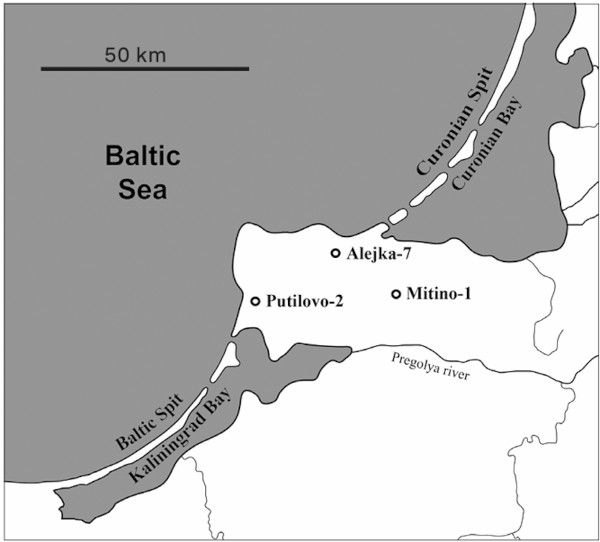
Burial sites with bear claw finds on the Kaliningrad Peninsula. –(Graphics J. Prassolow/CC BY-SA 4.0)
Bear Symbolism and Northern European Connections
Similar uses of bear claws and skins appear in Iron Age and Migration Period graves across Scandinavia, northern Germany and beyond. In many cases the claws represent the only surviving traces of complete pelts that once wrapped or underlaid the deceased. Such practices often signaled prestige, protection or identification with the powerful qualities of the bear itself. The Kaliningrad examples fit this wider pattern while adding a new eastern Baltic dimension.
The concentration of weapons, precious metals, sacrificed horses and bear remains in these specific graves emphasizes individuals whose social rank was deliberately highlighted in death. Researchers note that the claws therefore offer more than an unusual curiosity. Together with the rich accompanying goods, they illustrate a society in which rank, ritual symbolism and connections to wider Northern European traditions held growing importance.
- Ancient Cult of the Brave Bear, Feared and Revered
- New Finds Show Ancient Baltic Amber Elites Weren’t Ignorant or Dumb!
The research was published in the journal Russian Archaeology and builds on long-term work by the Sambian Archaeological Expedition in the region. Earlier excavations in nearby cemeteries have already revealed horse burials, imported luxury items and clear evidence of hierarchical elites linked to the amber trade.
Further analysis of the claw bones and associated materials may refine understanding of how these rituals operated and whether the skins served protective, ancestral or status-display functions. For now, the seven burials provide the first clear evidence of this practice in weapon graves of the sixth and early seventh centuries on the Kaliningrad Peninsula, linking local Aestii customs firmly to a much broader Northern European tradition of bear symbolism in elite funerary rites.
Top image: Grave №726 at the Putilovo-2 burial site. A 1 single-edged sword. – 2–3. 6 spearheads. – 4 fragmented ceramic vessel. – 5 pair of bear claws. – B detail: enlarged picture of bear claws. Source: Photos K. Skvorcov/CC BY-SA 4.0
By Gary Manners
References
Grimm, O. 2013. Bear-skins in northern European burials (first millenium AD). In Grimm, O. & Schmölcke, U. (eds.), Hunting in northern Europe. Wachholtz. Available at: https://www.researchgate.net/publication/317305105_Oliver_Grimm_Bear-skins_in_northern_European_burials_first_millenium_AD_In_O_Grimm_U_Schmolcke_Hunting_in_northern_Europe_Schleswig_2013_277-296
Milligan, M. 2026. Bear claws found in 1,400-year-old elite burials near Kaliningrad. HeritageDaily. Available at: https://www.heritagedaily.com/2026/08/bear-claws-found-in-1400-year-old-elite-burials-near-kaliningrad/159014
Skvorcov, K. & Prassolow, J.A. 2025. First Bear Claw Finds in Weapon Graves of the 6th/First half of the 7th Century on the Kaliningrad Peninsula. In Grimm, O. (ed.), Beast and Human: Case Studies for Northern Europe from Prehistoric to Early Modern Times. Propylaeum. Available at: https://doi.org/10.11588/propylaeum.1690.c24844