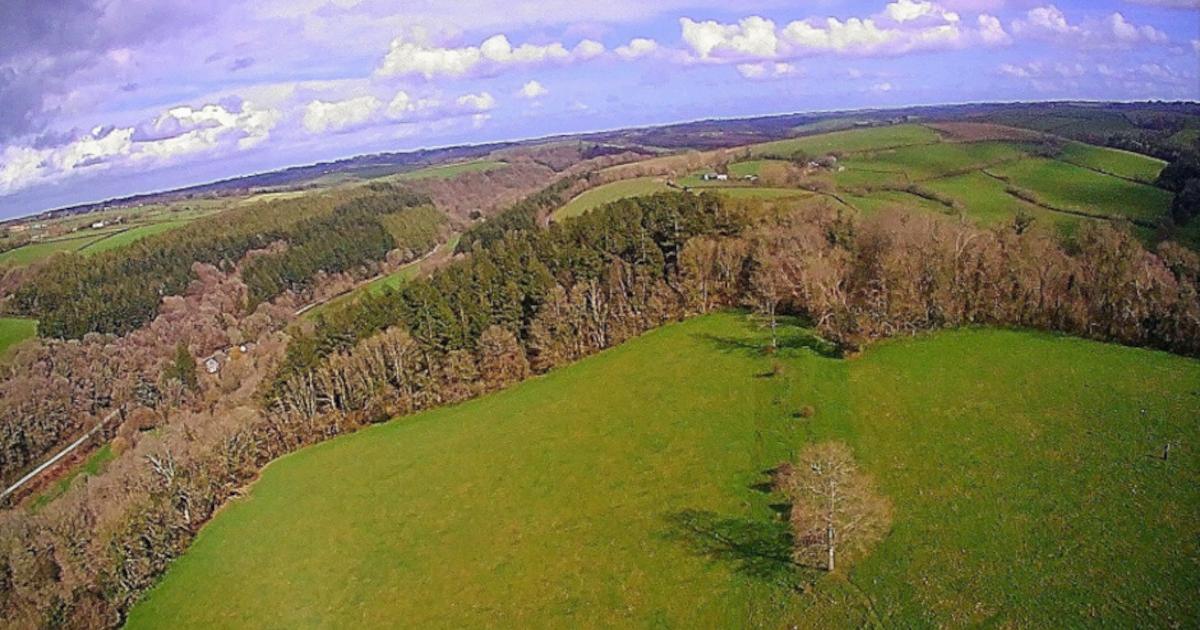

An Iron Age hillfort in North Devon is a strong contender for the long-debated location of the Battle of Cynuit in 878, when a West Saxon army defeated a Viking army. Research contained within the new book Sons of Ragnar by Paul Harper presents evidence that Castle Hill in Beaford matches many of the unusually specific clues given by various medieval sources. In addition, a large mound located nearby has sparked interest in what may be the burial location of the Viking commander identified later as Ubbe. However, to date there has been no archaeological confirmation of either the location of the battlefield or the burial site.
Harper, who grew up in Devon, said:
“People have been searching for the battle site in Devon for centuries, but Castle Hill has the most compelling claims and could finally solve this age-old mystery.”
- Why was Alfred the Great One of Only Two Kings Named ‘Great’ in English History?
- The Kingdom of Wessex and the Birth of England

Another angle of the landscape at Castle Hill. (Paul Harper)
Medieval Clues Point to Castle Hill
The case was developed by author and historian Nick Arnold, who compared forts across Devon and Dartmoor using Historic Environment Records and Ordnance Survey maps. Arnold believes that the Vikings had sailed up the River Taw and were targeting royal estates near Bishops Tawton when they became aware of the Devon thegns (king’s personal bodyguards and troops) led by Odda, the ealdorman of Devonshire, gathering at Castle Hill.
The earliest reference of Cynuit is from 893, by Alfred’s biographer Asser, who described Cynuit as a fortification that was "fortified on all sides but the east, with no water at the Fort." Castle Hill sits high above the River Torridge as it rises above the surrounding countryside at an altitude of 280 feet. Castle Hill's entrance/exit is located to the northeast and to the best of our knowledge, there is no known source of water within the fortress. Arnold told the North Devon Gazette that it was “the only location in Devon” matching a headland fort with comparatively weak eastern defenses.
- Ivar the Boneless: Viking Warrior, Ruler and Raider
- Halfdan Ragnarsson: Viking Commander and King of Dublin
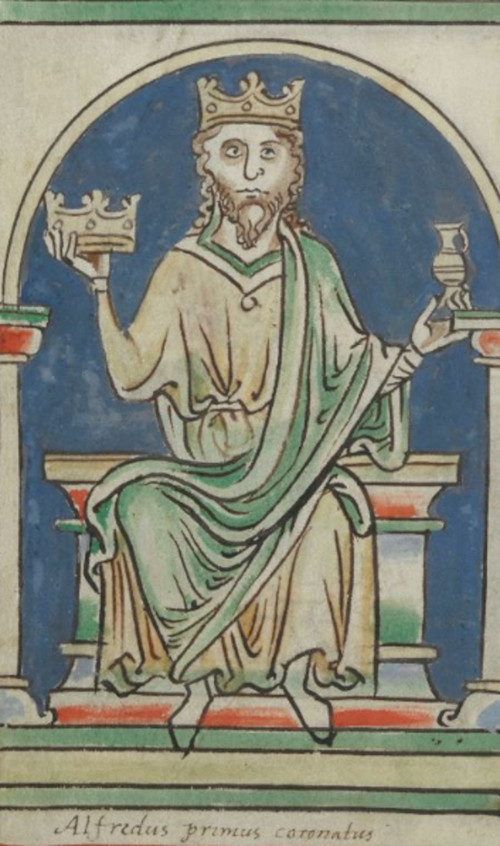
Alfred the Great in a medieval manuscript. (Matthew Paris/Public Domain)
A Dawn Attack That Broke the Siege
The clash occurred while the Great Heathen Army was successfully advancing through the Anglo-Saxon territory of England. Asser documented in his writings that the army had arrived by ships from Dyfed and surrounded King Alfred's thegns (the kings personal bodyguards and troops) anticipating that the thegns would ultimately surrender due to food and drink shortages. However, the defenders mounted a surprise attack on the Viking siege forces at daybreak and overwhelmed them.
According to the Anglo-Saxon Chronicle, 840 Vikings were killed during this encounter, along with the losses of the Raven standard (a common name for a battle flag) to the Anglo-Saxons, while Asser places the Viking loss count at 1,200.
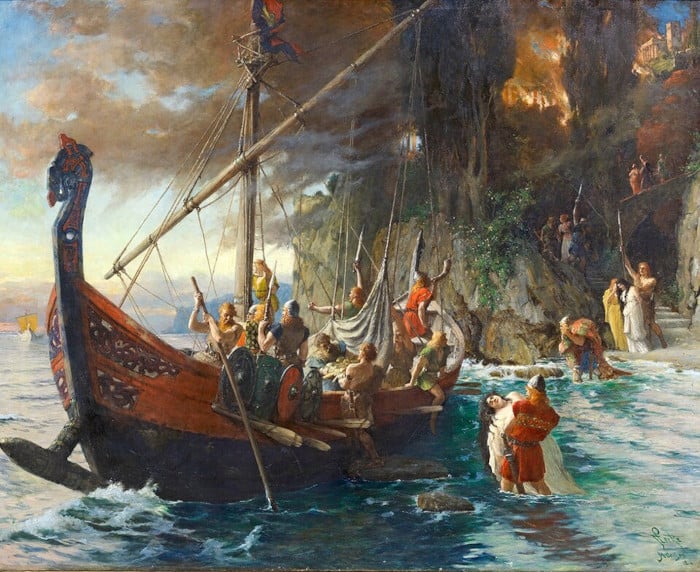
A later artistic imagining of a Viking raid by Ferdinand Leeke. (Public Domain)
The earliest accounts call the slain leader a brother of Ivar the Boneless and Halfdan Ragnarsson, but do not name him Ubbe. That identification appears in Geoffrey Gaimar’s 12th-century L’Estoire des Engleis, which places his death in “Penwood.” Gaimar also says the Danes raised a great mound called Ubbelawe over him in Devonshire. The later tradition is intriguing, but it was written centuries after the battle.
Could the Mound Be Ubbe’s Grave?
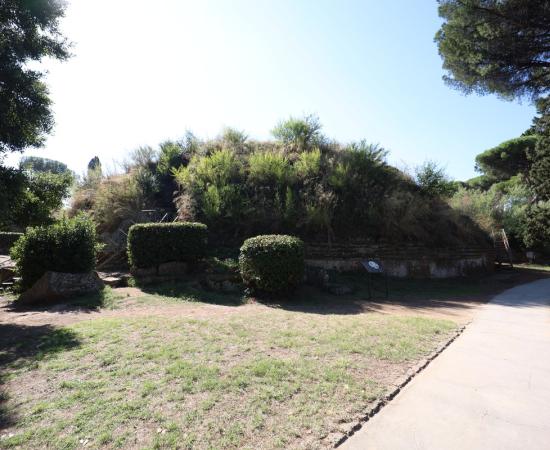
To the northwest of Castle Hill is a structure that resembles a tumulus and measures approximately 12 m in diameter and 2.5 m high (visible as marked on 19th-century maps). According to a geophysical survey, there appears to be a stony layer on top of a rock outcrop (similar to what has been identified in other sites) which leads researchers to speculate there might be some similarities to burial practices of the Vikings. There is, however, no conclusive dating for this feature; therefore, it cannot unequivocally be associated with Ubbe or even the Viking Age, as Arkeonews emphasizes.
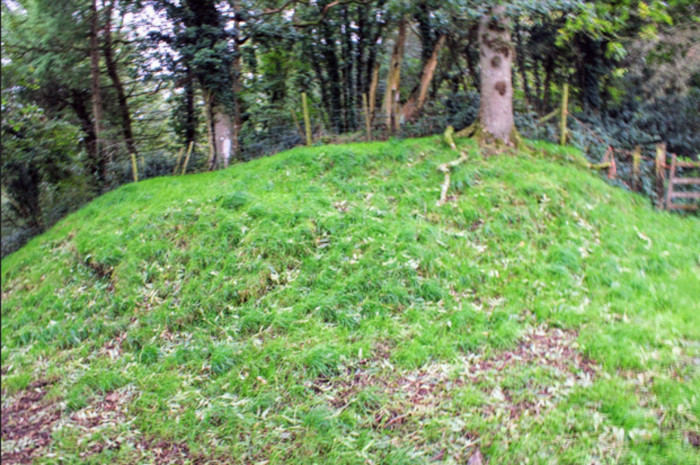
The potential Ubbe burial mound, near Castle Hill. (Paul Harper)
A Candidate, Not Yet a Confirmed Battlefield
Historic England has protected Castle Hill as a Scheduled Monument since 2009 and already notes its possible association with the Battle of Cynuit. Its official entry describes an ovoid hillfort roughly 220 by 110 meters, but cautions that further research would be needed to displace Cannington Hill in Somerset as the generally accepted candidate. Other proposed locations include Countisbury, Kenwith and sites near the rivers Taw and Torridge. Archaeological investigation, rather than topographic resemblance alone, will be needed to settle the argument.
Since 2009, Castle Hill has been designated a Scheduled Monument by Historic England, (which already notes its possible associations with the Battle of Cynuit). The official entry for Castle Hill indicates that it is an ovoid (egg-shaped) hillfort approximately 220 meters long and 110 meters wide. However, it notes that a considerable amount of research will still be required for Castle Hill to replace Cannington Hill in Somerset as the accepted candidate for the site of the battle. In addition, other possible contenders include Countisbury, Kenwith, and areas around the Taw and Torridge Rivers. Only through archaeological investigation, not merely due to their similar topography, can we settle this issue.
The importance of the battle itself is less doubtful. The victory removed a major threat while Alfred the Great was rebuilding resistance in the Somerset marshes, only weeks before he defeated Guthrum at Edington. Harper called Castle Hill’s claims “the most compelling” yet, but the most exciting possibility remains untested beneath the soil. For now, the Devon hillfort offers a persuasive new chapter in the 400-year search for the Battle of Cynuit.
Top image: Castle Hill aerial view taken by drone. Source: Paul Harper
By Gary Manners
References
Asser. 1906. Life of King Alfred. Translated by Albert S. Cook. Available at: https://www.gutenberg.org/files/63384/63384-h/63384-h.htm
Buyukyildirim, O. 12 August 2026. A Lost Viking Battlefield May Have Been Hidden in Devon for Centuries. Available at: https://arkeonews.net/a-lost-viking-battlefield-may-have-been-hidden-in-devon-for-centuries/
Gaimar, G. 1889. Lestorie Des Engles Solum la Translacion Maistre Geffrei Gaimar, Vol. II: Translation. London: Her Majesty’s Stationery Office. Available at: https://archive.org/details/lestoriedesengl00gaimgoog/page/n151/mode/2up
Gussin, T. 18 August 2026. Was the long-lost site of a famous Viking defeat in North Devon? Available at: https://www.northdevongazette.co.uk/news/was-the-long-lost-site-of-a-famous-viking-defeat-in-north-devon-8928260
Harper, P. 10 July 2026. Sons of Ragnar: Viking Warriors who Terrorised Britain and Ireland. Pen & Sword Military. Available at: https://www.pen-and-sword.co.uk/Sons-of-Ragnar-Hardback/p/61528
Historic England. 23 March 2009. Hillfort known as Castle Hill Settlement, 350m south of Woolleigh Bridge. Available at: https://historicengland.org.uk/listing/the-list/list-entry/1021417
Ingram, J. (trans. ). 1823. The Anglo-Saxon Chronicle: Ninth Century. Available at: https://avalon.law.yale.edu/medieval/ang09.asp