
A placename from a charter from the 10th century and the description of an ancient transaction offer clues related to the long sought after site of the Battle of Ashdown, an important win for Alfred against the Viking invaders of ancient Britain. Author Paul Harper argues that “Rammesburi,” which can be interpreted as “fort of the ravens," or "Raven's Fort" refers to the Weathercock Hill in Ashbury in Oxfordshire and is the location where defeated Vikings reportedly died in large numbers in 871. If his deduction turns out to be true, it will help to localize one of the very first victories of Alfred the Great in a landscape that has long been connected with this battle. However, as things stand, this should be seen as an interesting interpretation of historical evidence rather than confirmation.

Sons of Ragnar: Viking Warriors who Terrorised Britain and Ireland, by Paul Harper was published by Pen & Sword Military on July 10, 2026.
A Raven’s Name Written into the Landscape
The battle is often placed near Ashbury, Oxfordshire, because it was called ‘Asshedoune’ (Ashdown) in Old English in a royal charter from Alfred’s father king Ethelwulf around thirty years before the Battle of Ashdown took place.
The main evidence sited arises from the Electronic Sawyer charter S 524, which is dated back to 947, in which King Eadred provided 20 hides to Eadric at Ashdown Park. Its description of boundaries notes the passing of a “horeston ford” and reaching “rammesburi,” from where it returns to the place where it started. From this, Harper associates Rammesburi with Weathercock Hill, opposite Ashdown Park, and interprets the name as “Raven’s Fort,” which corresponds with the tradition of carrion birds on the battlefields of Old Norse and Old English. Harper writes:
“The Anglo Saxons and Vikings were obsessed with ravens because of their association with warfare and this ancient place name, from a royal charter dated to less than eighty years after the battle, is surely linked to the aftermath of this legendary conflict that had huge consequences for the future of Britain.”
- Was Alfred the Great Just a King that was Great at Propaganda?
- Long-Lost Remains of King Alfred the Great Claimed to be Located Under Car Park
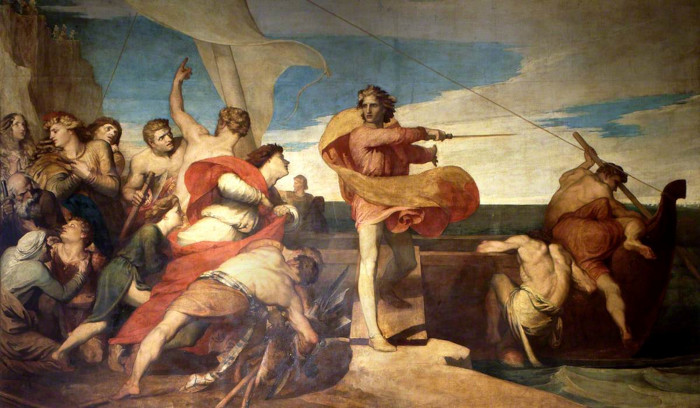
Alfred the Great rallies the Saxons against the Danes in George Frederic Watts’s 1846 painting. (Public Domain)
Another royal charter that bolsters the connection to Ashbury is Charter S 288 from King Æthelwulf, issued in the year 840 and confirming a land transaction at “Asshedoune”, (identified by scholars as Ashdowne Park), nearly 30 years prior to the battle. This early reference demonstrates that Ashdown was a known district long before the name was created to commemorate the victory of Alfred. King Æthelwulf, Alfred’s father and one of the greatest kings of early Wessex, could not have foreseen how closely the place would later become tied to his son.
Historian Peter Knott previously analyzed the regional geography in “Alfred’s Wayte,” published in 1990. A 1519 survey mentioned “the Wayte” many times and Knott read it as meaning lookout post or ambush in context with the Ridgeway and concluded that “the pursuit and slaughter would have taken place south and east of the Wayte,” thus proving that the presumed Rammesburi location in the southeast is correct.
Having examined historic environment record data for Oxfordshire, Harper concluded the ‘Horestone Ford’ was a reference to an ancient boundary stone and a former Bronze Age barrow on the Woolstone parish boundary. This is significant as there is roughly half a mile between Weathercock Hill and the barrow site, and Harper has found half a mile was a common distance between such boundary markers in Anglo Saxon charters.
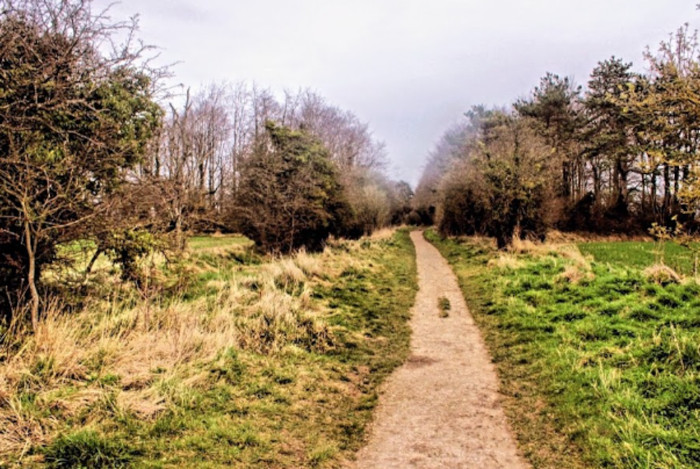
The path of the Ridgeway exists to this day. (via Pen & Sword Books)
An Ambush on the Ridgeway?
The Great Heathen Army was based at Reading, where it had just vanquished the West Saxons. The Vikings could have reached the Berkshire Downs via the Thames, crossing at Goring. According to Harper, the Vikings anticipated an ambush and so occupied the higher ground of Tower Hill and were subsequently pushed towards Weathercock Hill. That sequence would fit the terrain described in the written account, although no contemporary source actually names either modern hill.
- Archaeologists Uncover Evidence of Huge Viking Camp in England
- Unraveling the Mystery of the Headless Vikings of Dorset
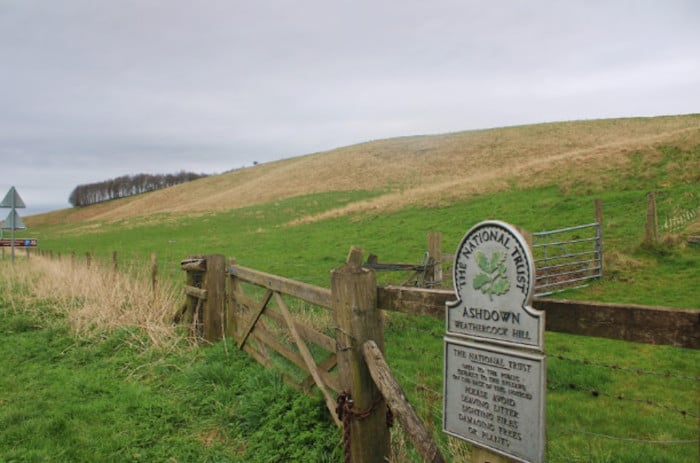
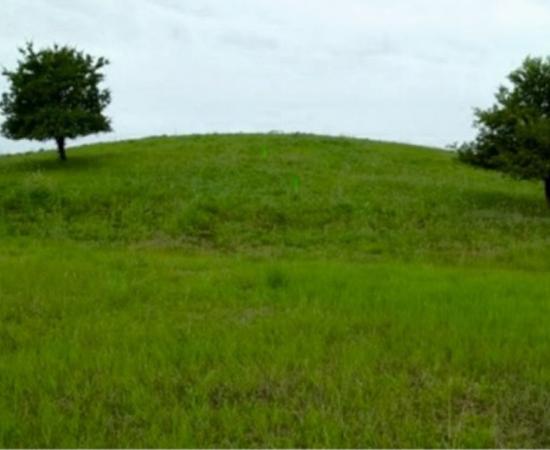
Weathercock Hill, as seen from the Ridgeway. (via Pen & Sword Books)
The most reliable narrative account is Asser's Life of King Alfred, which dates to about 20 years after the battle. According to Asser, the Vikings occupied the higher ground while Alfred's forces fought their way uphill, and the battle took place near a solitary thorn tree. Asser describes Alfred making a dramatic charge “with the rush of a wild boar,” and the encounter ending with the death of King Bagsecg and five ealdormen, with survivors being chased through Reading. It may even be true that “many thousands of their men were either slain at this spot or lay scattered far and wide over the whole field of Ashdown”, as Asser recounts. This detail illustrates what drew attention to an association with ravens.
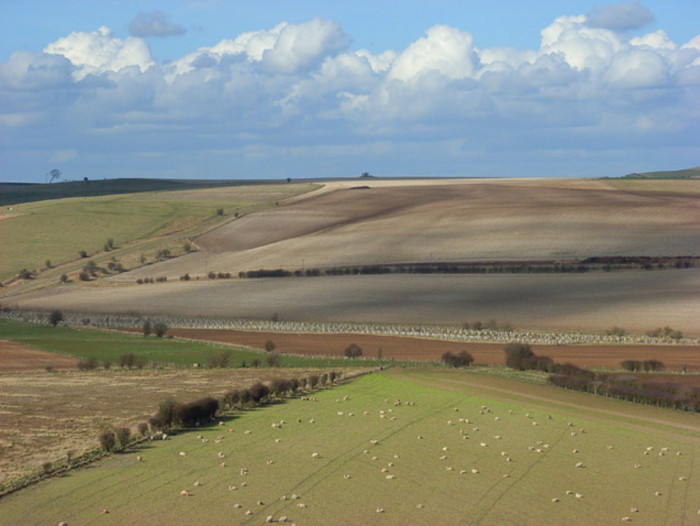
The Berkshire Downs between Lambourn and Ashbury. The view from Near Down of the mixed farmland near Ashdown House. Weathercock Hill is on the skyline to the left. (Andrew Smith / The Berkshire Downs between Lambourn and Ashbury / CC BY-SA 2.0)
A Great Victory, but Not the End
The victory for Alfred was important because Wessex stood between the invaders and domination of the remaining Anglo-Saxon kingdoms. Halfdan Ragnarsson and other commanders of the army were certainly historical figures, even if later tales about Ragnar Lothbrok and his sons mixed history with legend. Yet Ashdown did not destroy the Viking threat: West Saxon defeats at Basing and Wilton followed within months.
Harper said:
“The Raven’s Fort, which is known today as Weathercock Hill, was a dark reminder of the gruesome scene after the Battle of Ashdown when the Viking forces had been cut down and killed in great numbers.
If Alfred had lost this battle there was a very good chance that the England we know and love may never have existed.”
Æthelred died later in 871, leaving Alfred to inherit a kingdom still in danger. Alfred and his descendants eventually reversed the Scandinavian advance, a struggle continued by figures including Æthelflæd, Lady of the Mercians, as Wessex grew into the core of a united England. That long aftermath makes the location of Alfred’s early victory historically important, but it also argues against treating one battle as the moment England was single-handedly saved. Ashdown was a turning point in a campaign, not the campaign’s conclusion.
A Focused Search, Not a Solved Battlefield
Knott described the documentary evidence for Ashbury as circumstantial and said that physical evidence would be necessary in order for the issue to be resolved. Neither charter makes any mention of a battle, and the identification of Rammesburi with Weathercock Hill cannot be accepted at face value with the current evidence. Nevertheless, Harper draws attention to a relatively small area in which the various elements of the case can be compared, and perhaps, in time, more evidence will emerge.
His book, Sons of Ragnar: Viking Warriors who Terrorised Britain and Ireland, was published by Pen & Sword Military on July 10, 2026.
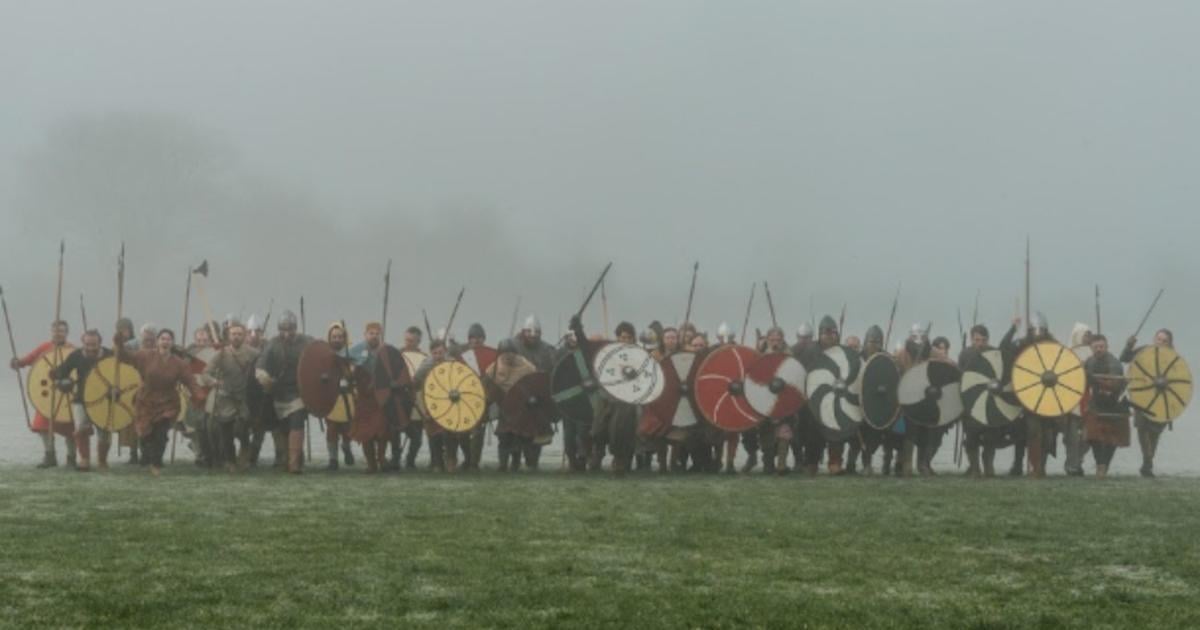
Top image: Reenactment of a charge, representative of the Battle of Ashdown. Source: Courtesy of Jennifer Robinson of Regia Anglorum.
By Gary Manners
References
Asser. c. 893 (Cook, A. S., trans. 1906). Asser’s Life of King Alfred. Ginn & Company. Available at: https://www.gutenberg.org/files/63384/63384-h/63384-h.htm
Electronic Sawyer. 840. S 288: Æthelwulf, King of Wessex, to Duda; Grant at Asshedoune. Available at: https://esawyer.lib.cam.ac.uk/charter/288.html
Electronic Sawyer. 947. S 524: King Eadred to Eadric; Grant at Ashdown Park in Ashbury. Available at: https://esawyer.lib.cam.ac.uk/charter/524.html
Harper, P. 2026. Sons of Ragnar: Viking Warriors who Terrorised Britain and Ireland. Pen & Sword Military. Available at: https://www.pen-and-sword.co.uk/Sons-of-Ragnar-Hardback/p/61528
Knott, P. 1990. Alfred’s Wayte. Berkshire Old and New, No. 7, pp. 14–23. Berkshire Local History Association. Available at: https://www.blha.org.uk/wp-content/uploads/2020/02/BOAN90.pdf