


God Lists Were Writing Lessons, Too
Formal Babylonian education largely served boys from families able to pursue scribal or specialist careers, adds an Archaeology News Online Magazine report. Pupils practiced cuneiform writing by copying signs, vocabulary and eventually more demanding compositions, rather than working from a single religious textbook. One shorter list, An, contained more than 200 divine entries; the seven-tablet An = Anum extended to almost 2,000. Zaia argues that these lists preserved an expansive catalogue of gods, including figures whose cults had long faded, not a roster of deities each student was expected to venerate.
- Nabu: Ancient Mesopotamian God of Scribes and Wisdom
- Marduk: Babylonian King of Gods and Reportedly Liberator of the Jews
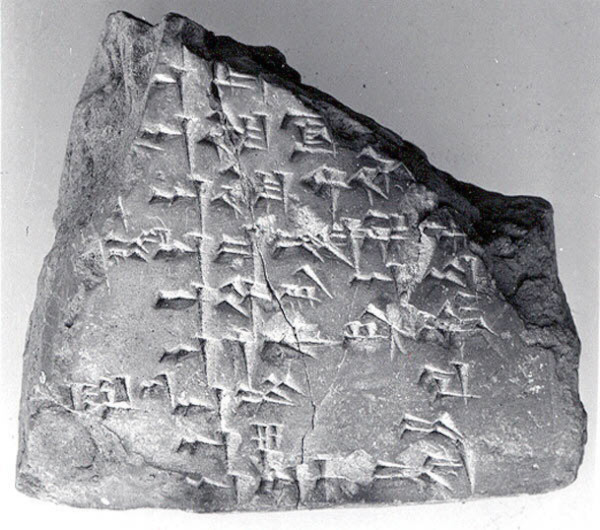
A fragment of the late first-millennium BC Weidner God List, an example of the divine-name lists that could be used in scribal training; it is not identified as one of the tablets examined by Zaia. (The Metropolitan Museum of Art/Public Domain)
The repetition also taught the intricate signs required to write Sumerian and Babylonian texts, and to work in the Babylonian language. A tablet bearing a god's name could therefore be both handwriting practice and a lesson in how the divine world was ordered. As Paul Arnold reports, Zaia compared surviving school tablets from different cities and considered how their lessons connected to later professional work. That approach reveals religious learning inside ordinary training, not in a separate school subject.
Which City's Gods Took Center Stage?
In northern Babylonia, the curriculum gave particular prominence to Babylon and its patron, Marduk. Pupils encountered hymns and the creation epic Enūma eliš, in which Marduk defeats Tiamat, as well as Tintir, a text naming Babylon's sacred places. Those lessons presented the city not merely as a place on a map but as a religious center. A surviving late hymn to Marduk illustrates the kind of literature specialists continued to copy, though the museum does not identify this particular tablet as a school exercise.
- Nippur: The Great Mesopotamian Holy City That Gave Early Ideas Of God
- Ninurta: God of War and Agriculture
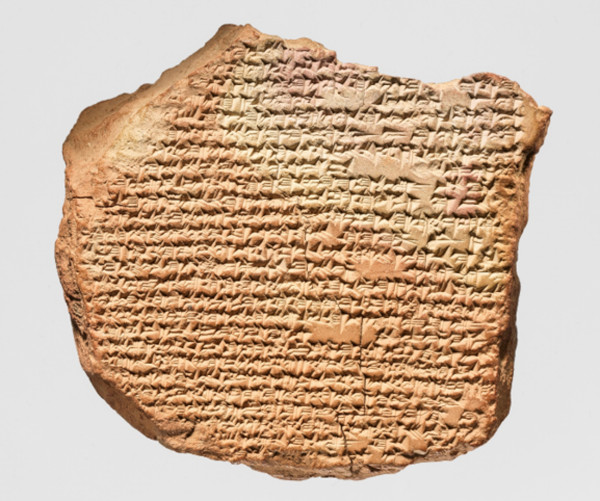
This first-millennium BC Babylonian hymn praises Marduk; it probably came from a library of cult singers, not a known classroom. (The Metropolitan Museum of Art/Public Domain)
Southern classrooms did not simply copy the northern emphasis. At Nippur, pupils studied local traditions, including works concerning Ninurta, while Uruk also drew on Nippur's scholarly world. Zaia sees two partly competing educational spheres rather than a uniform imperial syllabus. The contrast is striking beside other evidence for Nippur's importance, including its much earlier clay city map: geography mattered, but so did the stories a city chose to teach about itself.
Homework Could Become an Offering
Lessons sometimes carried pupils beyond the copying bench. Zaia describes exercises prepared as votive tablets for temples, where a student could dedicate his work to a deity such as Nabû, the patron of scribes. One tablet records a pupil collecting clay from a special place before making his offering, joining the material of schoolwork to ritual practice. Such evidence does not mean every child followed the same procedure, but it shows how a writing assignment could become an act of devotion.
More advanced works explored what people owed the gods and one another. Ludlul bēl nēmeqi, the tale of a righteous sufferer, treated affliction, prayer and divine favor, while the Counsels of Wisdom offered guidance on piety and conduct. These texts trained judgment as well as literacy for people who might later serve temples or rulers. The lessons were not pupils' first encounter with religion: Zaia notes that children also absorbed rituals and stories at home and in public life.
Learning Tradition, Then Changing It
The training did not freeze Babylonian religion in place. In Uruk, later scholars and priests could draw on inherited god lists to elevate the sky god Anu and support his temple's standing. Elsewhere, older names and stories could be interpreted to sustain newer religious claims. A scribe who knew the archive could preserve a tradition, but could also argue persuasively for its revision.
There are limits to what the surviving tablets reveal. They preserve selected exercises, not the spoken explanations of a teacher or the private beliefs of a child. Even so, Babylonian education left a durable record of how future elites learned to read their world: by writing down its gods, its places and the expectations attached to both. No separate religion class was necessary when those subjects were already on the tablet.
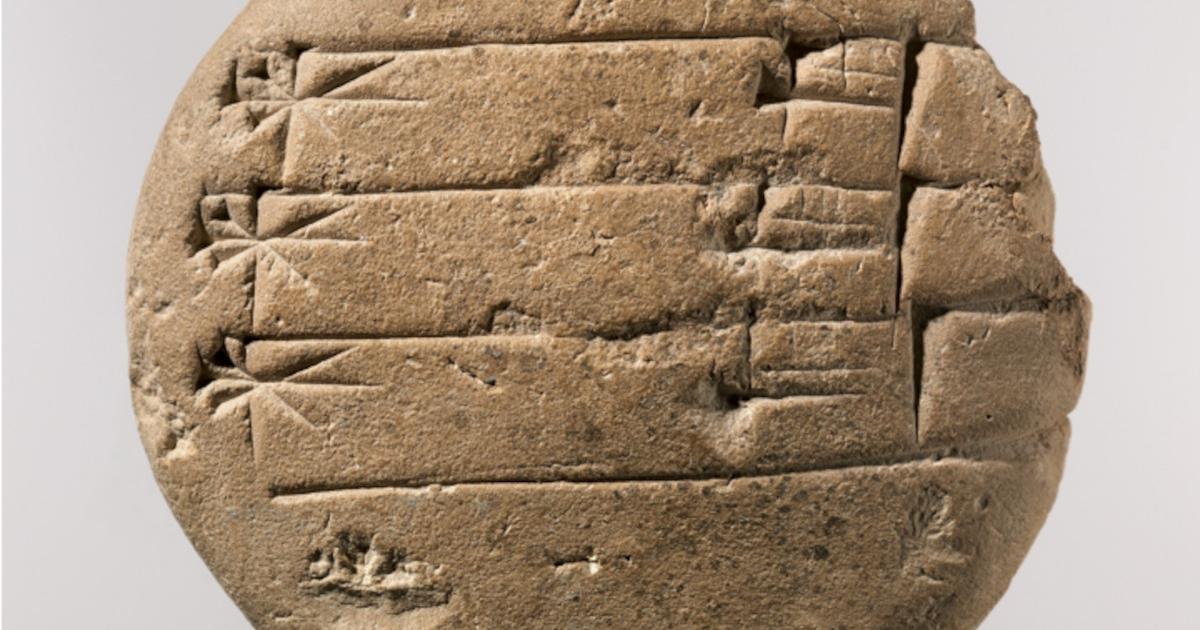
Top image: An Old Babylonian pupil repeated the name of the deity Urash on this exercise tablet; it is earlier than the first-millennium schools in Zaia's study. (Image Source: The Metropolitan Museum of Art/Public Domain)
By Gary Manners
References
Radley, D., 2026. How Babylonian students learned about hundreds of gods without a religion class. Archaeology News Online Magazine. Available at: https://archaeologymag.com/2026/09/how-babylonian-students-learned-about-gods/
Arnold, P. 2026. Clay tablets reveal how Babylonian students learned about their gods. Available at: https://phys.org/news/2026-09-clay-tablets-reveal-babylonian-students.html
Zaia, S. 2026. Gods in the classroom: Religion and education in 1st millennium BCE Babylonia. Iraq. Cambridge University Press. Available at: https://doi.org/10.1017/irq.2026.10057






















