
With remarkable skill, Ice Age sculptors transformed mammoth ivory into lifelike works of art that reveal early human creativity, inspiring awe and appreciation among audiences. Now, researchers studying tiny bird carvings found in Hohle Fels Cave in Germany have uncovered new clues about the symbolic world of Europe's earliest modern humans. The delicate figurines offer fresh insight into how Ice Age people observed, interpreted, and expressed their relationship with the natural world.
Hohle Fels Cave World Heritage Site Produces Ancient Figurative Art
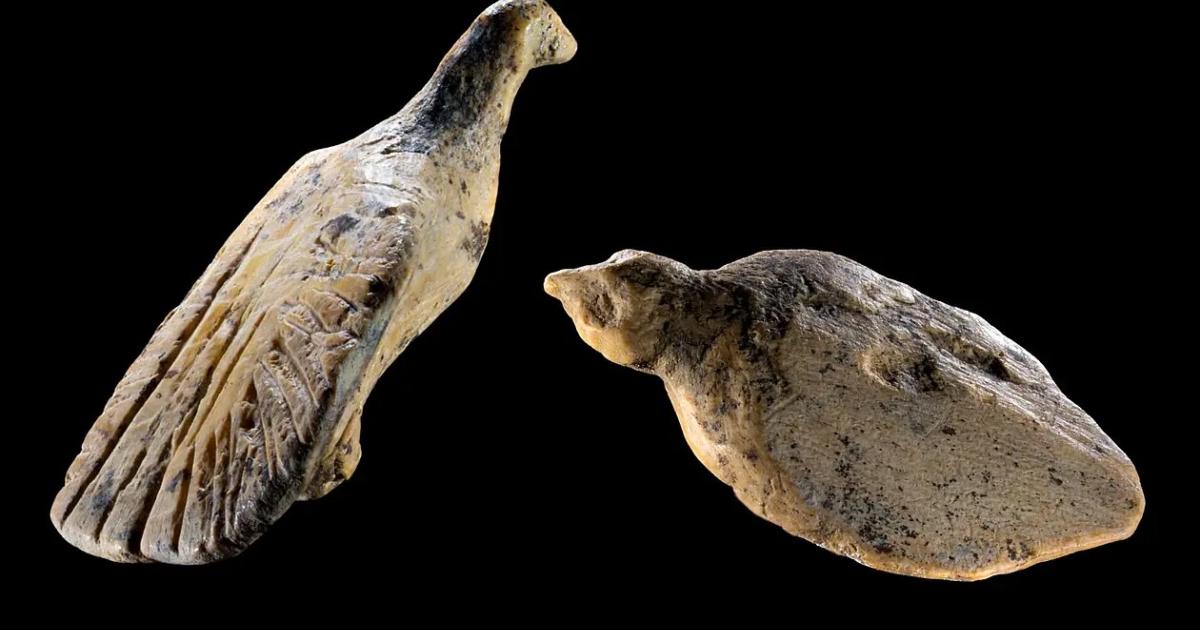
Excavations at Hohle Fels Cave in the UNESCO World Heritage area of the Swabian Jura of southwestern Germany have yielded two 40,000-year-old depictions of birds carved from mammoth ivory. The two detailed figurines are the smallest discovered so far, about the size of a thumbnail, making them exceptional examples of Ice Age miniature art. These remarkable finds come from the rich Aurignacian layers at Hohle Fels, which have yielded some of the oldest known figurative art, and date to the initial arrival of modern humans in the Upper Danube region. One find is complete, depicting a brooding bird, while the other incomplete bird has outstretched wings and may be in flight or landing.
- Hunters Melted and Sculpted Ivory 12,000 Years Ago
- Aurignacian Secrets Revealed in Cutting-Edge Dental Research
Master Ivory Carvers of the Ice Age
In 2025, archaeologists from the University of Tübingen, Germany, recovered the birds in the same layer, lying about 1.5 meters apart. They are of similar age and may have been carved by the same person. The Director of Excavations from the University of Tübingen, Professor Nicholas Conard, notes the advanced skills of the sculptor:
“The figurines demonstrate that the earliest artists were skilled ivory-carvers, who could depict delicate motifs in miniature form. Additionally, it seems that specific depictions are associated with specific sites.”
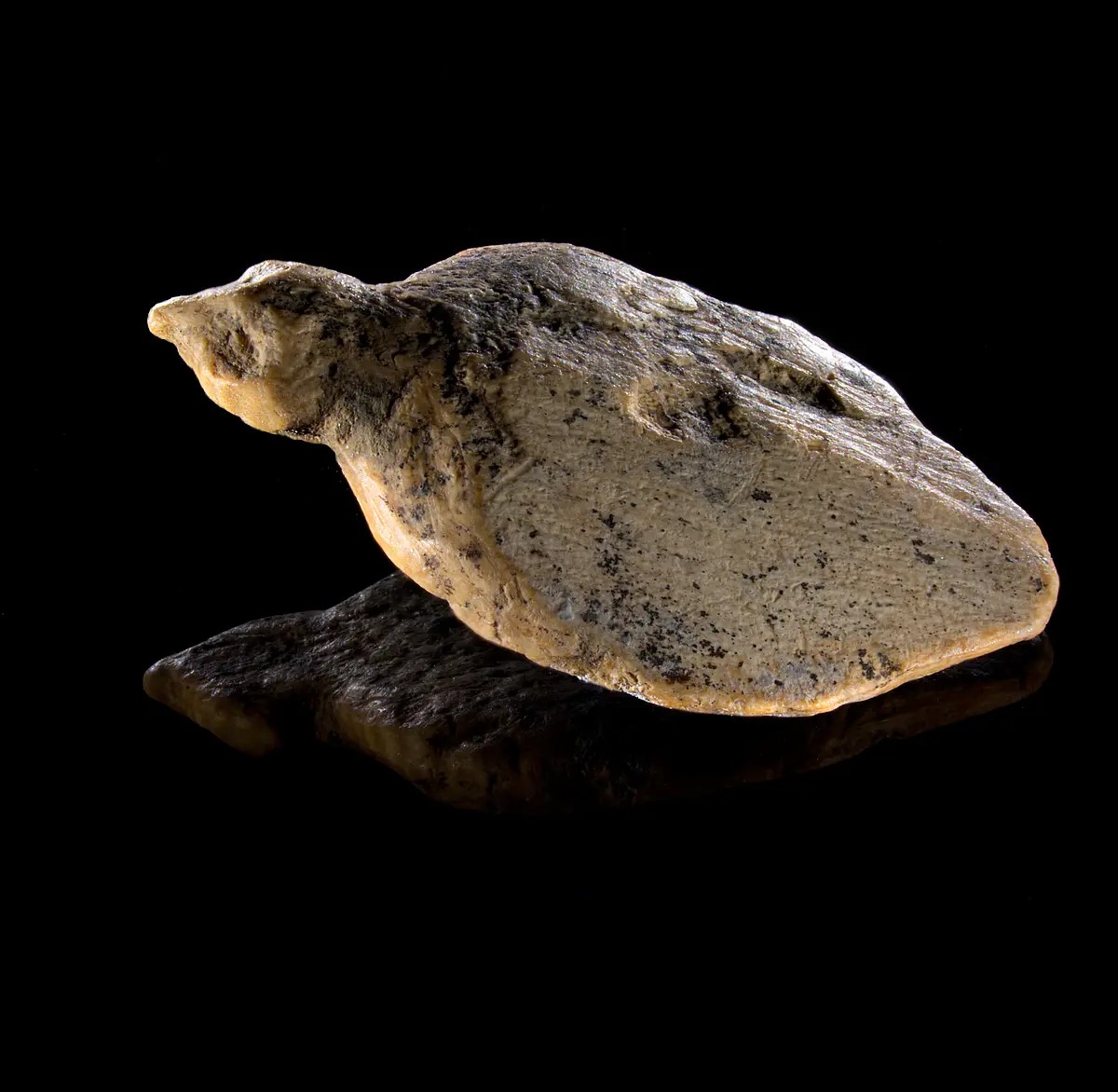
The resting bird figurine from Hohle Fels Cave preserves remarkably subtle anatomical details despite measuring only about two centimeters in length. (Ralf Ehmann/University of Tübingen)
Tiny Sculptures, Astonishing Detail
The newly discovered birds are extremely small, measuring approximately 2 x 1 x 0.5 cm. Most other figurines from this period are larger, ranging from 3 to 9 cm. The resting bird is depicted with remarkable detail, including prominent eyes, while the bird with outstretched wings features a distinctive beak and clear feather markings. These miniature sculptures showcase the extraordinary skill of Ice Age artisans, inspiring wonder at their precision and artistry.
- 40,000-Year-Old: The World's Oldest Boomerang Was Carved From Mammoth Ivory
- Humans were Hunting the Largest Bird in the World on Madagascar 10,500 Years Ago
Frozen Moments From the Ice Age
Although many of the early ivory carvings from the caves in the Swabian Jura show animals that are tense and motionless, the two birds imply movement. One of the birds appears to be lying on the ground, brooding over its eggs. The bird with spread wings may be flying, landing, or posturing in courtship. Ice Age art can often have many interpretations. The brooding bird appears to be a ptarmigan, a species well represented in the rich faunal material recovered from Hohle Fels. The bird with spread wings could be a ptarmigan, a grouse, or a bird of prey.
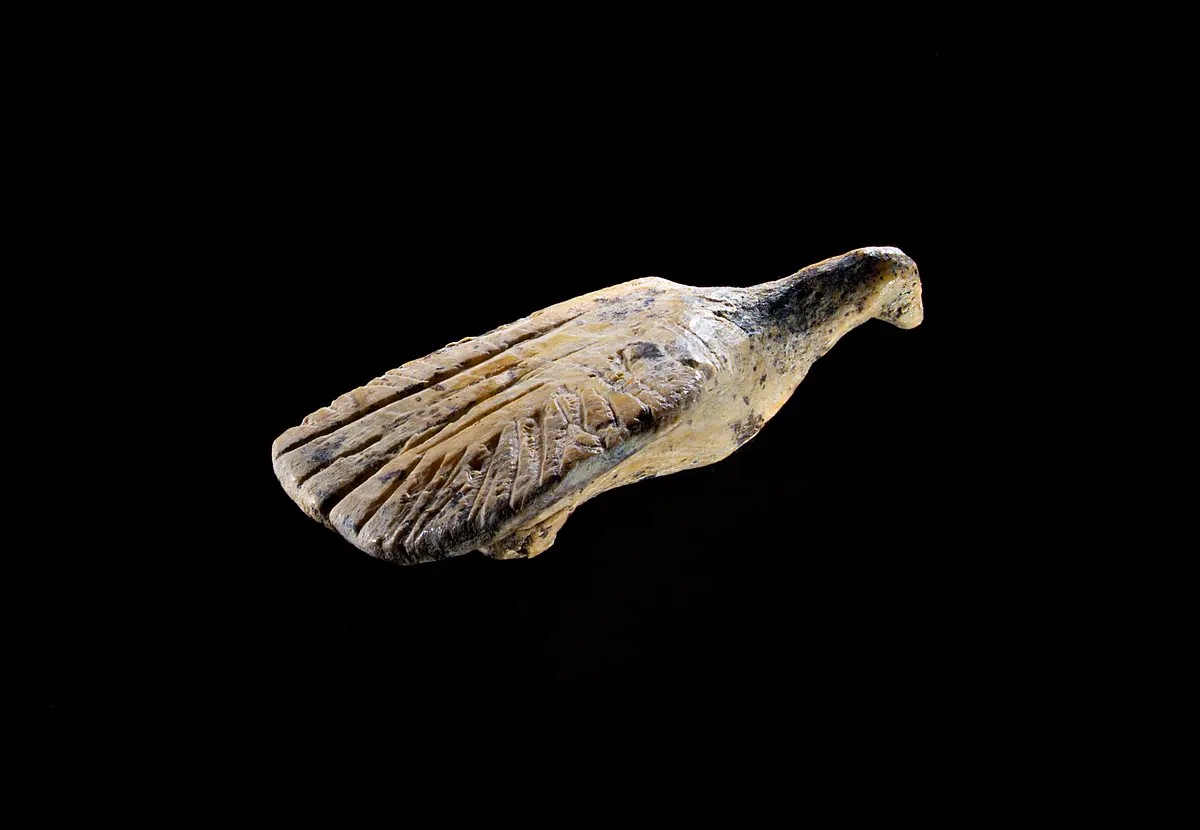
The bird figurine with outstretched wings displays finely engraved feather details carved by Aurignacian artisans approximately 40,000 years ago. (Ralf Ehmann/University of Tübingen)
Tiny Treasure with Enormous Meaning
“The figurines in their present state weigh only 1.3 and 0.7 grams and are the smallest and finest depictions from this period 40,000 years ago,” notes Conard, “but despite their size, they raise many new questions about their purpose. Researchers are exploring what meaning the birds held for the prehistoric residents of Hohle Fels Cave. Did the birds serve as personal talismans or as symbols for the identity of the person who carved or carried the diminutive sculptures? Hohle Fels has now yielded three carefully made carvings, while no other site in the region has produced a single bird figurine. At the same time, depictions of other animals are numerous, with mammoths and lions most frequently depicted, followed by smaller numbers of bears, horses, fish, and bison. With 30 years of experience studying the site, Conard has great respect for the special qualities of each one: “Each of the four World Heritage sites that have yielded figurative art is unique and documents a link between the site and its specific geographic and social context.”
- Ten Amazing Ice Age Artworks By The Magdalenians Discovered In England
- First Americans May Have Arrived by Sea Ice Highway as Early as 24,000 Years Ago
Birdsong Across 40,000 Years
The figurines will be on display at the Museum of Prehistory and Ice Age Art in Blaubeuren (URMU) in a special exhibit that runs until April 4, 2027, titled "Feather light, research heavy: Discover the miniature birds in Ice Age Art." Stefanie Kölbl, the managing director of URMU, points out that the region is home to a wide variety of birds: “Our region and landscape have always been the home of a vast range of birds, and nearby Lake Schmiechen is today a bird sanctuary. Even 40,000 years ago, birds were here. Their song filled the air, and some species came to the region in the course of annual migrations. Their calls signaled warnings, and the residents of the region often used their hollow bones and even mammoth ivory to make flutes that produced magical sounds.”

Excavations inside Hohle Fels Cave, where archaeologists uncovered the tiny mammoth ivory bird figurines in deposits dating to approximately 40,000 years ago. (University of Tübingen)
The Urgeschichtliches Museum (URMU) is located among the region’s caves that were inscribed as UNESCO World Heritage Sites in 2017, titled: “Caves and Ice Age Art in the Swabian Jura.” Founded more than 60 years ago, this research museum at the University of Tübingen has long displayed renowned Paleolithic artifacts from southwestern Germany, along with the oldest figurative art and musical instruments dating back 40,000 years. URMU houses exceptional finds such as the Venus of Hohle Fels. Researchers plan to continue excavations and increase the collection of prehistoric carvings that represent the legacy of the people who enjoyed bird songs 40,000 years ago.
Top Image: Two mammoth ivory bird figurines from Hohle Fels Cave, Germany, dating to approximately 40,000 years ago. The carvings are among the smallest examples of Ice Age figurative art ever discovered. Source: Ralf Ehmann/University of Tübingen
By Ramsey Hardin
References
Conard, Nicholas J., Alexander Janas, and Mohsen Zeidi. "Hochwertige Funde aus dem Mittelpaläolithikum und zwei aurignacienzeitliche Vogeldarstellungen aus dem Hohle Fels bei Schelklingen." In Archäologische Ausgrabungen in Baden-Württemberg 2025, 46–52. Stuttgart: Landesamt für Denkmalpflege im Regierungspräsidium Stuttgart, 2026. Available at: Zwei Vogelfiguren sind „Fund des Jahres“ aus der UNESCO-Welterbehöhle Hohle Fels | Universität Tübingen
Carvajal, Guillermo. "Two 40,000-Year-Old Ivory Bird Figurines Discovered in Hohle Fels Cave, the Smallest Sculptures Found to Date at the Famous Site." July 2026.https://www.labrujulaverde.com/en/2026/07/two-40000-year-old-ivory-bird-figurines-discovered-in-hohle-fels-cave-the-smallest-sculptures-found-to-date-at-the-famous-site/.
Callaway, Ewen. "40,000-Year-Old Bird Carvings Provide Clues to How Ice Age Humans Flourished." Nature, July 29, 2026.https://www.nature.com/articles/d41586-026-02312-y.
Eberhardt, Janna. "Ice Age Artists Carved Thumbnail-Size Bird Figurines from Mammoth Ivory 40,000 Years Ago." July 29, 2026.https://phys.org/news/2026-07-ice-age-artists-thumbnail-size.html.
Killgrove, Kristina. "40,000-Year-Old Bird Figurines the Size of a Thumbnail Discovered in German Cave." July 30, 2026.https://www.livescience.com/archaeology/40-000-year-old-bird-figurines-the-size-of-a-thumbnail-discovered-in-german-cave.
de Lázaro, Enrico. "40,000-Year-Old Bird Figurines Found in German Cave." July 29, 2026.https://www.sci.news/archaeology/hohle-fels-cave-bird-figurines-14956.html.
University of Tübingen. "Two Bird Figurines Found in World Heritage Site of Hohle Fels Are Declared Find of the Year." University of Tübingen Press Release, July 29, 2026.https://uni-tuebingen.de/en/university/news-and-publications/press-releases/press-releases/article/two-bird-figurines-found-in-world-heritage-site-of-hohle-fels-are-declared-find-of-the-year/.