
Archaeologists have recently discovered a set of tombs dating back around 2,300 years at Hattusa, the ancient capital of the Hittite Empire in central Turkey. This particular find sheds fresh light on burial customs from a lesser-known chapter of the site’s storied past. One particular grave has stood out to the excavation team. Its stone architecture was unusually well preserved, and even the skeleton was mostly intact when found.
This tomb’s good state of preservation immediately distinguished it from the other graves excavated in the area. Beside the skeleton’s right shoulder, archaeologists also found a knife; its function is still undetermined. Researchers are now trying to establish whether it was placed there as a burial offering or if it ever belonged to the deceased at one time and was eventually buried alongside them. What’s crucial to understand is that while these tombs have been discovered within the former Hittite capital, the graves are not Hittite: they belong to communities occupying Hattusa centuries after the Bronze Age empire had disappeared.
- The Role of Severe Drought in the Collapse of the Hittite Empire
- Hellenistic Elite was Buried on a Bronze Bed with Gold in Her Mouth
A Mysterious Stone-Ringed Tomb Emerges at Hattusa
The tomb was surrounded by a circular stone wall approximately seven meters (23 feet) in diameter, with a second inner stone enclosure large enough to accommodate an adult burial. Researchers believe the unusually well-preserved structure could provide valuable evidence about funerary practices in the region during this poorly understood period. The current season of excavations, led by Dr. Andreas Schachner of the German Archaeological Institute, is being carried out at no less than five separate points across the site. It was on the city’s northwest slope that the team of researchers came across a brand new discovery: a previously unknown cemetery containing no less than three tombs which are believed to date from the Early Hellenistic and Galatian eras.
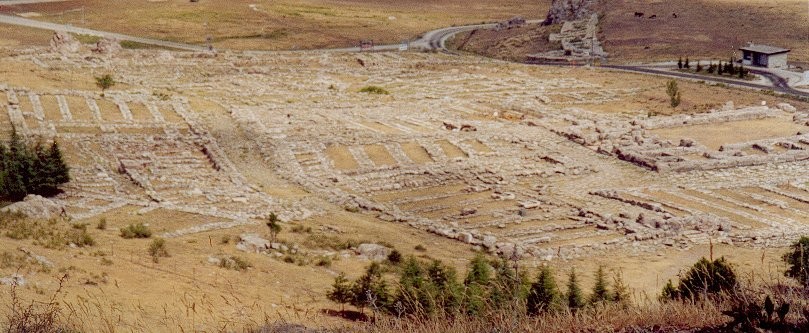
Ruins of ancient Hattusa, capital of the Hittite Empire and site of the newly investigated Hellenistic-Galatian cemetery. (China Crisis/CC BY-SA 2.0)
A Growing Cemetery Emerges at Hattusa
Schachner has already said that the cemetery was discovered while the research team was working to clear an area around a storage structure. He also explained how during last year’s excavations, five tombs (three of them belonging to women) were also found in the same area, and that this year’s work added three more to the list.
Hattusa: Heart of the Mighty Hittite Empire
The site itself is located in the Boğazkale district of Çorum province. Hattusa, the capital city of the Hittites, was once the political and cultural heart of this ancient power, rivaling states such as Egypt in military capabilities and prestige. The Hittites themselves were one of the earliest civilizations that lived in the region, which was once called Anatolia but is now known as Turkey. The ancient city of Hattusa spans about two square kilometers and is still ringed by roughly seven kilometers of fortification walls.
- Hattusa: The Cursed City of the Hatti and the Hittite Empire
- Construction Workers Stumble Upon Ancient Cemetery in Turkey
A Century of Excavations Reveals Hattusa’s 8,000-Year Story
Hattusa was inscribed on UNESCO’s World Heritage List in 1986, while the remarkable archive of cuneiform tablets discovered at the site was added to UNESCO’s Memory of the World Register in 2001. These excavations have been ongoing since 1906, gradually revealing traces of human settlement that can stretch back up to 8,000 years ago, including layers from the Chalcolithic period, the pre-Hittite era, the Hittite period itself, the Iron Age, and later occupations from Galatians, Romans, and Byzantines.
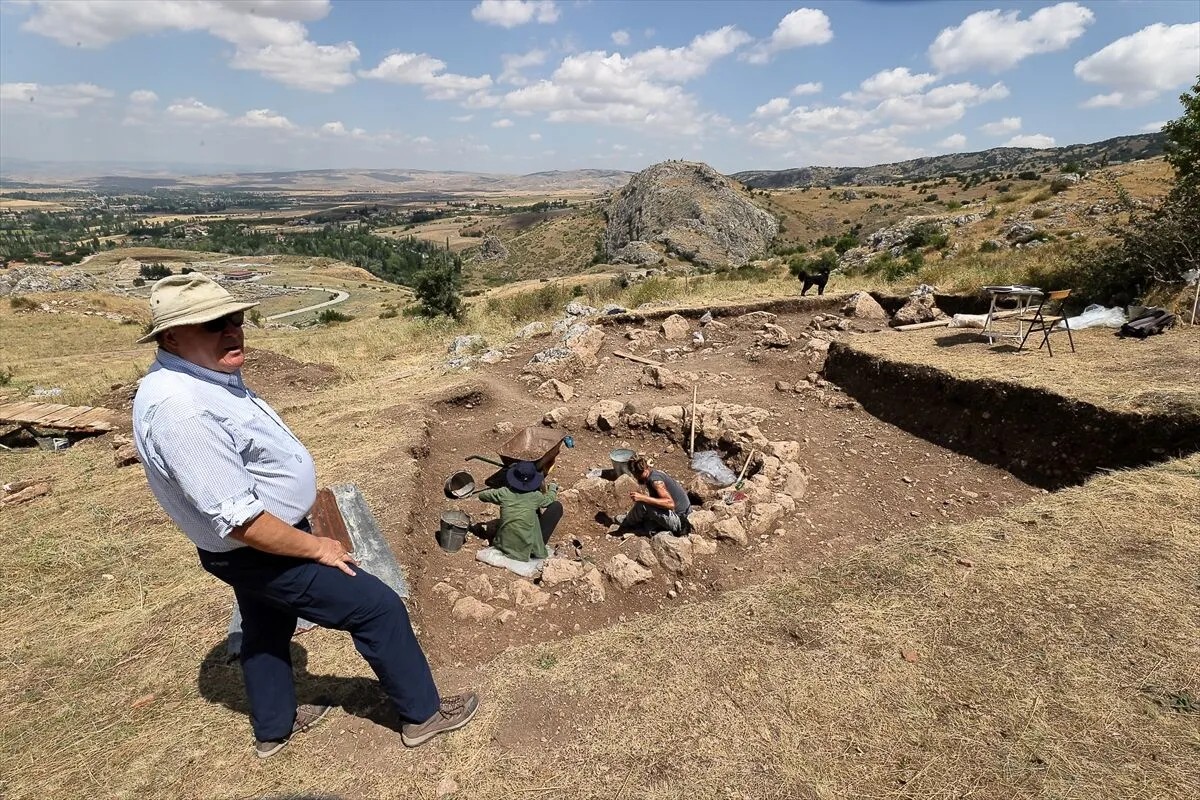
Excavation director Andreas Schachner overlooks work at the newly identified Early Hellenistic and Galatian cemetery on the Northwest Slope of Hattusa in central Turkey. (Kemal Ceylan/Anadolu Agency)
Hattusa’s Best-Preserved Tomb Reveals a Mysterious Knife
Schachner goes on to say, “This isn’t a densely packed cemetery- it’s a sparse one, with tombs scattered around. They belong to the Early Hellenistic and Galatian periods, so that we can date them to the late 4th century BC all the way down to the 3rd century BC.” He also described how the newly found tomb was the best-preserved of its particular type that has been discovered so far at the site:
“A circular stone ring around them characterizes these tombs, and in this new one, that set ring has survived remarkably well. It’s a stone cast cist grave, a very common type in this region. Other tombs have yielded items like coins and cosmetic sets. In this one, a knife was resting on the individual’s right shoulder. We don’t yet know its full significance - it could be a grave offering or something buried with the body. We can’t say for certain until the tomb is opened. This may be a male individual, whereas the tombs we’ve excavated before were mostly women”.
- 3,500 Years Ago, Hittites Sacked and Razed an Unwary City
- Five of the Most Powerful and Influential Empires of the Ancient World
Schachner goes on to note that burials were in fact from many different eras and have even been discovered across Hattusa over the years. Schachner says, “In this area, we’ve found eight tombs total-five last year and three this year. To the west of this area, nine more tombs from the same period were found in previous seasons, bringing the total to 17 tombs from that specific era. Across the wider Bogzkoy site, hundreds of tombs from various periods have been documented- nearly all from the Roman period alone. This gives us insights into a period we actually know relatively little about.” Once excavation and documentation work on the tombs is finally at an end, the team can plan to restore them and even open the area to visitors one day.
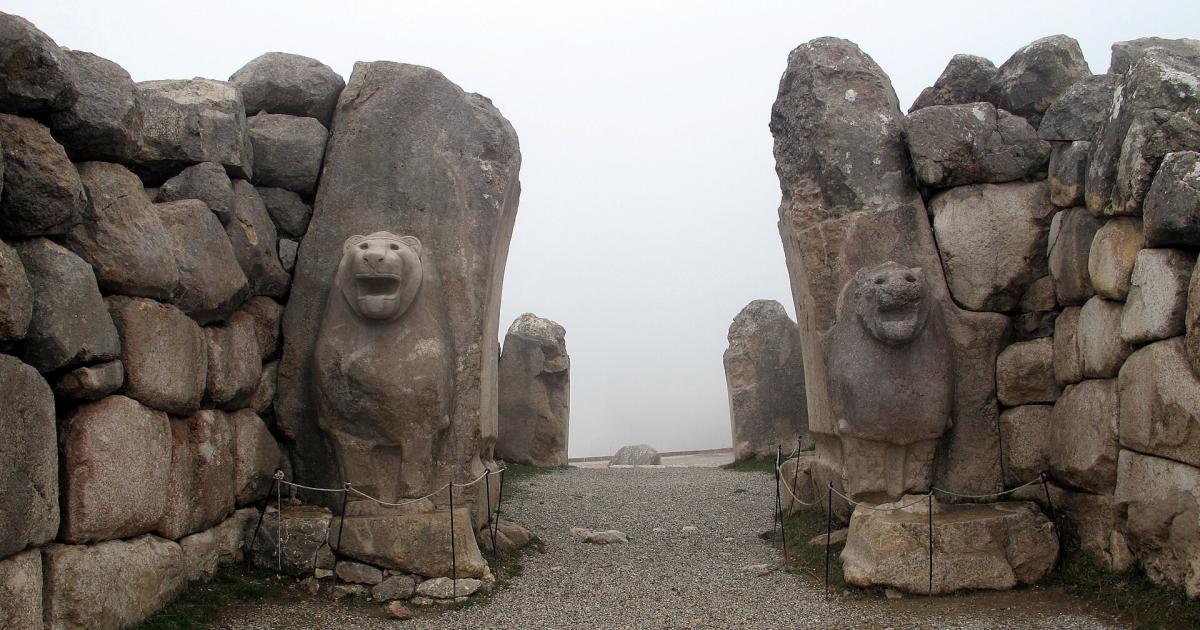
Top Image: The Lion Gate at Hattusa, the ancient capital of the Hittite Empire in central Türkiye. The newly discovered 2,300-year-old cemetery lies within the much older archaeological landscape of the former Hittite capital. Source:(Murat Özsoy/CC BY-SA 4.0)
By Ramsey Hardin
References
Becker, J. and Schachner, A. 2025. Boğazköy, Türkiye. Excavations at Büyükkale, the Palace Area of the Hittite Capital Ḫattuša: The Work of the Years 2021 to 2024. e-Forschungsberichte des Deutschen Archäologischen Instituts 2025-2. Deutsches Archäologisches Institut. Available at:
https://doi.org/10.34780/twvy2a06
Büyükyıldırım, O. 2023. Discoveries in the Hittite Capital of Hattusa Never Cease. Available at:
https://www.anatolianarchaeology.net/discoveries-in-the-hittite-capital-of-hattusa-never-cease/
Büyükyıldırım, O. 2025. 119 Years of Excavations at Hattusa: New Discoveries in the Mysterious Area Between the Great Temple and Palace. Available at:
Buyukyildirim, O. 2026. New 2,300-Year-Old Tombs Discovered in Hittite Capital of Hattusa. Available at:
https://arkeonews.net/new-2300-year-old-tombs-discovered-in-hittite-capital-of-hattusa/
Ceylan, K. and Balabaz, B. 2026. Hattuşa'da yaklaşık 2 bin 300 yıllık yeni mezarlar bulundu. Available at:
https://www.aa.com.tr/tr/kultur/hattusada-yaklasik-2-bin-300-yillik-yeni-mezarlar-bulundu/4023823
Schachner, A. 2024. Ausgrabungen in der Unterstadt von Boğazköy II: Der Große Tempel von Ḫattuša, die Magazine in seinem Umfeld und das sogenannte Südareal. Boğazköy-Ḫattuša: Ergebnisse der Ausgrabungen 30. Harrassowitz Verlag. Available at:
https://doi.org/10.34780/mcb6-6c5f
Schachner, A., Alparslan, M., Becker, J., Doğan-Alparslan, M., Gruber, M., Herbordt, S., et al. 2025. Die Ausgrabungen in Boğazköy-Ḫattuša 2024. Archäologischer Anzeiger 2025/1. Deutsches Archäologisches Institut. Available at: