
In northwestern Arabia's Tabuk province, blowing in the sands of a long-forgotten oasis, archaeologists have found the world's oldest known evidence for the ritual application of Peganum harmala, otherwise known as Syrian rue or harmal—a plant both psychoactive and medicinal.
Used more than 2,700 years ago in funeral rituals, this humble desert shrub was once at the center of a complex healing and spiritual practice that has only recently come out of the shadows.
Due to the power of modern biomolecular analysis and the cooperation of the Max Planck Institute of Geoanthropology, Vienna University, and Saudi Arabia's Heritage Commission, scientists have followed the residual chemical traces of this powerful plant, once smoked by Iron Age Qurayyah people in holy smoke, and published their finds in the latest edition of Communications Biology.
What they've found is more than an expansion of the history of pharmacobotany—it implies a hitherto unrecognized ritual pharmacology in pre-Islamic Arabian society.
- Saudi Arabian Dog Remains Are A Shocking Find
- Footprints Reveal Passage of Early Humans From Africa Through Arabia
Fire, Smoke, and Stone: Uncovering Ancient Rituals
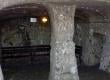
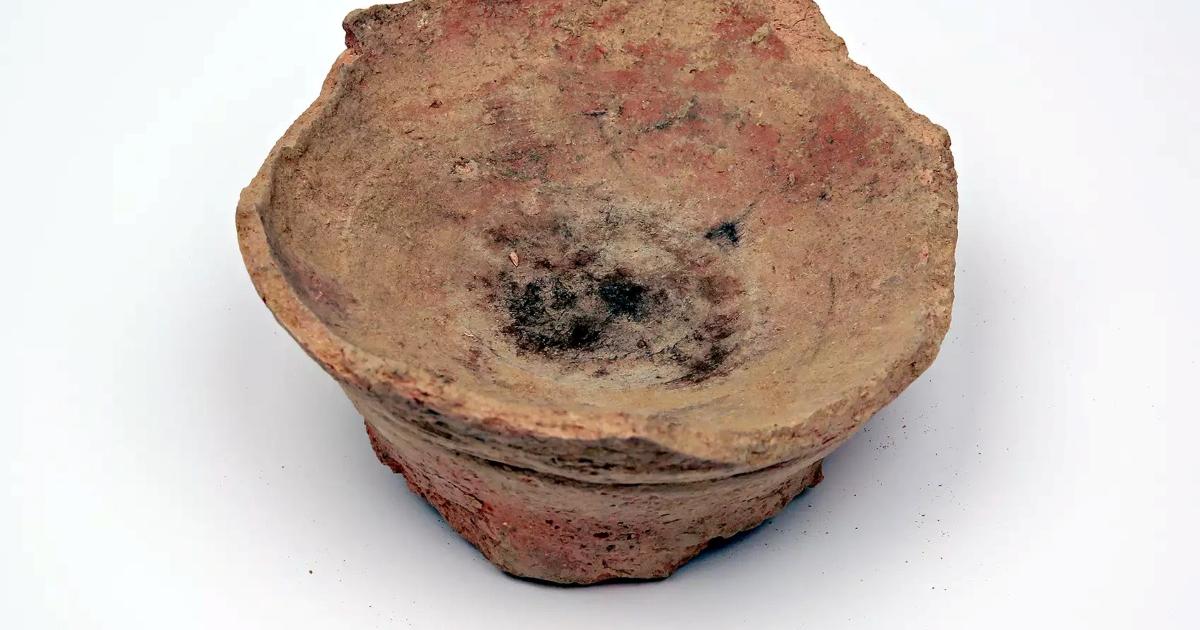
The find revolves around organic residue that remains trapped within fumigation equipment and stone burners recovered in a multi-room tomb at the oasis settlement of Qurayyah, which is famous for its beautifully painted ceramics and position along early trade and migration routes.

The oasis settlement of Qurayyah in northwestern Saudia Arabia. (A.M. Abualhassan)
Using high-performance liquid chromatography-tandem mass spectrometry (HPLC-MS/MS), scientists isolated three potent beta-carboline alkaloids—harmine, harmaline, and tetrahydroharmine—chemical signatures of Peganum harmala. They are not only psychoactive, but also have antibacterial and anti-inflammatory activities, and continue to be used in traditional medicine throughout the Middle East and Central Asia.
The significance of this discovery is unprecedented. "This is the first direct chemical proof of Syrian rue being used in a funerary context anywhere in the world," Dr. Barbara Huber, the study's lead author, stated in a press release. "Our results demonstrate that individuals in Iron Age Arabia were already experimenting with sophisticated plant-based pharmacologies, not just for healing, but for ritual and sensory transformation."
Moreover, the plant was not only buried in tombs as an offering - its seeds were burned and smoked, most likely as part of purification or visionary rituals performed during or after death. In a way, ancient Arabian mourners were smoking the divine, negotiating the realms of the living and the dead through scent and smoke.
The Spirit in the Smoke: Syrian Rue's Ancient Power
Peganum harmala has been familiar for millennia throughout much of the Old World. Today it is still burned at home to repel the evil eye, alleviate sickness, or sanctify ceremonies. It is also used in combination with other herbs to produce altered states of consciousness or spiritual insight.

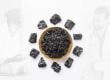
Dried fruit of Peganum harmala, show here to have been already in use for its therapeutic and psychoactive properties 2,7000 years ago. (Barbara Huber)
But what this study shows is that such practices were not survivals of the modern era, but an integral part of a long historical tradition. The Qurayyah folk were already tapping the bioactive properties of the plant more than two and a half millennia ago—indicating that their knowledge of the world was far, far beyond subsistence or survival. These were societies who worked with plants as with agents of healing, protection, and transformation.
"This totally reworks our perception of early Arabian cultures," said Prof. Marta Luciani, one of the co-directors of the dig. "It represents a cognitive and cultural level of sophistication, where religious and therapeutic spheres interacted in significant, ritualized contexts."
This reframing of Iron Age Arabia disrupts older narratives that often depict desert societies as culturally peripheral. Instead, it suggests a network of botanical knowledge, spiritual complexity, and localized pharmacological experimentation comparable to that found in South America, Central Asia, or the Indus Valley.
Resonance Across Time: Healing, Memory, and Heritage
It is not simply a story about old bones and scientific tools. Finding Syrian rue in Qurayyah bridges past and present with intangible cultural heritage. It confirms that ancient Arabian societies practiced spiritual ecology, recognizing particular plants as not only means, but as attendants to the divine.
- New Study Reveals Ancient Arabian Peninsula Funerary Avenues Network
- Ritual Platform Discovered in Saudi Arabia, With Egyptian Artifacts
In an age more and more committed to the conservation of traditional medicine and ethnobotany, the Qurayyah discoveries provide a measure of more than historic value—they provide continuity. As Saudi Heritage Commission's Ahmed M. Abualhassan noted, "We are not preserving artifacts—we are restoring wisdom that continues to reside in oral traditions, domestic habit, and ancestral rituals."
For anthropologists and archaeologists, the stakes are enormous. By bridging chemical analysis, archaeological context, and cultural history, there is a blueprint for how ancient knowledge systems may still be able to teach pharmacology, spirituality, and cultural resilience in the present.
In fact, the smoke that rose heavenward from Qurayyah's stone burners in the past was not merely a ritual—it was a language, a medicine, a heritage.
Top image: Source:
By Sahir
References
Altuntas, L. 2025. Earliest Direct Evidence of Psychoactive Plant Use in Iron Age Arabia Identified in Tomb at Qurayyah. Available at: https://arkeonews.net/earliest-direct-evidence-of-psychoactive-plant-use-in-iron-age-arabia-identified-in-tomb-at-qurayyah/.
Huber, B., et al. 2025. Metabolic profiling reveals first evidence of fumigating drug plant Peganum harmala in Iron Age Arabia. Communications Biology, 8. Available at: https://doi.org/10.1038/s42003-025-08096-7.