Archaeologists working with Cambodia’s Apsara National Authority have unearthed the significant remains of a 12th-century hydraulic system within the ancient royal palace complex of Angkor Thom. The excavation has shed new light on the engineering marvels and daily life of the Khmer Empire during the reign of King Jayavarman VII. The discoveries, centered around a large reservoir known as Pool No. 11, provide a rare glimpse into the sophisticated water management that once sustained this massive pre-industrial city.
The project, launched in February by the Department of Temples and Archaeology in cooperation with the Department of Water Resources, Forests and Infrastructure, focused on the drainage system surrounding the Phimeanakas palace. According to the Apsara Authority, the excavation aims to document the architectural layout and historical development of the site. Researchers analyzed archaeological layers, drainage structures, and sediment deposits to better understand the condition of the pool’s embankments and the broader hydraulic system that channeled water out of the royal palace.
- The Great Sacred City of Angkor Thom
- Unexpected Find of Impressive Ancient Statue at Cambodia's Angkor Complex
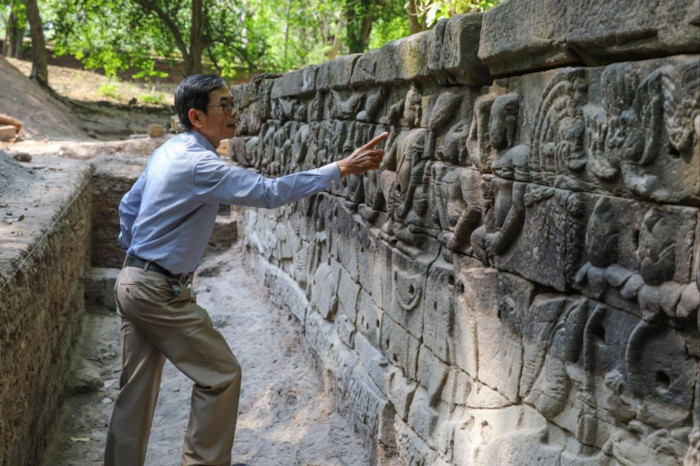
Archaeologist Srun Tech at one of the excavation sites. (APSARA National Authority)
Engineering the Empire of Water
Sunshulpi, the archaeologist leading the excavation, noted that Pool No. 11 is a rectangular structure measuring approximately 65 meters (213 feet) long and 30 meters (98 feet) wide, enclosed by compacted earth walls. Excavations revealed that sediment layers within the pool extend roughly 3.5 meters (11.5 feet) deep. Based on construction materials, stratigraphic evidence, and artistic styles, experts dated the structure to the late 12th century during the reign of King Jayavarman VII, one of the most influential rulers of the Khmer Empire.
The excavation revealed three ancient drainage systems at the base of the palace walls, featuring a total of six water outlets. These systems played a crucial role in channeling water from within the palace grounds into the surrounding moat. Soil deposits up to three meters deep were found inside the moat, which consists of 9 to 11 laterite steps, indicating a carefully engineered design. Over time, these structures were buried due to natural factors such as sediment accumulation and vegetation growth, highlighting the vulnerability of Angkor's water management to environmental changes.
- The Hydraulic System That Built Angkor Wat — and Ultimately Destroyed It
- High-Tech Equipment Leads to Discovery of Lost City in Cambodian Jungle
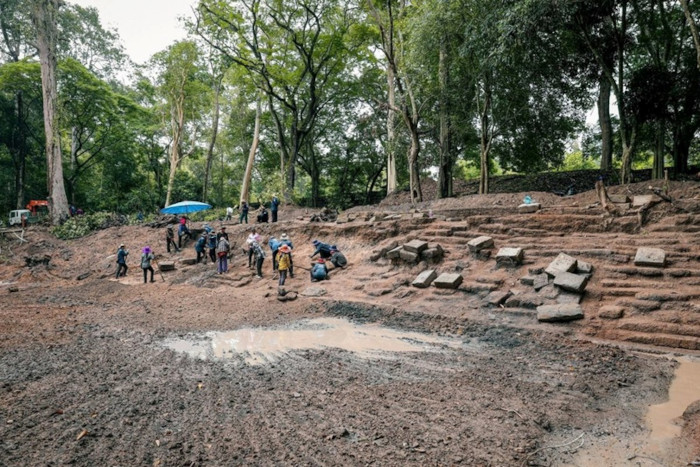
Ongoing work at one of the Angkor Thom excavations. (Cambodia China Times)
Rare Glimpses of Khmer Daily Life
Perhaps the most striking discoveries were detailed stone carvings found on the western side of the pond. These bas-reliefs depict boating scenes and leisure activities on the water, giving a very rare glimpse into social and cultural life during this period. The carvings show people paddling boats with various aquatic creatures, including fish, visible beneath them. The Apsara National Authority stated that these carvings reflect the artistic sophistication of the era, adding a human element to the monumental ancient technology of the site.
Archaeologists also found signs of the ancient biodiversity of the area, indicating that birds, reptiles, and fish once inhabited the waters around the royal palace. These findings enrich our understanding of the vibrant ecosystem that existed alongside the Khmer capital. The integration of nature and urban planning was a hallmark of Angkor Thom, which at its height was the largest pre-industrial city on Earth.
Restoring the Ancient Network
The Apsara Authority is currently developing preservation plans to protect both the physical remains and the cultural significance of the site. Future work will include extensive archaeological excavations, structural enhancement of the reservoir, and landscape restoration to return the pool to its historical appearance and functionality. Officials plan to restore the drainage system to its original function, which will help relieve water from inside the former palace complex that floods annually during the rainy season.
The ongoing excavation not only enhances our understanding of Angkorian hydraulic engineering but also supports future restoration efforts. By reviving these ancient systems, Cambodia aims to preserve its rich heritage while orienting the future of Angkor Thom towards academic research and sustainable tourism development.
Top image: Intricate bas-relief carvings showing people paddling boats, found at Angkor Thom. Source: APSARA National Authority
By Gary Manners
References
Cambodianess. 2026. Carvings Found at Angkor Thom’s Royal Palace. Available at: https://cambodianess.com/article/carvings-found-at-angkor-thoms-royal-palace
Clarity UPSC. 2026. Angkor Thom Hydraulic System: Excavation & Water Management. Available at: https://clarityupsc.com/news/article/angkor-thom-hydraulic-system-excavation-water-management-3212
Milligan, M. 2026. Ancient royal water system discovered beneath Angkor Thom. HeritageDaily. Available at: https://www.heritagedaily.com/2026/06/ancient-royal-water-system-discovered-beneath-angkor-thom/158317