
For centuries, garum's pungent, briny charm haunted the written word of imperial cooks and self-righteous philosophers only. But all that has changed, thanks to a group of archaeologists, geneticists, and molecular biologists, who’ve uncovered the secret sauce of the Roman empire: sardines. Specifically, European sardines resembling the ones still swimming off the Iberian coast today.
In a paper published in Antiquity, scientists recovered and sequenced ancient DNA from a Roman fish-salting vat at the Adro Vello site in northwestern Spain. Although the conditions of fermentation are notoriously chemical and physical hostile, including grinding, salting, acidic brine, the team was able to recover intact genetic material from broken fish bones buried in the dregs of garum production.
“We show that workable DNA can endure in fermentation conditions, like the brines employed by the Romans to produce garum,” said lead author Dr. Paula Campos of CIIMAR, University of Porto, in a press release. “In spite of facing circumstances to foster DNA degradation, the techniques we report permit species identification from these processed bones.”
The Sardine Identity: A Methodological Breakthrough
With the use of sophisticated sequencing methods, Campos and colleagues aligned overlapping DNA fragments from the ancient remains with contemporary fish genomes to reach species-level identification: Sardina pilchardus, the European sardine.
- Roman Diets Exposed: Who Ate Best? Elite Roman Men, Or Women?
- What Egyptians Ate: Did the Cuisine of Ancient Egypt Reflect the Tastes of Today?
It's a finding that validated what archaeologists had long suspected from visual inspection of fish bones at comparable sites—but one that also represents the first time such an identification has been made directly from deteriorated genetic material.

Fish residues from the bottom of an ancient Roman fish-salting vat. (Archaeology Department of the University of Vigo/Antiquity (2025).
Considering how challenging it is to distinguish between small, crushed fish bones that have been chemically cooked for months, this genetic verification is a methodological breakthrough.
“This could contribute to identifying with greater accuracy some regional differences in the principal ingredients of ancient fish sauces and pastes,” said Annalisa Marzano, a Roman economic historian at the University of Bologna, who was not connected to the study, but chatted at length with New Scientist.
Garum was not merely a gastronomic aside—it was the ketchup, soy sauce, and oyster sauce of the ancient Mediterranean all in one. Found everywhere throughout Roman kitchens, it seasoned everything from grains to meat to vegetables. Its manufacture became industrialized on the shores of Hispania and North Africa, where cetariae—fish-salting factories—scarred the Atlantic coast.
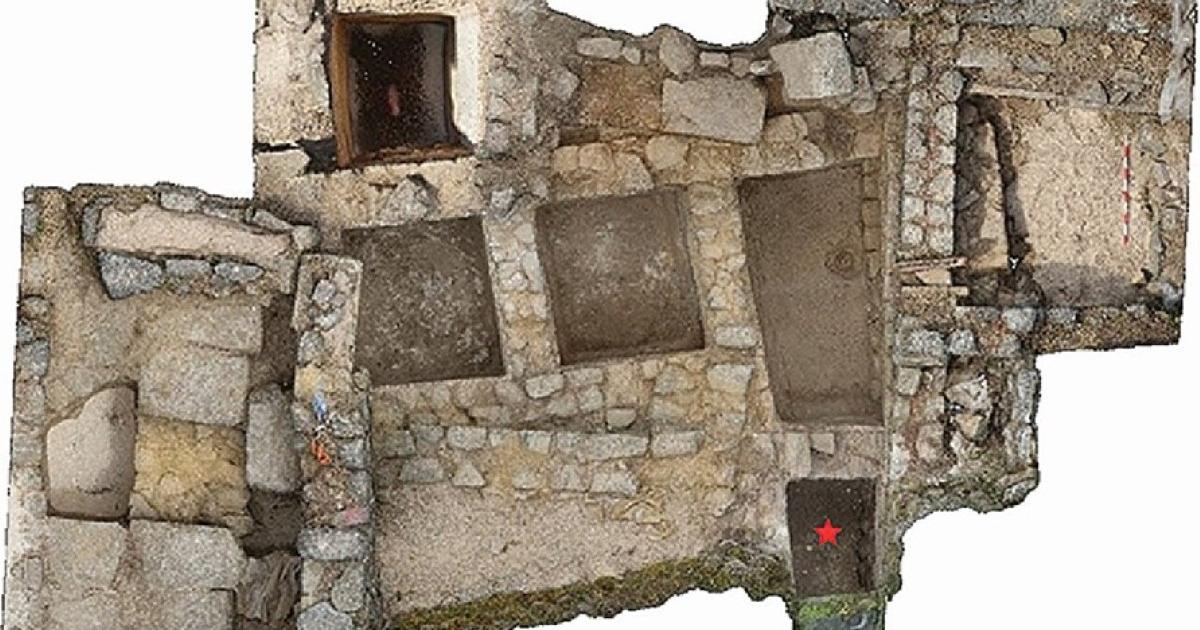
The Adro Vello site where the vat sampled for this study was located is a remarkably preserved instance of such a cetaria. A 3D reconstruction from the excavation shows a large processing factory, with a capacity to mass-produce the pungent elixir in both liquid (garum) and solid (allec) form.
Roman statesman Seneca once ridiculed it as “the overpriced guts of rotten fish,” but it was still a highly valued good, used locally and shipped abroad in great quantities.
Ancient Fish, Modern Kin
Aside from kitchen fascination, the researchers' work also opened doors to marine biology. By comparing the ancient sardine genomes to their modern counterparts, the researchers discovered that genetic continuity generally held fast over 1,700 years. That's a remarkable find for a fish species recognized for its extensive dispersal and admixture capability.
“The ancient sardines were genetically comparable to their contemporary counterparts in the same area,” Campos said.

Aerial view of Adro Vello during archaeological works. Archaeology Department of the University of Vigo/Antiquity (2025).
That similarity not only provides insight into fishery tradition but also gives researchers a one-of-a-kind long-term data point to assess how ocean life reacts to human activity and climate change over thousands of years.

Latest German Silver Oxidized Tribal Cotton Thread Antique Choker Necklace Jewellery Set From the Ancient Origins Shop
Having established that spoiled fish remains can still yield their secrets, Campos and her team are now widening their sampling to other garum-producing areas throughout the former Roman Empire.
By contrasting fish DNA from various vats—varied coasts, various periods in time—they aim to pinpoint trade routes, local ingredient priorities, and potentially even changes in marine populations correlated with economic or environmental disturbances.
- Neanderthal Diet Was Carnivorous, Shows Study of Tooth Enamel
- Study reveals surprising facts about diets of Medieval children in England
If the findings stand, garum could become an unexpected source of data about imperial supply chains, ecosystem resilience, and the deep prehistory of coastal resource exploitation.
Top image: 3D reconstruction of the fish salting plant at Adro Vello. The location of the vat is marked with a red star. Source: Archaeology Department of the University of Vigo/Antiquity (2025).
By Sahir
References
Bassi, M. 2025. Ancient DNA Unlocks the Secret Recipe of Roman Fish Sauce. Available at: https://gizmodo.com/ancient-dna-unlocks-the-secret-recipe-of-roman-fish-sauce-2000621133.
Hsu, J. 2025. Ancient DNA reveals make-up of Roman Empire’s favourite sauce. Available at: https://www.newscientist.com/article/2486546-ancient-dna-reveals-make-up-of-roman-empires-favourite-sauce/.
Themudo, G. et al. 2025. Roman Atlantic garum: DNA confirms sardine use and population continuity in north-western Iberia. Antiquity. Available at: https://doi.org/10.15184/aqy.2025.73.