
The vibrant colors of ancient Egyptian art have survived for thousands of years, but what held those pigments together has long been a mystery. Now, a groundbreaking study published in Science Advances has revealed that ancient Egyptian paint recipes were far more complex than anyone imagined, containing glues from multiple animals and, for the first time ever, plant proteins from sesame and moringa.
Colorful ancient Egyptian paintings and artworks have survived for thousands of years, yet the binding materials used in paintings have remained a mystery for a very long time. Recent research published in Science Advances has shown that the formulas behind ancient Egyptian paint are much more intricate than previously thought, containing glue derived from many different kinds of animals, and, for the first time, plant proteins from crops like sesame and moringa.
An international team of scientists involved in the research examined 28 microscopic samples taken from 14 pieces of artwork including wooden coffins, paintings found in the tomb of Nebamun and Sobekhotep, painted limestone slabs, plaster pieces used in the mummification process, and others, all curated from three European museums.
According to a report by Archaeology News Online Magazine, using a cutting-edge technique called paleoproteomics, the scientists identified the exact animal species and tissues behind the ancient paint binders and adhesives.
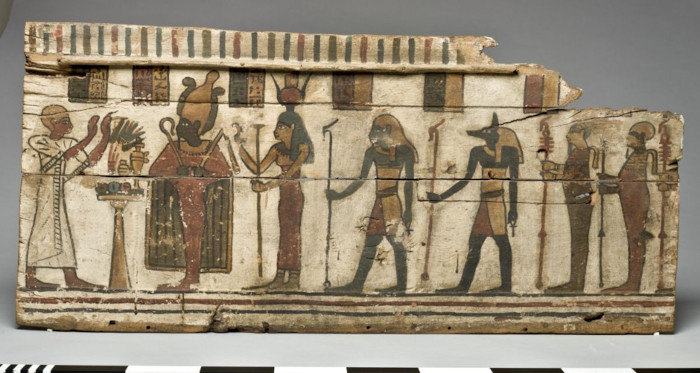
Fragment of a painted wooden mummy coffin (Medelhavsmuseet, MM 13944), painted wood. (Museum of Mediterranean and Near Eastern Antiquities, Stockholm)
A Menagerie of Animal Glues
According to the analysis, it appears that cattle glue is predominantly present in most of the samples that produced animal glue. But Egyptians did not stop just with that. Researchers have discovered the presence of proteins belonging to sheep or goats, donkeys, horses, and possibly even wild antelopes too indicating that the craftsmen made use of different animal materials available around them.
Analysis has shown that the glue was produced not only from bones, but also from hide or connective tissue, making a very strong adhesive called hide glue. This indicates that the ancient Egyptian artists recycled the animal byproducts, making use of all parts of the animal body as they did during the mummifying process of millions of animals all around Egypt.
- Tracing the Legacy of Egyptian Blue: From Ancient Artifacts to Modern Insights
- New X-Ray Scanning Method Reveals Pharaoh's Hidden Mysteries in Egyptian Paintings
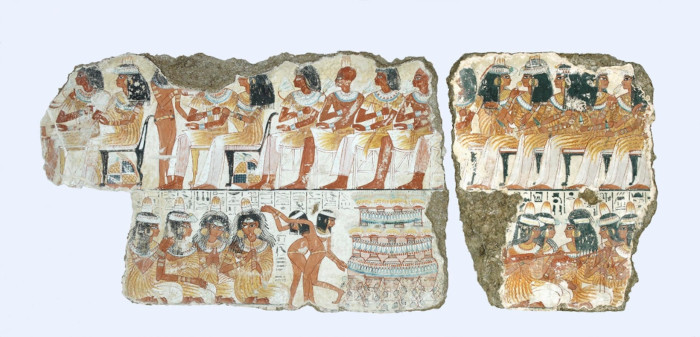
Wall painting fragment from the tomb of Nebamun, Thebes (British Museum, EA 37981), painted plaster. (The Trustees of the British Museum/CC BY-SA 4.0)
Egg, Sesame, and Moringa: The Unexpected Ingredients
The most unexpected revelation was the identification of plant proteins that have not previously been discovered in any ancient Egyptian works of art. The scientists detected seed-storage proteins obtained from sesame and moringa plants in the paintings, which include the green color layer from the famous Nebamun tomb in Thebes, and the red paint layer found in the Greco-Roman wooden coffin.
"Proteomics confirmed the use of glue prepared from the collagen of multiple animals and revealed the presence of plant proteins, including sesame and moringa products, previously undocumented in ancient Egyptian artworks," the researchers said in their paper, as reported by Phys.org.
The team also identified the presence of chicken egg proteins in a sample of the green paint from the tomb of Nebamun. This indicates that whole chicken egg was used as the binding agent in the paint. This adds to our understanding of the sophisticated techniques used by the artists of ancient Egypt, including the work of ancient Egyptian artists in the Fayum mummy portraits, which were created many centuries afterward.
Seed Cake and Sacred Symbolism
Because sesame and moringa are both oil-producing plants, the researchers ran additional chemical tests to determine what form these plant materials took. The analysis revealed a protein-rich material with only traces of oil, pointing to seed cake, the protein-rich residue left over after oil is pressed from seeds, rather than pure plant oil.
Since both moringa and sesame are capable of producing oil, the researchers conducted further chemical tests in order to confirm the nature of the respective materials. The analysis revealed a protein-rich material with only traces of oil, pointing to seed cake, the protein-rich residue left over after oil is pressed from seeds, rather than pure plant oil.
"Only the integration of proteomics with more established techniques such as FTIR and Py-GC-MS, and the interpretation of analytical results with knowledge of artists' materials and their manufacture, as well as archaeological evidence, allowed us to propose the use of byproducts of seed processing," the researchers explained in Science Advances.
- Analysis Reveals Secret Recipe of Ancient Egyptian Embalming Fluids
- How Neanderthals Made the Very First Glue 200,000 Years Ago
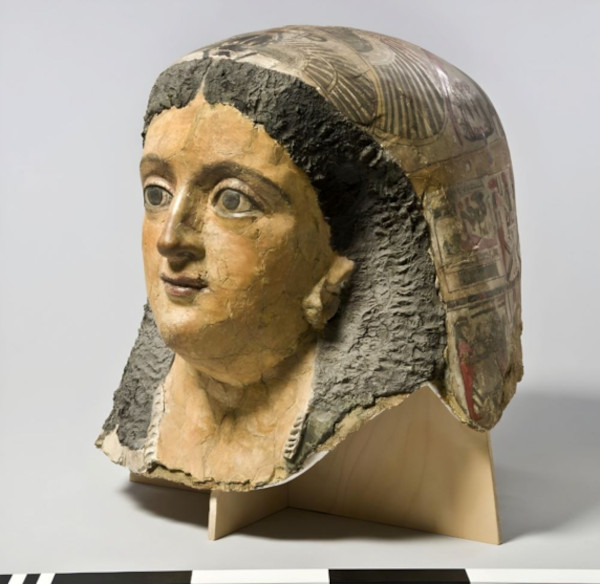
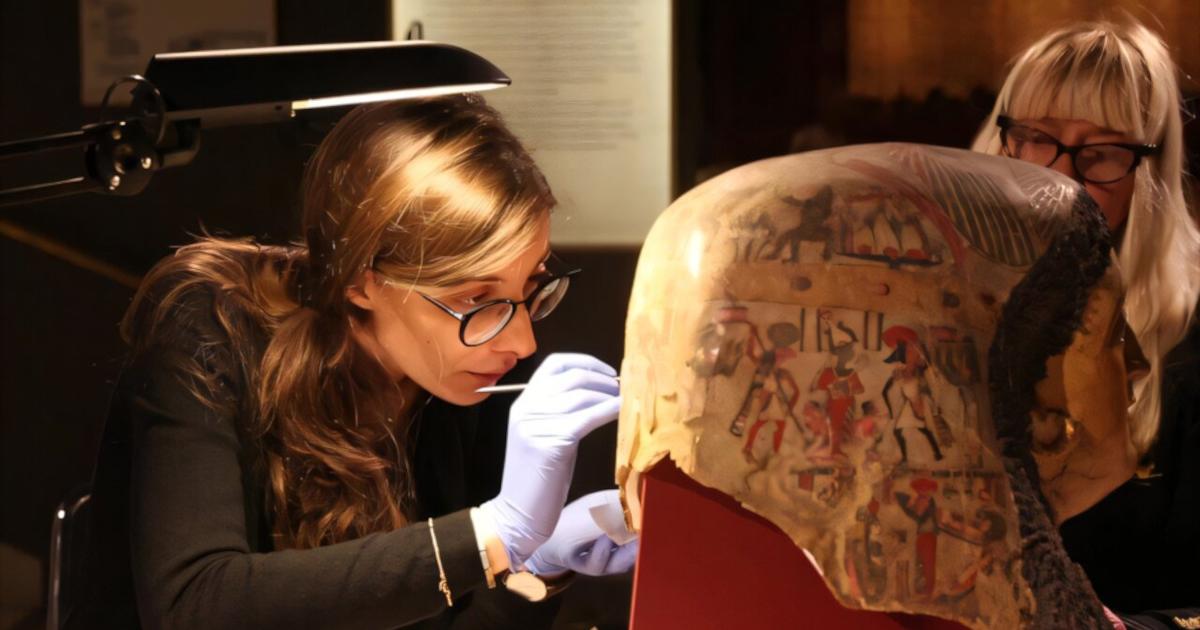
Mummy mask of a woman (Medelhavsmuseet, MM 14957), stucco on linen. (Museum of Mediterranean and Near Eastern Antiquities, Stockholm)
The discovery of moringa is particularly intriguing because of its symbolic connections. In ancient Egyptian religion, the god Ptah, patron of artisans and craftsmen, bore the epithet "Ptah who is under his moringa tree" and was often depicted beneath this plant. The researchers suggest that using a material derived from this sacred tree may have placed the artwork under Ptah's protection, adding a layer of religious meaning to the practical choice of materials.
Implications for Conservation and Beyond
The results have significant implications in terms of ancient artwork preservation practices. Knowing the precise animal and plant matter used in ancient paint layers enables conservators to use this important information to come up with plans for the treatment of delicate objects. The study also reveals how powerful paleoproteomics can be for unlocking materials that are otherwise beyond the reach of other forms of analysis.
The research opens new questions about the sources and meaning of such materials in ancient Egyptian culture. As the scientists note in their paper, their findings shed light on both expected and unconventional organic materials in painted artworks, revealing a world of artistic innovation, religious symbolism, and practical resourcefulness that has remained hidden in plain sight for millennia. Even the tiniest samples from painted objects can provide evidence for the complex and sophisticated materials used in Egyptian art over more than 1,800 years.
The study result raises new questions regarding the origins and significance of such materials in ancient Egyptian culture. According to the authors of the study, their research describes the use of both anticipated and unexpected organic materials in paintings revealing a world of artistic innovation, religious symbolism, and practical resourcefulness that has remained hidden in plain sight for millennia. Even the tiniest samples from painted objects can provide evidence for the complex and sophisticated materials used in Egyptian art over more than 1,800 years.
Top image: Dr. Clara Granzotto, assisted by conservator Inger Jonsson, taking a micro-sample for proteomics analysis from the painted surface of Mummy mask of a woman (Medelhavsmuseet, MM 14957), stucco on linen, H. 37 cm, W. 33 cm, D. 38 cm. Source: Photographer Johan Jeppsson/Museum of Mediterranean and Near Eastern Antiquities, Stockholm
By Gary Manners
References
Arnold, P. 2026. Surprising ingredients suggest ancient Egyptian paint was far more complex than previously assumed. Available at: https://phys.org/news/2026-08-ingredients-ancient-egyptian-complex-previously.html
Granzotto, C., Stacey, R. J., Mackie, M., Fulcher, K., Di Gianvincenzo, F., Spencer, N., … Cappellini, E. 2026. Beyond animal glue: Paleoproteomic analysis of paint binders and adhesives in ancient Egypt. Science Advances, 12(35 ), eady3618. Available at: https://www.science.org/doi/10.1126/sciadv.ady3618
Radley, D. 2026. Ancient Egyptian paint had surprising ingredients and was more complex than thought, study finds. Available at: https://archaeologymag.com/2026/08/egyptian-paint-had-surprising-ingredients/